
Black Cumin Seed Oil: The Thymoquinone (TQ) Potency, Bioavailability & Clinical Dosage Guide
A clinical guide to HPLC thymoquinone (TQ) testing, the anti-inflammatory NF-κB blockade, safe therapeutic daily dosages, and the synergistic stacking protocol with wild oil of oregano.
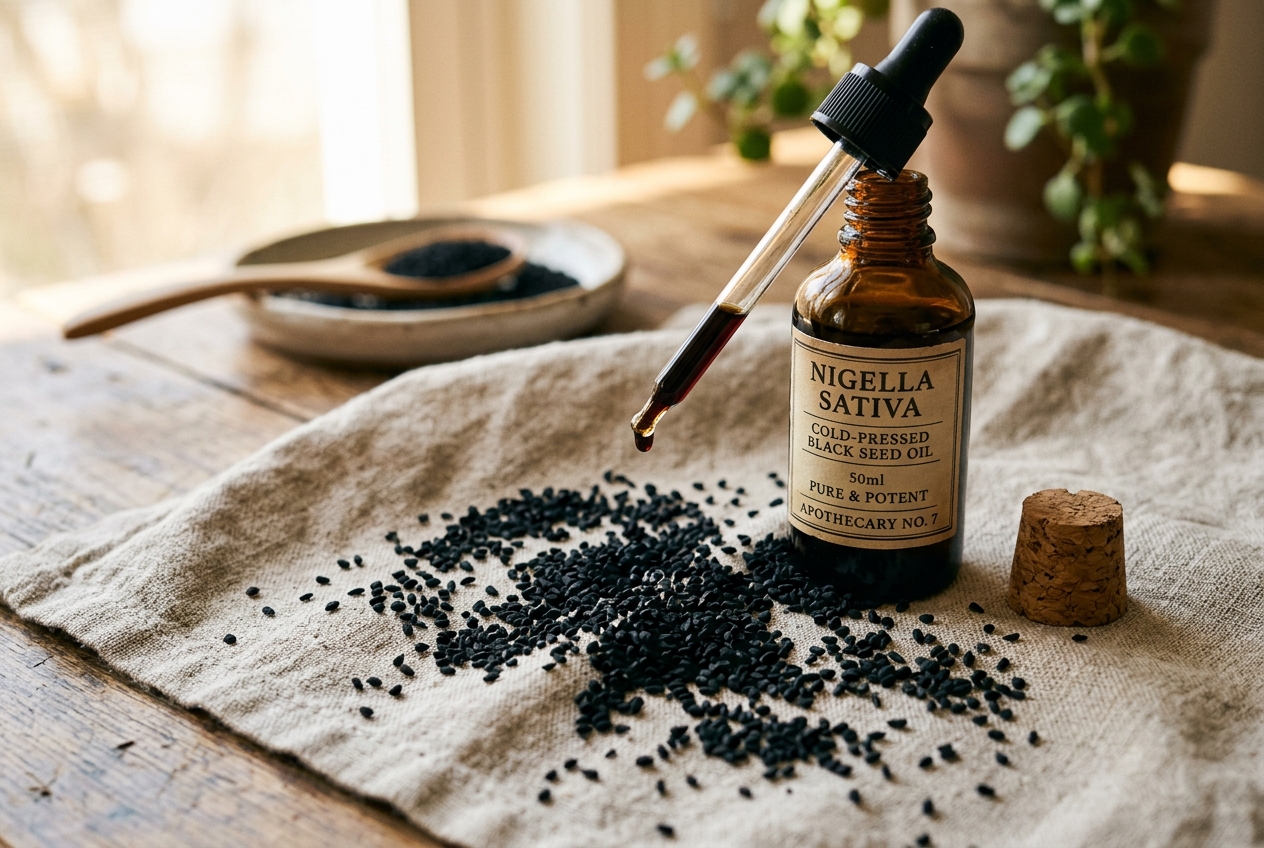
Across three millennia of botanical medicine, few plants have been revered with the reverence accorded to black cumin seed (Nigella sativa), historically known across North Africa, the Levant, and South Asia as Habbat al-Barakah (“the seed of blessing”) or Kalonji. Traditional herbalists famously claimed it was a remedy for every ailment except death itself.
Modern clinical pharmacology has largely substantiated this ancient reputation. Over 1,200 peer-reviewed studies indexed in the National Library of Medicine confirm that Nigella sativa exerts profound anti-inflammatory, immunomodulatory, antidiabetic, and antimicrobial activities.
However, the modern market for black seed oil is fraught with vast variations in potency. A cheap supermarket bottle may contain virtually zero active medicine, while a laboratory-grade cold-pressed extract delivers a therapeutic payload. The secret lies in a single, volatile quinone phytochemical: Thymoquinone (TQ).
Oil of oregano with black seed oil: Stacking wild Mediterranean oil of oregano with black seed oil creates a synergistic antimicrobial and anti-inflammatory defense. Oregano oil's carvacrol weakens microbial biofilm and cell walls, allowing black seed oil's thymoquinone (TQ) to penetrate and suppress NF-κB inflammatory cytokines. The clinical protocol is 1 teaspoon of virgin black seed oil paired with 2 drops of diluted oregano oil taken with a meal for 10 to 14 days.
Above-the-Fold Thymoquinone (TQ) Potency & Formulation Matrix
Review how active phytochemical concentrations, extraction methods, and bioavailability differ across commercial black seed products:
| Product Grade | HPLC Thymoquinone (TQ) % | Extraction Heat | Bioactive Synergy | Typical Clinical Dosage | Primary Therapeutic Indication |
|---|---|---|---|---|---|
| High-TQ Virgin Cold-Pressed Oil Clinical Gold Standard | 2.0% – 5.0% TQ (Certified) | Strictly < 104°F (40°C) | High (Retains nigellone & p-cymene) | 1 teaspoon (5 ml) daily with food | Asthma, metabolic syndrome, autoimmune modulation |
| Standard Commercial Cold-Pressed | 0.5% – 1.2% TQ | Low to Moderate (< 140°F) | Moderate | 1 to 2 teaspoons daily | General immune maintenance & skin health |
| Standardized Softgel Capsules | 1.5% – 3.0% TQ | Cold encapsulation | High (Protection from oxygen) | 500 mg – 1,000 mg softgels (2x daily) | Convenient dosing; zero peppery gastric burn |
| Whole Raw Nigella Sativa Seeds | 0.2% – 0.4% TQ by weight | None (Intact seed) | Whole-plant matrix + dietary fiber | 1 tablespoon (ground fresh) | Culinary seasoning & gut microbiome support |
1. The Biochemistry of Thymoquinone: Molecular Mechanisms
The vast majority of the biological properties of Nigella sativa are attributable to Thymoquinone (2-isopropyl-5-methyl-1,4-benzoquinone), a lipophilic monoterpene quinone with unique spatial and electrochemical properties:
Thymoquinone (TQ): C₁₀H₁₂O₂ (Molar Mass: 164.20 g/mol)
[ Environmental Toxins / Pathogens / Stress ]
                     │
                     ▼
           [ IκB Kinase (IKK) Activation ]
                     │
                     ▼
          [ NF-κB Nuclear Translocation ] ──► Systemic Inflammatory Storm
                     ▲
                     │ (POTENT INHIBITION)
      [ Thymoquinone (Black Cumin Oil) ]
                     │
                     ▼
  Suppresses TNF-α, IL-1β, IL-6, COX-2 & 5-LOX
  Upregulates Intracellular Glutathione & SOD
The 3 Core Anti-Inflammatory Pathways:
- NF-κB Blockade: Nuclear Factor Kappa B (NF-κB) is the master genetic switch governing chronic systemic inflammation. Thymoquinone inhibits the phosphorylation of IκBα, preventing NF-κB from translocating into the nucleus. This blocks the transcription of pro-inflammatory cytokines: Tumor Necrosis Factor-Alpha (TNF-α), Interleukin-1 Beta (IL-1β), and Interleukin-6 (IL-6).
- Dual COX-2 and 5-LOX Suppression: Unlike non-steroidal anti-inflammatory drugs (NSAIDs) that selectively block cyclooxygenase while shunting arachidonic acid toward inflammatory leukotrienes, TQ simultaneously inhibits cyclooxygenase-2 (COX-2) and 5-lipoxygenase (5-LOX), reducing both prostaglandins and leukotrienes without damaging the gastric mucosa.
- Nrf2-ARE Activation: Like sulforaphane, thymoquinone activates the Nrf2 antioxidant response element, increasing the synthesis of endogenous glutathione S-transferase (GST) and superoxide dismutase (SOD).
2. The Synergistic Duo: Oil of Oregano with Black Seed Oil
One of the most widely searched and clinically utilized botanical combinations in functional medicine is black cumin seed oil stacked with wild Mediterranean oil of oregano.
🌱 Editor's Recommended Clinical Black Seed Formulations
Third-Party HPLC Certified- Cold-pressed from Turkish Nigella sativa seeds
- Independently HPLC tested: Guaranteed 3.0%+ active Thymoquinone
- 100% Certified USDA Organic, unrefined, and non-GMO
- Packaged in pharmaceutical amber glass with calibrated glass dropper
- Standardized virgin cold-pressed oil in easy-to-swallow softgels
- Protects against the spicy, peppery aftertaste of raw liquid oil
- Third-party tested for heavy metals, pesticides, and microbial purity
- Delivers 1,000 mg of pure Nigella sativa extract per 2-capsule dose
- Authentic wild Mediterranean mountain-grown oregano oil
- Standardized to high carvacrol content in extra virgin olive oil
- Enteric-coated softgels eliminate severe throat irritation
- Clinical pairing for the 14-day black seed immune synergy protocol
The Carvacrol + Thymoquinone Synergy:
While black seed oil operates primarily through Thymoquinone (TQ), wild oregano oil (Origanum vulgare) operates through Carvacrol and Thymol.
- Microbial Membrane Permeabilization: Carvacrol inserts into the bacterial and fungal cell membrane, disrupting its phospholipid bilayer and causing cytoplasmic leakage of potassium and ATP.
- Intracellular Biofilm Disruption: Once the microbial membrane is weakened by carvacrol, lipophilic thymoquinone penetrates the cell interior, shutting down intracellular energy metabolism and inhibiting bacterial efflux pumps.
- Targeted Clinical Application: Functional medicine physicians prescribe this pairing for acute gastrointestinal dysbiosis, Small Intestinal Bacterial Overgrowth (SIBO), Candida albicans overgrowth, and upper respiratory challenges.
The Stacking Protocol: Mix 1 teaspoon (5 ml) of virgin black seed oil with 2 drops of high-carvacrol wild oregano oil in a tablespoon of extra virgin olive oil. Consume with a dense meal once daily for a strict 10 to 14-day protocol. Never consume pure oregano oil undiluted, as it can cause mucosal chemical burns.
3. Clinical Dosage Protocols & Safety Limits
To optimize therapeutic outcomes while avoiding gastrointestinal distress, follow these evidence-based dosage guidelines:
[ CLINICAL DOSAGE SPECTRUM FOR NIGELLA SATIVA ]

Daily Maintenance & Longevity:
• 1/2 to 1 teaspoon (2.5 ml – 5.0 ml) cold-pressed oil daily with food
• OR 500 mg – 1,000 mg standardized softgels once daily

Active Inflammatory / Metabolic Protocol (Insulin Resistance, Asthma):
• 1 teaspoon (5 ml) twice daily with morning and evening meals (Total: 10 ml)
• OR 1,000 mg softgels twice daily for 8 to 12 weeks

Toxicological Safety Threshold:
• Human trials demonstrate clinical safety up to 40 mg/kg/day (approx. 3,000 mg pure extract).
• Extreme supra-nutritional doses (> 25g/day) can elevate liver transaminases (ALT/AST).
Bioavailability Maximization Rule:
Because thymoquinone is highly lipophilic (hydrophobic), taking black seed oil on an empty stomach with a glass of water results in poor absorption, rapid hepatic clearance, and unpleasant “black seed burps.”
Always take your dose with dietary triglycerides (eggs, avocado, olive oil, or whole seed porridge). The dietary fats stimulate cholecystokinin (CCK) release, bile acid secretion, and mixed micelle formation, increasing lymphatic absorption of thymoquinone by up to 300%.
- Verified HPLC Thymoquinone Content: Insist on a third-party Certificate of Analysis guaranteeing at least 2.0% to 3.0%+ active Thymoquinone (TQ). Avoid generic bottles that do not disclose TQ percentages.
- Strict Hydraulic Cold-Pressing (< 104°F / 40°C): Thermal extraction above 120°F evaporates volatile nigellone and alters delicate quinone double bonds.
- Pharmaceutical Amber Glass Bottling: Ultraviolet rays and ambient light photochemically degrade thymoquinone within weeks. Never buy oils stored in transparent or clear plastic bottles.
- Botanical Origin Authentication: Premium medicinal seeds are cultivated in mineral-dense soils of Turkey, Egypt, or Ethiopia (Nigella sativa).
4. Liquid Oil vs. Softgel Capsules: Which Should You Choose?
- Choose Liquid Virgin Oil If: You require maximum cost-effectiveness, need flexible dosage scaling (1/2 tsp up to 2 tsp), or intend to use the oil topically for eczema, psoriasis, or scalp massage. Liquid oil provides immediate sublingual and esophageal mucosal contact, which is beneficial for acute pharyngitis and seasonal bronchial constriction.
- Choose Softgel Capsules If: You are sensitive to the pungent, peppery, engine-like flavor of unrefined black cumin oil, or suffer from gastric reflux. Softgels bypass the taste buds and dissolve in the duodenum, eliminating gastrointestinal irritation.
Cross-Botanical Lipid Synergy
To understand where black cumin ranks among other therapeutic plant lipids, review our comprehensive investigation into the seed oil spectrum: cold-pressed vs industrial refining, and read about botanical DHT inhibition in our pumpkin seed oil hair protocol. You can also discover how whole seeds support microbiome richness in our 30-plants per week diversity protocol.
5. Summary: Elevating Your Botanical Routine
Black cumin seed oil is a premier botanical compound for modulating immune hyperactivity, lowering HbA1c, and protecting cardiovascular endothelium.
To explore how the fatty acids in black cumin seed oil stack alongside whole seeds like hemp, chia, and pumpkin, use our interactive Daily Seed Nutrition & Protein Stacker, or track your weekly species diversity using the 30-Plants Microbiome Tracker.
Frequently Asked Questions: Black Cumin Seed Oil
Standard, generic cold-pressed black seed oils typically test between 0.5% and 1.0% active thymoquinone (TQ). Clinical-grade, therapeutic-potency oils are certified by High-Performance Liquid Chromatography (HPLC) testing to contain between 2.0% and 5.0% natural TQ. Always look for a Certificate of Analysis (CoA) confirming the exact TQ percentage on the product label.
Yes, and they create powerful botanical synergy. Stacking thymoquinone (from black cumin seed oil) with carvacrol (from wild Mediterranean oil of oregano) produces a dual-action antimicrobial and biofilm-disrupting cascade. When addressing gut dysbiosis, SIBO, or respiratory viral challenges, practitioners recommend taking 1 teaspoon of black seed oil alongside 2 to 3 drops of diluted oregano oil with a meal for 10 to 14 days.
The ideal time to take black cumin seed oil is in the morning with a breakfast containing healthy dietary fats (such as eggs, avocado, or yogurt). Because thymoquinone is a lipophilic compound, co-ingesting it with dietary triglycerides enhances micellar incorporation and increases lymphatic bioavailability by up to 300% compared to taking it on an empty stomach.
Standardized liquid oil and softgel capsules offer equivalent bioavailability provided the softgel contains pure, unrefined, cold-pressed virgin oil. Liquid oil is faster-absorbing in the upper GI tract and allows for higher volumetric dosing (1 to 2 teaspoons), whereas softgels protect against the pungent, peppery taste and eliminate the risk of esophageal burning or acid regurgitation.