
Hitting 130 Grams of Daily Plant Protein: The Complete Whole-Food Meal Stacking Blueprint
How to trigger skeletal muscle protein synthesis (MPS) and reach elite daily protein targets using whole seeds, legumes, and ancient grains—without relying on ultra-processed protein powders.
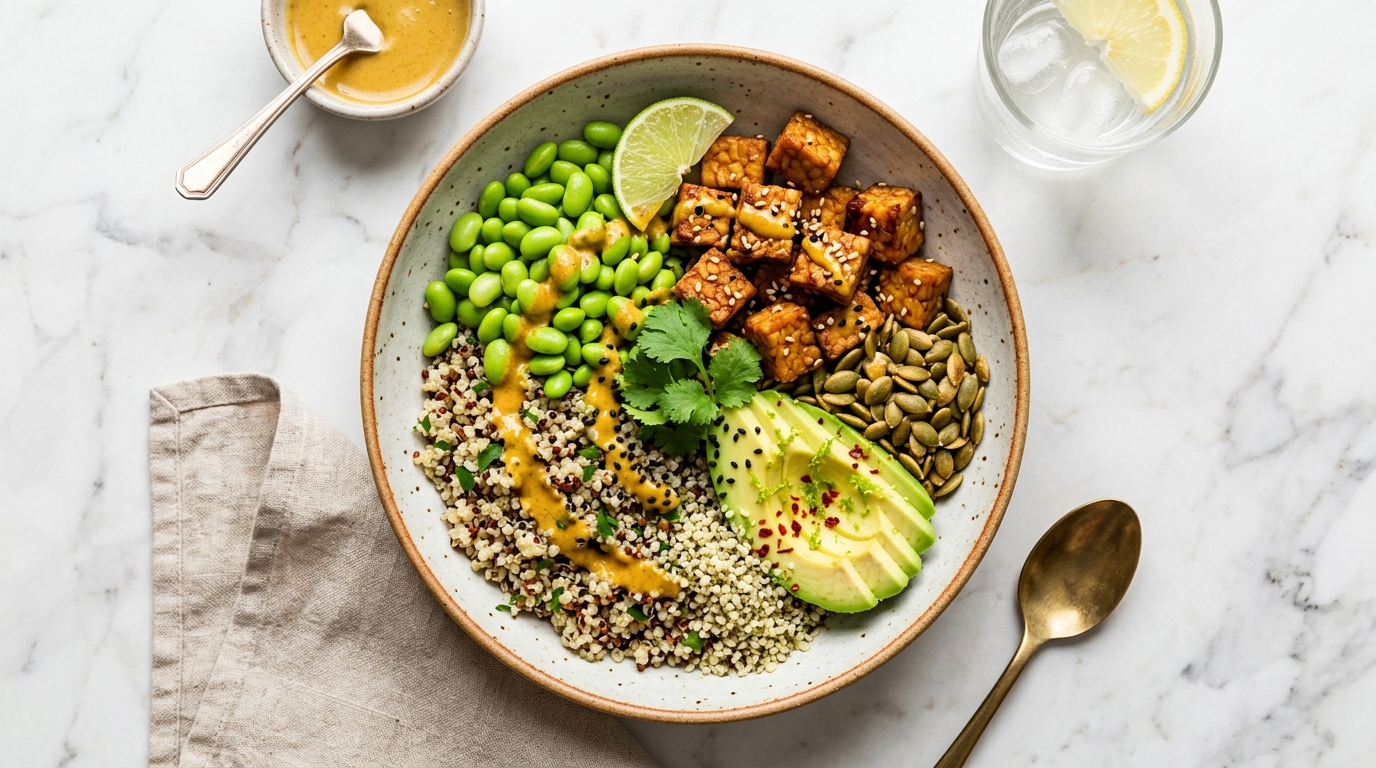
One of the most persistent myths in athletic nutrition is that achieving optimal skeletal muscle protein synthesis (MPS) requires heavy reliance on animal protein or industrial ultra-processed protein powders.
While plant foods generally exhibit lower branched-chain amino acid densities than whey or egg albumin, human muscle physiology does not care about the origin of an amino acid molecule—it only cares about plasma amino acid kinetics, total nitrogen balance, and hitting the intracellular leucine threshold (2.5g–3.0g per feeding).
By leveraging Whole-Food Amino Acid Stacking—pairing sulfur-rich seeds (hemp, pumpkin, sesame) with lysine-dense legumes (tempeh, edamame, lentils)—you can effortlessly hit 130 to 140 grams of complete, highly bioavailable daily protein using 100% wholesome, unrefined foods.
1. The Leucine Threshold: Why Plant Protein Timing Matters
Skeletal muscle protein synthesis operates via the mammalian target of rapamycin (mTORC1) pathway. To fully activate mTORC1 and turn on the cellular machinery for muscle repair, a meal must deliver approximately 2.5 to 3.0 grams of the essential amino acid leucine.
[ Conventional Plant Meal ] ──► 1.2g Leucine  ──► Sub-Threshold (Blunted MPS)
[ Stacked Seed + Legume ]   ──► 2.8g Leucine  ──► mTORC1 Triggered (Optimal MPS)
In animal foods, this leucine threshold is easily reached in 25–30g of total protein. In single plant sources, however, lower leucine ratios mean a generic 25g plant meal often falls short of the cellular trigger.
The Solution: Stack complementary plant protein sources to reach 35 to 45 grams of total protein per major meal. At this intake level, total leucine routinely exceeds the 2.8g threshold, producing identical fractional synthetic rates (FSR) to animal protein benchmarks.
To calculate your personalized daily protein and carbohydrate needs based on your lean body mass and activity volume, use the interactive macro engines on Intake.fitness, which allow custom athletic macronutrient partitioning and caloric expenditure tracking.
2. The 4-Meal 134-Gram Whole Food Stacking Blueprint
Below is a laboratory-calculated, real-world daily meal blueprint that delivers 134 grams of complete plant protein across four balanced feedings:
Meal 1: The High-Lipid Botanical Breakfast Bowl (34g Protein)
- 1 cup Organic Unsweetened Soy Milk: 8.0 g protein (Rich in lysine)
- 3 tbsp (30g) Raw Shelled Hemp Hearts: 9.5 g protein (Rich in edestin and BCAAs)
- 2 tbsp (20g) Whole Chia Seeds: 3.2 g protein (Prebiotic soluble mucilage)
- 1/2 cup Rolled Oats (dry): 5.5 g protein
- 2 tbsp Natural Peanut Butter: 7.8 g protein
- Total Meal Metrics: 34.0 g Complete Protein · 2.6g Leucine · 14g Dietary Fiber
Meal 2: The Tempeh & Super-Seed Power Bowl (44g Protein)
- 150g Organic Fermented Tempeh (cubed & pan-seared): 28.5 g protein (Fermentation eliminates phytates, maximizing absorption)
- 1/2 cup Cooked Quinoa: 4.1 g protein (Complete ancient grain)
- 1/2 cup Shelled Steamed Edamame: 8.5 g protein
- 2 tbsp (20g) Raw Pumpkin Seeds (Pepitas): 6.0 g protein (Highest zinc and magnesium density of any common seed)
- Tahini Garlic Dressing (1 tbsp tahini): 2.6 g protein
- Total Meal Metrics: 49.7 g Complete Protein · 3.4g Leucine · 11g Dietary Fiber
Meal 3: The Afternoon Sprouted Protein Crunch (18g Protein)
- 1/2 cup Roasted Crunchy Chickpeas or Sprouted Lentils: 11.0 g protein
- 1 oz (28g) Raw Almonds or Walnuts: 6.0 g protein
- 1 tbsp Unsweetened Golden Flaxseed Meal (stirred into unsweetened almond yogurt): 2.0 g protein
- Total Meal Metrics: 19.0 g Complete Protein · 1.4g Leucine · 8g Dietary Fiber
Meal 4: The Golden Red Lentil & Sesame Dahl (37g Protein)
- 1 cup Cooked Red Split Lentils (mashed with turmeric, ginger, and cumin): 18.0 g protein
- 1/4 cup Nutritional Yeast Flakes (stirred in at the end): 16.0 g protein (Exceptional B-vitamin spectrum & complete protein)
- 1 tbsp Toasted White Sesame Seeds (sprinkled on top): 2.8 g protein (Provides methionine to perfectly balance lentil lysine)
- Total Meal Metrics: 36.8 g Complete Protein · 2.9g Leucine · 16g Dietary Fiber
3. Daily Nutritional Summary
| Macronutrient Component | Total Daily Amount | Clinical Target for Active Adults (70kg / 154lbs) |
|---|---|---|
| Total Daily Protein | 139.5 g | 1.6–2.0 g/kg lean mass (Achieved: 1.99 g/kg) |
| Total Leucine Delivered | 10.3 g | Minimum 7.5g daily (Optimal athletic threshold) |
| Total Dietary Fiber | 49.0 g | Exceeds RDA (fevers short-chain fatty acid gut synthesis) |
| Essential Fatty Acids (Omega-3) | 8.4 g ALA | Complete anti-inflammatory cellular coverage |
4. Digestive Optimization: Preventing Bloat on High-Fiber Plant Diets
The primary hurdle athletes face when shifting to whole-food plant protein is the sudden leap in dietary fiber (45g–55g vs. standard American intake of 15g).
To ensure smooth gastrointestinal transit and complete enzymatic absorption: 1. Prioritize Fermentation: Opt for fermented soy (tempeh, organic miso, natto) over raw processed isolates. The fermentation process pre-digests oligosaccharides like raffinose that otherwise cause lower-bowel gas. 2. Employ the Overnight Soak Rule: Always soak dried beans and whole grains with an alkaline agent (a pinch of baking soda) or an acidic medium (lemon juice) for 12 hours before pressure cooking to degrade lectins and flatulence-producing alpha-galactosides. 3. Hydrate Relative to Fiber: For every 10 grams of dietary fiber added to your daily intake, consume an additional 250ml of pure water to allow soluble mucilage fibers (chia, flax) to form soft, easy-to-transit luminal bulking gels.