
The Complete Nutrient Density Comparison: Hemp vs. Chia vs. Flax Seeds
A laboratory-grade breakdown of complete amino acid profiles, Omega-3 to Omega-6 ratios, soluble mucilage fiber, and the bioavailability rules for maximum cellular absorption.
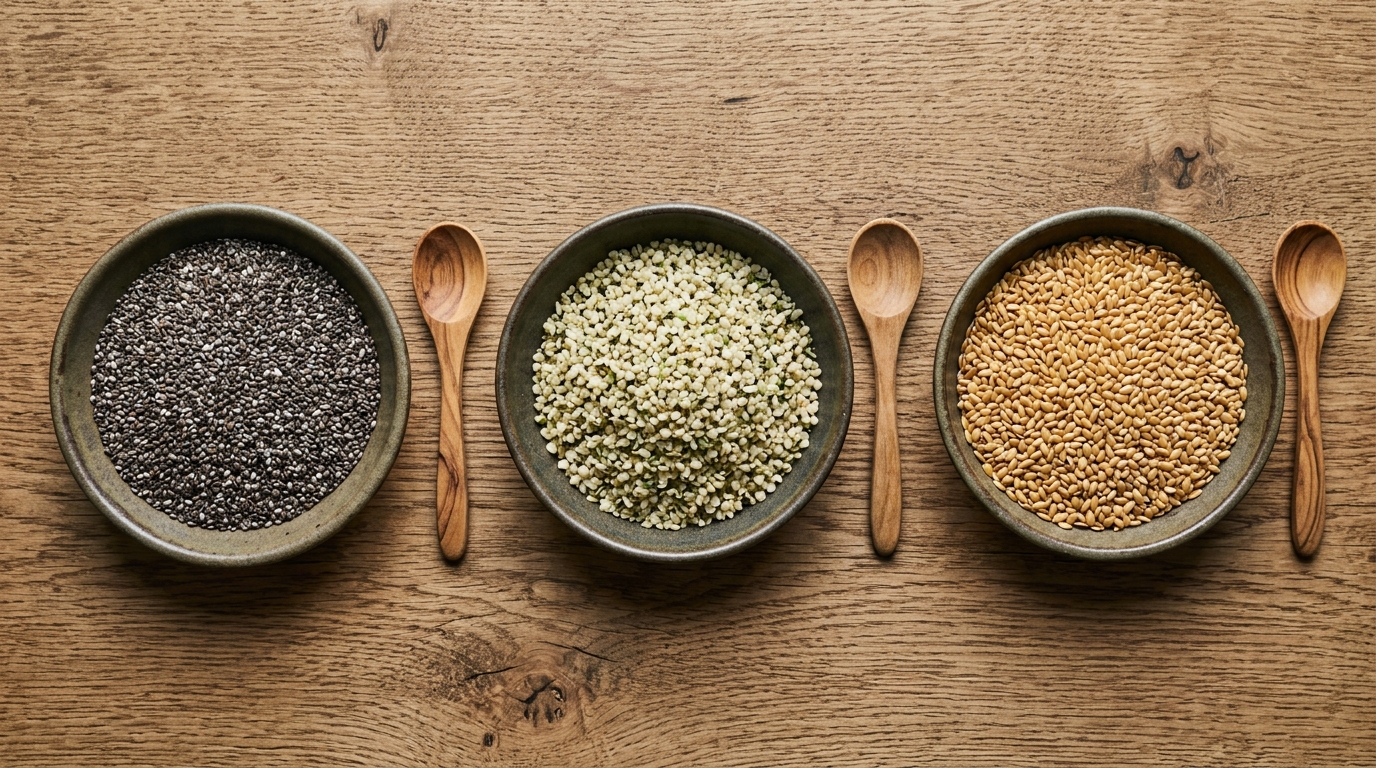
In the hierarchy of whole plant nutrition, few botanical structures concentrate energy, essential lipids, and complete proteins with the density of edible seeds. Among functional whole foods, three species dominate clinical nutrition discussions: hemp hearts (Cannabis sativa), chia seeds (Salvia hispanica), and flaxseeds (Linum usitatissimum).
While popular health media frequently lumps these three superfood seeds into a single generic category, their underlying biochemical profiles could not be more distinct. Hemp is an exceptional complete plant protein rich in sulfur-containing amino acids; chia is an unmatched hydrophilic soluble fiber engine; and flax is the world’s most concentrated botanical reservoir of cancer-protective secoisolariciresinol diglucoside (SDG) lignans.
Understanding these structural differences is essential for optimizing cardiovascular health, athletic recovery, and gut microbiome diversity.
1. Macronutrient Architecture: The 30-Gram Serving Breakdown
To make meaningful nutritional comparisons, we analyze each seed based on a standard two-tablespoon (30-gram) serving size, the clinically established therapeutic daily intake:
| Nutritional Metric | Shelled Hemp Hearts (30g) | Whole Chia Seeds (30g) | Ground Golden Flaxseed (30g) |
|---|---|---|---|
| Total Calories | 166 kcal | 138 kcal | 150 kcal |
| Protein | 9.5 g (Complete) | 4.7 g | 5.4 g |
| Total Dietary Fiber | 1.2 g | 10.2 g (80% Soluble) | 8.2 g (Mucilage & Lignin) |
| Net Carbohydrates | 1.4 g | 1.8 g | 1.6 g |
| Total Fats | 14.6 g | 8.7 g | 12.6 g |
| Alpha-Linolenic Acid (Omega-3) | 2.6 g | 5.1 g | 6.8 g |
| Linoleic Acid (Omega-6) | 8.2 g | 1.7 g | 1.8 g |
| Omega-6 to Omega-3 Ratio | 3.1 : 1 (Ideal) | 0.33 : 1 (Omega-3 Dominant) | 0.26 : 1 (Omega-3 Dominant) |
| Magnesium (% Daily Value) | 48% (210 mg) | 24% (95 mg) | 28% (118 mg) |
| Zinc (% Daily Value) | 28% (3.0 mg) | 12% (1.4 mg) | 11% (1.3 mg) |
| Non-Heme Iron (% DV) | 16% (2.8 mg) | 14% (2.3 mg) | 12% (1.7 mg) |
2. Protein Quality and Essential Amino Acid Breakdown
One of the most persistent challenges in plant-based nutrition is achieving adequate levels of branched-chain amino acids (BCAAs) and essential sulfur amino acids (methionine and cysteine) without excessive carbohydrate density.
The Hemp Heart Advantage
Hemp seed protein is composed primarily of two globulin storage proteins: edestin (65%) and albumin (35%). Unlike soy or pea protein concentrates, edestin is exceptionally digestible because it is free of trypsin inhibitors that impair protease enzyme action in the human duodenum.
- Leucine Density: Hemp delivers approximately 0.68g of leucine per 30g, matching the branched-chain density of whole eggs gram-for-gram.
- Arginine Concentration: Hemp contains extraordinary concentrations of L-arginine (over 1.1g per serving), a direct precursor to nitric oxide (NO) synthesis, promoting vascular endothelial dilation and lower resting arterial pressure.
Chia and Flax Amino Acid Limitations
While chia and flax contain moderate protein amounts (4.7g and 5.4g per 30g), both exhibit lower concentrations of lysine and methionine. When using seeds primarily for athletic recovery or skeletal muscle synthesis, hemp hearts represent the mathematically superior choice.
To compare comprehensive amino acid profiles across more than 50 common and heirloom seed varieties, researchers and athletes can cross-reference the interactive CompareSeeds Database, which tracks complete PDCAAS scores and raw micronutrient data side-by-side.
3. Essential Fatty Acid Dynamics: The Omega-3 vs. Omega-6 Balance
Human physiology evolved on an ancestral diet with an Omega-6 to Omega-3 ratio of approximately 1:1 to 3:1. Modern industrial diets, heavy in refined seed oils (soybean, corn, canola), frequently push this ratio to an inflammatory 16:1 or 20:1.
[ Flaxseed ]  ────────► 0.26 : 1  (Potent Omega-3 Anti-Inflammatory)
[ Chia Seed ] ────────► 0.33 : 1  (Potent Omega-3 Anti-Inflammatory)
[ Hemp Heart ] ───────► 3.15 : 1  (Perfect Ancestral Metabolic Balance)
[ Corn/Soy Oil ] ─────► 16.0 : 1  (Pro-Inflammatory Dysregulation)
- Flaxseed: Delivers the highest concentration of botanical Alpha-Linolenic Acid (ALA) available in common food (6.8g per 30g). ALA undergoes enzymatic desaturation and elongation into eicosapentaenoic acid (EPA) and docosahexaenoic acid (DHA), modulating systemic cytokine production (TNF-α, IL-6).
- Hemp Heart: While lower in total Omega-3 than flax, hemp uniquely contains Gamma-Linolenic Acid (GLA) and Stearidonic Acid (SDA). SDA bypasses the rate-limiting enzyme delta-6-desaturase, converting to anti-inflammatory EPA far more efficiently than standard ALA from plant oils.
4. Bioavailability Protocols: How to Prepare Each Seed for Maximum Absorption
Consuming whole seeds without respecting their physical seed coat architecture can result in virtually zero nutrient absorption. The human gastrointestinal tract lacks the cellulase enzymes required to fracture tough outer seed coats.
The Clinical Preparation Rules:
- Flaxseeds MUST Be Freshly Milled: Whole flaxseeds pass through the intestinal tract completely intact. To liberate the hydrophobic alpha-linolenic acid droplets and SDG lignans, flax must be ground into a fine meal immediately before consumption or stored in an opaque airtight container in the freezer to prevent lipid peroxidation.
- Chia Seeds Require Hydration (Gel Formation): Whole chia seeds can be mechanically broken by chewing, but their highest therapeutic value occurs when soaked in water at a 1:6 ratio for 15 minutes. The soluble polysaccharide mucilage forms a viscous gel that slows gastric emptying, stabilizing postprandial glucose curves.
- Hemp Hearts Are Ready to Eat Raw: Shelled hemp hearts have already had their tough outer perisperm husk removed during mechanical processing. They can be consumed raw, blended, or sprinkled directly without grinding or soaking.
5. Strategic Prescription: Which Seed Belongs in Your Routine?
- Choose Hemp Hearts If: Your primary goal is muscle repair, lean mass support, zinc replenishment, or adding non-inflammatory complete protein to morning meals without powders.
- Choose Chia Seeds If: Your focus is cardiovascular glycemic control, athletic hydration endurance, or feeding the gut microbiome with prebiotic soluble fiber.
- Choose Ground Flaxseeds If: You are targeting hormonal balance, estrogen metabolite modulation, or blood pressure regulation through potent lignan and high-dose ALA intake.
For optimal metabolic diversity, the most effective botanical approach is the Tri-Seed Blend: combining equal parts shelled hemp, whole chia, and freshly ground flaxseed into a daily 30-gram powerhouse that covers all three physiological pathways simultaneously.