
The 30-Plants-Per-Week Protocol: The Science of Microbiome Diversity and How to Hit It
Why modern microbiome science has moved past generic probiotic pills to the '30 Plant Rule'—and how using seeds and herbs makes hitting the diversity target effortless.
For decades, the dominant medical conversation around digestive wellness focused on single variables: eliminating gluten, restricting dairy, or swallowing commercial probiotic pills containing a handful of laboratory-cultured bacterial strains.
However, the landmark American Gut Project and British Gut Project—the largest citizen-science microbiome investigations ever conducted, analyzing over 10,000 human stool samples across multiple continents—shattered this simplistic model.
The single strongest predictor of gut microbiome health and microbial gene richness was not whether someone identified as vegan, vegetarian, or omnivore. It was the sheer diversity of distinct plant species consumed each week.
Specifically, individuals who consumed 30 or more distinct plant types per week had significantly more diverse microbial communities, higher levels of therapeutic short-chain fatty acids (butyrate, acetate, and propionate), and substantially lower circulating inflammatory biomarkers than those who consumed 10 or fewer.
1. Why Microbial Diversity Dictates Human Longevity
Your colon houses roughly 38 trillion bacterial cells representing hundreds of distinct species. Each bacterial phylum—from Faecalibacterium prausnitzii to Akkermansia muciniphila—has evolved to ferment specific structural carbohydrates, resistant starches, and polyphenol compounds.
When you eat the same five vegetables every day (e.g., standard russet potatoes, iceberg lettuce, white onions, carrots, and sweet corn), you feed only the narrow subsets of microbes specialized in those exact fiber linkages. Microbes that require complex pectins, arabinoxylans, and beta-glucans starve and undergo localized extinction.
Monotonous Diet (5-10 Plants) ──► Narrow Bacterial Guilds ──► Low Butyrate ──► Intestinal Permeability
Diverse Botanical Diet (30+ Plants) ──► Rich Microbiome ──► High SCFA Synthesis ──► Tight Junctions & Low Inflammation
When diverse fiber structures enter the distal colon, bacteria ferment them into Short-Chain Fatty Acids (SCFAs): * Butyrate: The primary energy substrate for human colonocytes, maintaining the epithelial tight junctions that prevent “leaky gut” and down-regulating systemic NF-κB inflammatory signaling. * Propionate: Crosses the portal vein to the liver, where it inhibits hepatic cholesterol synthesis and signals satiety in the hypothalamus. * Acetate: Enters peripheral circulation, fueling muscular energy and lipid metabolism.
2. What Counts as a “Plant Point”?
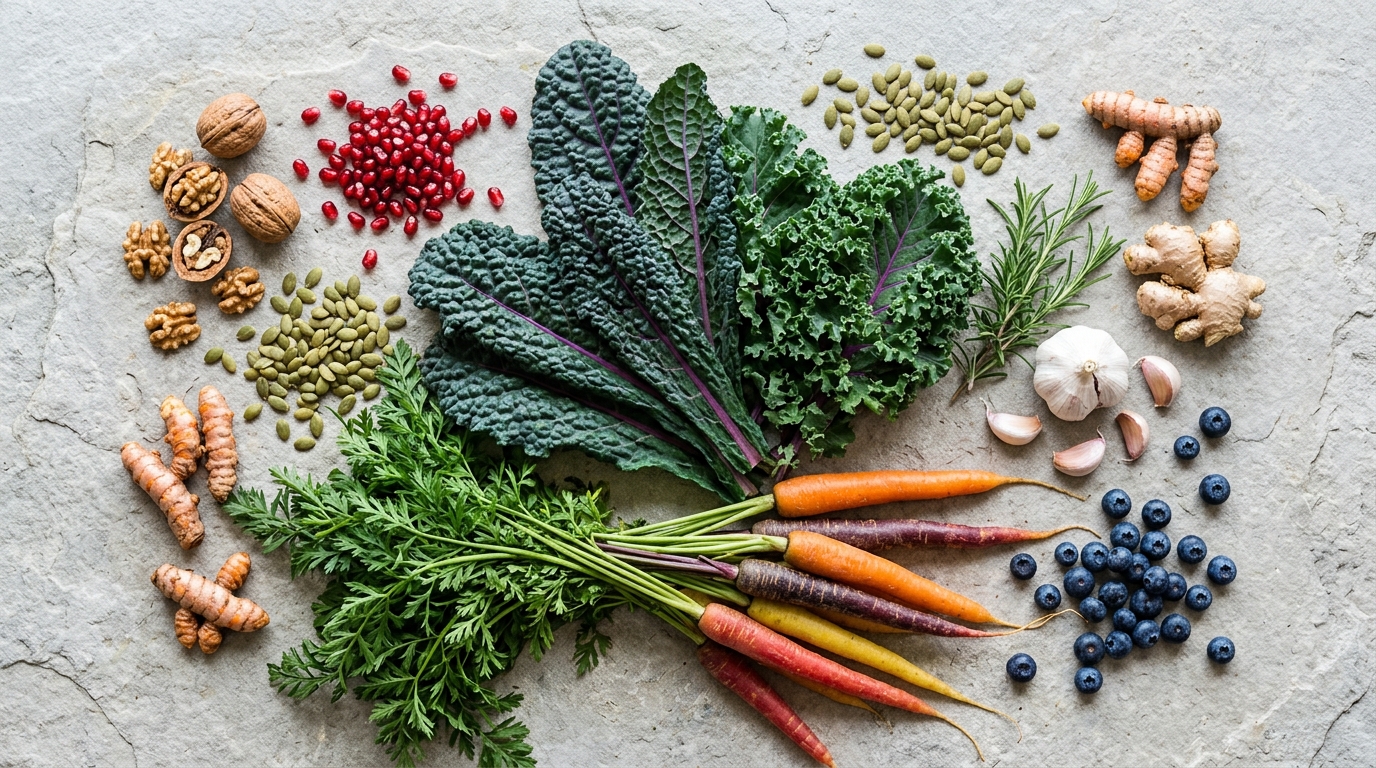
Many people hear “30 plants per week” and imagine eating 30 massive salads. In reality, a “plant point” encompasses six distinct botanical categories:
| Category | Examples (Each Counts as 1 Point per Week) | Why It Matters |
|---|---|---|
| 1. Seeds & Kernels | Chia, Hemp hearts, Flaxseed, Pumpkin (Pepitas), Sesame, Sunflower | Concentrated lignans, phytosterols, and mucilaginous soluble prebiotic fiber. |
| 2. Nuts & Legumes | Walnuts, Almonds, Lentils, Chickpeas, Black beans, Edamame | Resistant starch, polyphenols, and prebiotic galacto-oligosaccharides (GOS). |
| 3. Whole Ancient Grains | Quinoa, Wild rice, Buckwheat, Millet, Teff, Steel-cut oats | Beta-glucans and insoluble arabinoxylans that feed distal colonic flora. |
| 4. Vegetables | Purple cabbage, Arugula, Beets, Garlic, Leeks, Asparagus | Inulin, fructooligosaccharides (FOS), and glucosinolates. |
| 5. Fruits & Berries | Blueberries, Pomegranate, Blackberries, Apples, Lemons | Anthocyanins, ellagitannins, and soluble pectin. |
| 6. Culinary Herbs & Spices | Turmeric, Ginger, Rosemary, Cinnamon, Fresh cilantro | Potent secondary metabolites; 4 distinct spices count as 1 full plant point. |
Note: Different colors count as separate points! A purple carrot and an orange carrot contain completely distinct anthocyanin and carotenoid polyphenol profiles and count as two distinct botanical inputs.
3. The “Seed Shaker” Hack: Instant Diversity in 10 Seconds
The easiest, most potent kitchen hack to hit 30 plants weekly is the Countertop 5-Seed Shaker.
Keep an airtight glass jar on your kitchen counter filled with an equal blend of: 1. Raw Shelled Hemp Hearts (Point 1) 2. Whole Chia Seeds (Point 2) 3. Freshly Ground Golden Flaxseed (Point 3) 4. Raw Pumpkin Seeds (Pepitas) (Point 4) 5. Unhulled Toasted Sesame Seeds (Point 5)
By sprinkling two tablespoons of this blend over morning oats, lunch salads, dinner soups, or roasted vegetables, you instantly score 5 high-density plant points before you even factor in your main meal ingredients.
4. Sample 30-Plant Weekly Checklist
Below is a practical weekly blueprint demonstrating how easily a real-world eater can hit 35+ plant points by Friday:
- Monday (8 Points): Rolled oats, Chia seed, Hemp hearts, Blueberries, Arugula, Chickpeas, Garlic, Olive oil (botanical extract).
- Tuesday (6 Points): Quinoa, Black beans, Red onion, Cilantro, Avocado, Pumpkin seeds.
- Wednesday (7 Points): Brown lentils, Fresh ginger, Turmeric root, Spinach, Carrots, Walnuts, Golden flaxseed.
- Thursday (7 Points): Tempeh (fermented soy), Edamame, Bok choy, Sesame seeds, Purple cabbage, Scallions, Shiitake mushrooms.
- Friday (5 Points): Sweet potato, Rosemary, Almonds, Pomegranate seeds, Wild rice.
Total Botanical Species Count: 33 Unique Plants.
5. The Clinical Takeaway
You do not need to count calories or stress over micro-restrictions to optimize your metabolic biology. The human digestive tract is an adaptive, dynamic ecosystem.
By prioritizing botanical variety over rigid limitation—starting with your morning seeds and branching into ancient grains, colorful roots, and fresh aromatic herbs—you cultivate an internal microbial shield that supports cardiovascular resilience, cognitive clarity, and sustained vitality.