
Broccoli Sprouts vs. Mature Broccoli: The 50x Sulforaphane Multiplier (Heat & Myrosinase Guide)
A molecular analysis of glucoraphanin cleavage, the 70°C epithiospecifier protein (ESP) deactivation hack, and why 1 ounce of countertop sprouts matches 3 pounds of mature florets.
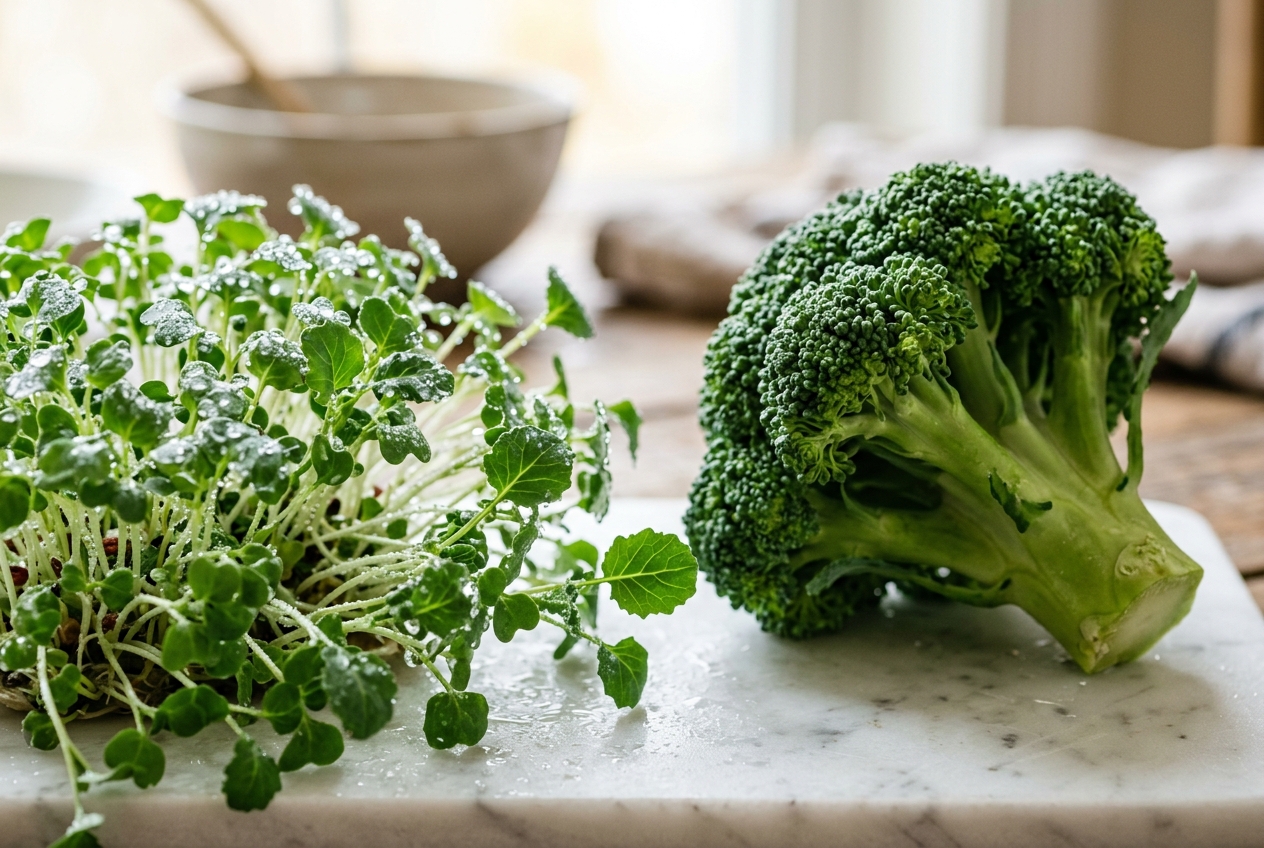
In 1997, a landmark scientific paper published in the Proceedings of the National Academy of Sciences (PNAS) by Dr. Paul Talalay and his team at Johns Hopkins University School of Medicine forever altered functional nutrition: 3-day-old broccoli sprouts contain 20 to 50 times the concentration of chemoprotective glucosinolates found in mature, market-ready heads of broccoli.
Today, sulforaphane (1-isothiocyanato-4-methylsulfinylbutane) is recognized as the most potent naturally occurring dietary activator of the Nrf2-ARE genetic pathway known to science. It drives cellular detoxification, quenches chronic neuroinflammation, protects mitochondrial DNA, and accelerates the excretion of environmental airborne carcinogens like benzene.
Yet, despite widespread enthusiasm, the vast majority of consumers forfeit sulforaphane’s therapeutic benefits due to two critical misunderstandings: purchasing the wrong agricultural seeds and destroying the delicate myrosinase enzyme through improper culinary heat exposure.
Broccoli seeds for sprouting: High-yield broccoli seeds for sprouting are non-GMO, certified organic seeds (Brassica oleracea var. italica) rigorously screened for foodborne pathogens (Salmonella, E. coli) with verified germination rates exceeding 95%. When sprouted for 3 to 5 days, these young micro-plants yield 20 to 50 times more glucoraphanin (the stable precursor to sulforaphane) than mature broccoli heads.
Above-the-Fold Sulforaphane Yield & Preparation Matrix
Review the drastic differences in glucoraphanin concentration, enzymatic conversion efficiency, and final sulforaphane yields across five forms of Brassica oleracea:
| Botanical Form | Glucoraphanin Precursor | Myrosinase Status | Sulforaphane Yield (per 50g) | Nrf2 Activation Potency | Preparation Protocol |
|---|---|---|---|---|---|
| 3-Day-Old Broccoli Sprouts (Raw) 50x Multiplier | Massive (~1,800 mg/kg) | 100% Active | 45 – 60 mg | Maximum (Top-Tier Gene Induction) | Masticate raw or blend fresh |
| 5 to 7-Day Microgreens | High (~900 mg/kg) | 100% Active | 20 – 30 mg | Very High | Raw garnish or salad base |
| Raw Mature Broccoli Florets | Moderate (~60 mg/kg) | Active (Cellular bound) | 1.5 – 3.0 mg | Baseline Maintenance | Chew raw florets thoroughly |
| Lightly Steamed Broccoli (3–4 min) | Preserved (~55 mg/kg) | Partially Retained (~40%) | 2.0 – 4.0 mg | Moderate | Steam until bright green (crisp-tender) |
| Boiled / Microwaved Broccoli (>5 min) | Degraded (~20 mg/kg) | Completely Denatured (0%) | < 0.2 mg (Near Zero) | Negligible | Add raw mustard powder to rescue |
1. The Sulforaphane Chemical Reaction: Glucoraphanin + Myrosinase
Sulforaphane does not exist in an intact, growing broccoli plant. Instead, Brassica species employ a two-part binary chemical defense system to deter herbivores and insect pests:
[ Glucoraphanin (Glucosinolate) ]   +   [ Myrosinase (Enzyme) ]
  (Stored in plant cell vacuoles)         (Stored in separate myrosin cells)
                              │
                              ▼ (Cellular Mastication / Crushing)
                     [ Unstable Intermediate ]
                              │
        ┌─────────────────────┴─────────────────────┐
        │                                           │
  (Normal / Optimal)                      (ESP Protein Present / Excess Heat)
        ▼                                           ▼
 [ Active Sulforaphane ]                  [ Inactive Sulforaphane Nitrile ]
 (Potent Nrf2 Activator)                   (Zero Biological Value)
- Glucoraphanin: A stable, biologically inert glucosinolate molecule residing inside the vacuoles of the plant cells.
- Myrosinase (β-thioglucoside glucohydrolase): A specialized hydrolytic enzyme housed separately inside specialized “myrosin cells.”
When an herbivore (or a human) bites into raw broccoli sprouts, the cellular compartmentalization is ruptured. Myrosinase immediately cleaves the sulfur-linked β-D-glucopyranosyl residue from glucoraphanin. The resulting aglycone intermediate spontaneously rearranges into Sulforaphane.
Why 3-Day Sprouts Dominate Mature Florets
A mature broccoli head has distributed its initial seed energy into broad vegetative biomass—leaves, fibrous stalks, water, and flowering florets. In contrast, a 3-day-old seedling retains the entire concentrated chemical defense payload of the dormant seed within a fraction of an inch of embryonic sprout tissue. Gram for gram, 3-day sprouts contain 20 to 50 times higher concentrations of glucoraphanin than the grocery store broccoli crown.
2. The 70°C (158°F) Water Bath Hack: Defeating Epithiospecifier Protein (ESP)
While raw broccoli sprouts are exceptionally potent, plant biology features a hidden spoiler: Epithiospecifier Protein (ESP).
In living sprouts, the ESP enzyme steers the degradation of glucoraphanin away from beneficial sulforaphane and toward sulforaphane nitrile, a metabolic dead-end compound that does not activate Nrf2 and provides zero cellular protection.
                           70°C (158°F) Mild Heat Bath
                                      │
                 ┌────────────────────┴────────────────────┐
                 ▼                                         ▼
   ESP Protein Denatured (Dead)           Myrosinase Retained (Active)
                 └────────────────────┬────────────────────┘
                                      ▼
             100% Conversion of Glucoraphanin into Bioactive Sulforaphane
The Clinical Optimization Protocol:
Food scientists discovered that ESP is significantly more heat-sensitive than myrosinase: * At 158°F (70°C) for 10 minutes: ESP is completely denatured and rendered permanently inactive. * Myrosinase survives intact: The myrosinase enzyme remains structurally stable up to approximately 165°F (74°C).
The Kitchen Protocol: Submerging fresh 3-day-old broccoli sprouts in a warm water bath maintained at precisely 158°F (70°C) for 10 minutes, then immediately plunging them into cold ice water, inactivates ESP while sparing myrosinase. When chewed, this hack doubles the final yield of bioactive sulforaphane compared to raw untreated sprouts.
3. Sourcing Broccoli Seeds for Sprouting & Broccoli Sprout Seeds: Avoiding Pathogens
When procuring broccoli seeds for sprouting, never purchase conventional agricultural seed packets intended for garden planting. Conventional seed lots are routinely treated with synthetic antifungal fungicides, chemical dusts, and industrial coatings that are toxic when consumed raw.
Always select certified organic broccoli sprout seeds (Brassica oleracea var. italica) that undergo verified third-party laboratory screening for human enteric pathogens, including Salmonella spp. and Escherichia coli O157:H7. Furthermore, verified sprouting lots feature germination rates exceeding 95%, ensuring dense cotyledon growth and preventing dead-seed bacterial spoilage inside your sprouting jars.
For a complete step-by-step equipment walkthrough, consult our countertop sprouting protocol for bioactive nutrients. To track broccoli sprouts as part of your weekly botanical target, learn the science in our 30-plants per week microbiome guide and log them in our 30-Plants Microbiome Diversity Tracker, or model your daily micronutrient stack with our Daily Seed Nutrition & Protein Stacker.
When cultivating countertop sprouts, seed purity is an urgent health concern. Sprouts grow in warm, humid micro-climates that can foster pathogenic bacteria if seeds are contaminated.
🌱 Editor's Recommended Broccoli Sprouting Seeds
Pathogen Tested & 98%+ Germination- 100% Certified USDA Organic & Non-GMO Project Verified
- Independently lab tested for Salmonella, E. coli, and Listeria
- Exceptional 98%+ germination rate within 72 hours
- Highest verified glucoraphanin yields in third-party testing
- Food-grade 316 surgical stainless-steel mesh sprouting lids
- Inverted drainage stands ensuring zero standing water or mold
- Complete step-by-step 3-day rinse and harvest protocol
- BPA-free blackout sleeves for initial germination phase
Why Garden Seed Packets Are Dangerous for Sprouting:
- Fungicide Coatings: Standard planting seeds sold in garden nurseries are frequently coated with synthetic fungicides (such as captan or thiram) and colored dyes to prevent damping-off in soil. Ingesting these seeds as raw sprouts can cause chemical poisoning.
- Agricultural Microbial Standards: Soil seeds are harvested with machinery that is not sanitized for raw food consumption. Certified sprouting seeds, by federal law, undergo rigorous pathogen screening for enteric bacteria.
4. The Mustard Seed Powder Hack for Cooked Broccoli
If you enjoy eating warm, cooked mature broccoli florets rather than raw sprouts, you can still unlock significant sulforaphane production using the exogenous myrosinase trick.
- The Problem: Steaming, roasting, or boiling mature broccoli destroys its endogenous myrosinase within 2 to 3 minutes. The intact glucoraphanin precursor passes through the upper GI tract unconverted.
- The Rescue: Raw mustard seeds (Sinapis alba or Brassica juncea) contain exceptionally high concentrations of a resilient form of myrosinase.
- The Protocol: Cook your broccoli florets as desired. Allow them to cool slightly to below 140°F (60°C). Sprinkle 1/4 teaspoon of raw ground yellow or brown mustard seed powder over the cooked vegetables and let rest for 5 minutes before eating.
- The Result: The raw myrosinase in the mustard powder hydrolyzes the intact glucoraphanin in the cooked broccoli, restoring up to 80% of sulforaphane synthesis.
5. Integrating Cruciferous Superfoods Into Your Routine
Cultivating countertop broccoli sprouts is the most economical and potent biohack in botanical nutrition. A single 1-lb bag of organic sprouting seeds yields dozens of jars of therapeutic sprouts for pennies per serving.
To learn how to safely soak, rinse, and invert your sprouting jars, review our comprehensive Countertop Sprouting Protocol Guide, or track your weekly intake of crucifers and microgreens alongside 30 diverse botanical species on our 30-Plants Microbiome Tracker.
Frequently Asked Questions: Broccoli Sprouts & Sulforaphane
One cup (approx. 50 to 60 grams) of fresh 3-day-old broccoli sprouts contains between 40 to 60 milligrams of bioavailable sulforaphane potential. To obtain an equivalent dosage from mature cooked broccoli heads, an individual would need to consume approximately 2.5 to 3 pounds (over 1.2 kg) of fresh broccoli florets daily.
Standard cooking methods like boiling, sautéing, or microwaving quickly heat sprouts above 158°F (70°C), which denatures the critical myrosinase enzyme and stops the conversion of glucoraphanin into sulforaphane. For maximum potency, consume sprouts raw in salads, blend them into room-temperature smoothies, or apply the precise 70°C 10-minute water bath protocol.
Mature cooked broccoli retains its heat-stable glucoraphanin precursor, but the cooking process completely destroys its endogenous myrosinase enzyme. Raw brown or yellow mustard seed powder (Sinapis alba) contains active, resilient myrosinase. Adding just a pinch of raw mustard powder to cooled, cooked broccoli re-introduces the enzyme, restoring up to 80% of sulforaphane synthesis.
Never use agricultural garden planting seeds, as they are frequently treated with chemical fungicides, heavy metals, or synthetic coatings not cleared for human ingestion. Always purchase USDA Certified Organic, Non-GMO Calabrese broccoli seeds explicitly batch-tested for human pathogens like Salmonella, E. coli O157:H7, and Listeria, with guaranteed germination rates above 90%.