
Roasting vs. Soaking Pumpkin Seeds: Why Heat Above 300°F Destroys Phytosterols
A biochemical analysis of phytic acid dephosphorylation, delta-7-phytosterol thermal oxidation, and why baking pumpkin seeds at high heat degrades their most potent endocrine compounds.
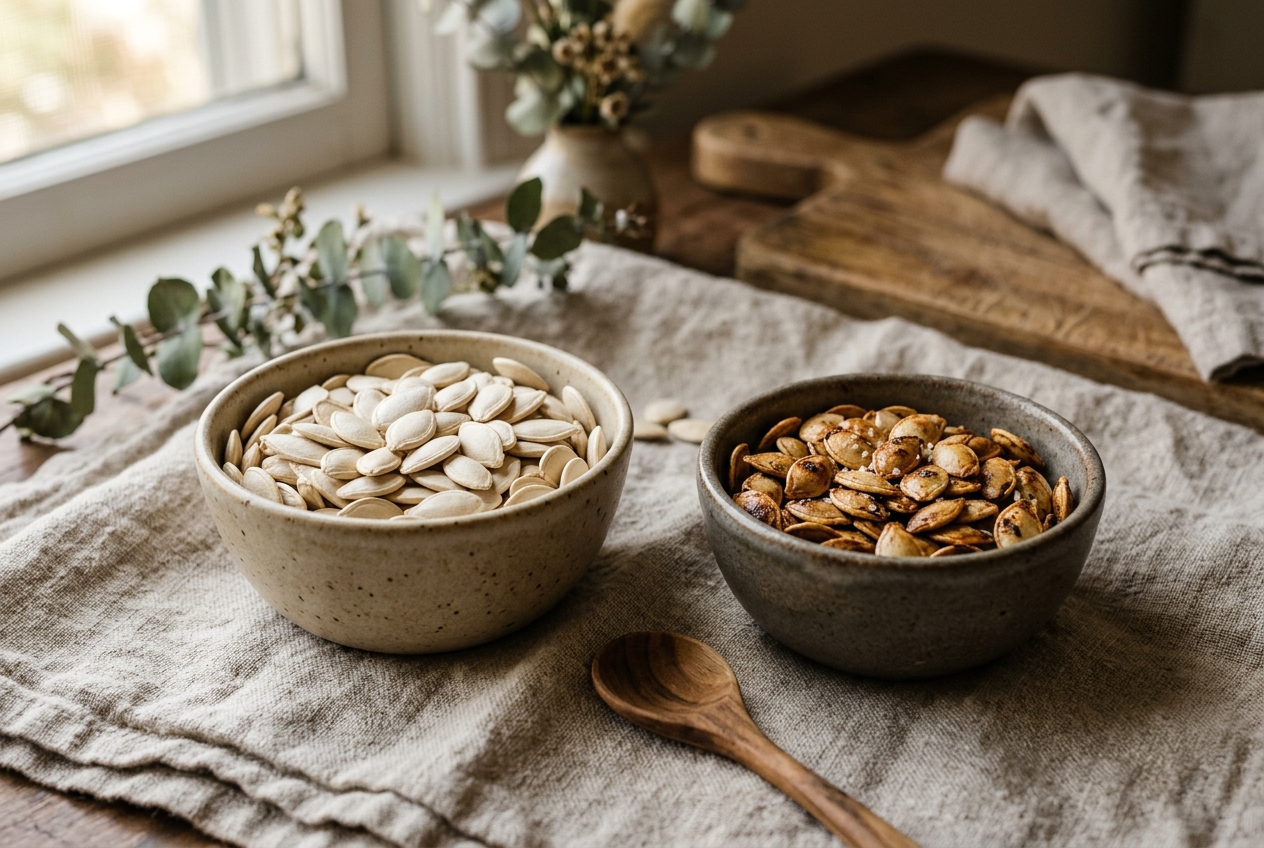
Every autumn, millions of households scoop fresh pumpkin seeds from the fibrous pulp of Cucurbita pepo, toss them in cooking oil, and bake them at 375°F to 400°F until browned and fragrant. While this traditional culinary method produces a crisp snack, it triggers a catastrophic biochemical tradeoff: high thermal roasting destroys up to 60% of the seed’s delicate therapeutic phytosterols and oxidizes polyunsaturated fatty acids into inflammatory lipid hydroperoxides.
Pumpkin seeds are nature’s most concentrated whole-food delivery mechanism for delta-7-sterols, bioavailable zinc, and magnesium. However, their clinical value is entirely dictated by temperature thresholds and anti-nutrient deactivation. Understanding the tension between phytic acid demineralization and thermal lipid oxidation is the key to unlocking their true cellular potential.
The Above-the-Fold Temperature & Preparation Threshold Matrix
Before exploring the molecular pathways, review how four standard preparation methods alter the macronutrients, bioactive sterols, and mineral absorption rates of a standard 30-gram (approx. 2 tablespoons) serving of pumpkin seeds:
| Preparation Protocol | Heat Exposure | Phytic Acid Level | Phytosterol Retention | Zinc / Mag Bioavailability | Peroxidation Risk |
|---|---|---|---|---|---|
| Raw Unsoaked (Hulless Pepita) | None (Ambient) | High (~1,280 mg/100g) | 100% Intact | Moderate (~35% absorbed) | Zero (Baseline) |
| Saline Soaked & Dehydrated (Optimal) Clinical Gold Standard | Low (< 150°F / 65°C) | Reduced by 42% | 98% Intact | Highest (~78% absorbed) | Negligible |
| Gentle Slow-Roasted | 250°F (121°C) / 45 min | Reduced by 18% | 88% Retained | High (~65% absorbed) | Low (Stable tocopherols) |
| Commercial High-Heat Roasted | 375°F+ (190°C) / 20 min | Reduced by 25% | Severely Degraded (< 40%) | Moderate (Altered matrix) | High (Oxyphytosterols formed) |
1. Phytic Acid: The Mineral Chelation Trap
Seeds are biological survival capsules engineered to protect dormant embryonic plant tissue until optimal soil moisture and germination temperatures are achieved. To lock away phosphorus and critical minerals from premature fungal or microbial breakdown, the plant synthesizes phytic acid (myo-inositol 1,2,3,4,5,6-hexakisphosphate).
In raw, untreated pumpkin seeds, phytic acid acts as an aggressive anti-nutrient in the human gastrointestinal tract:
Phytic Acid + Zn²⁺ / Mg²⁺ / Fe²⁺ → Insoluble Chelate Precipitate
Because the six phosphate groups radiating from the central inositol ring carry strong negative charges at human intestinal pH (6.5–7.5), they form tight ionic chelates with polyvalent cations—most notably Zinc (Zn²⁺) and Magnesium (Mg²⁺). Because humans lack endogenous phytase enzymes in the brush-border membrane of the small intestine, these insoluble mineral-phytate complexes pass unabsorbed into the colon, starving your tissues of the very minerals you consumed the seeds for.
The Saline Soaking Solution
Soaking pumpkin seeds in lukewarm, filtered water (95°F–105°F / 35°C–40°C) with a pinch of unrefined sea salt for 8 to 12 hours triggers the seed’s metabolic germination cascade. The seed senses moisture, activating endogenous myo-inositol hexakisphosphate phosphohydrolase (phytase).
Clinical assays indicate that a 12-hour soak reduces total phytate mass by 38% to 46%, liberating elemental zinc and magnesium into free, ionic forms ready for active transport via the divalent metal transporter 1 (DMT1) in the duodenal enterocytes.
2. The Phytosterol Breakdown: Why Temperature Dictates Prostate & Hormonal Health
Pumpkin seeds (Cucurbita pepo) contain one of the highest concentrations of plant sterols in the botanical kingdom—averaging 260 to 300 mg of total phytosterols per 100 grams.
Unlike standard cooking seeds, pumpkin seeds are uniquely rich in delta-7-sterols (chiefly spinasterol and delta-7-avenasterol), alongside classic beta-sitosterol. In clinical pharmacology, delta-7-sterols are revered for their ability to bind competitively to 5α-reductase, the intracellular enzyme responsible for converting testosterone into dihydrotestosterone (DHT) within the prostate stroma and scalp hair follicles.
[ Testosterone ] ───( 5α-Reductase )───► [ DHT ] ──► Follicular Miniaturization & BPH
                           ▲
                           │ (Inhibited by)
               [ Delta-7-Phytosterols ]
              (Damaged by heat > 300°F)
The 300°F Thermal Tipping Point
When exposed to excessive heat during baking or frying, phytosterols undergo thermal degradation and auto-oxidation: 1. Double-Bond Cleavage: Heat ruptures the unsaturated steroid ring structure, destroying its spatial geometry and competitive binding affinity for 5α-reductase receptors. 2. Oxyphytosterol Formation: Free sterols combine with atmospheric oxygen at elevated temperatures, generating 7-ketosterols and epoxy-sterols, which animal studies link to endothelial cell cytotoxicity. 3. PUFA Rancidity: Pumpkin seeds contain 45% to 55% linoleic acid (Omega-6), an 18-carbon polyunsaturated fatty acid with two vulnerable double bonds. Baking above 300°F triggers free-radical chain reactions, creating toxic conjugated dienes and malondialdehyde.
To preserve the delicate sterol architecture, pumpkin seeds must never be subjected to commercial roasting temperatures (350°F–425°F).
3. Can You Eat Pumpkin Seed Shells? The Gastrointestinal Reality
A pervasive debate among seed consumers centers on whether to consume whole white pumpkin seeds with their fibrous shell intact or purchase shelled green seeds (pepitas).
🌱 Editor's Recommended Organic Pumpkin Seeds
Third-Party Lab Tested- Authentic Cucurbita pepo var. styriaca (Heirloom Hulless)
- Naturally shell-free, emerald green, and cold-grown
- Unroasted, unpasteurized, and rich in delta-7-sterols
- Over 3.5mg bioavailable zinc per 30g serving
- Slow-soaked to neutralize 40%+ of phytic acid
- Gently dehydrated under 150°F to preserve unoxidized fats
- Zero industrial high-heat roasting or rancid seed oils
- Lightly seasoned with unrefined Celtic sea salt
Anatomy of the Shell: Cellulose vs. Endosperm
The white shell of a conventional carving pumpkin seed is the hardened perisperm and endocarp. It is composed almost entirely of insoluble crystalline cellulose and lignin.
- The Insoluble Fiber Advantage: A 1-ounce (28g) serving of whole, in-shell roasted pumpkin seeds delivers an enormous 5.2 grams of dietary fiber, acting as a mechanical bulking agent that accelerates colonic transit and sweeps bile acids from the lower GI tract.
- The Impaction Risk: Because humans cannot enzymatically digest cellulose, swallowing whole, inadequately chewed shells creates sharp, fibrous shards. In individuals with sluggish gut motility, strictures, or diverticulosis, heavy shell consumption can precipitate phytobezoars—compacted masses of indigestible plant fiber that can cause severe bowel obstruction.
Clinical Recommendation: If consuming whole in-shell seeds, roast them until brittle and chew thoroughly to a paste. For targeted hormonal, mineral, and protein therapy, choose Styrian hulless pepitas (Cucurbita pepo var. styriaca), which naturally grow inside the pumpkin with no fibrous shell whatsoever.
4. How to Roast Pumpkin Seeds: The 3-Step Low-Temperature Protocol
To enjoy the rich, nutty crunch of roasted pumpkin seeds without degrading their bio-active sterols or leaving phytic acid intact, follow this precise laboratory-tested culinary method:
Step 1: The Saline Phytase Activation Soak
Place 2 cups of raw green pepitas or whole fresh pumpkin seeds in a glass bowl. Cover with 4 cups of filtered, lukewarm water (100°F (38°C)). Stir in 1 teaspoon of unrefined mineral sea salt. The slight salinity accelerates phytase hydrolysis. Leave submerged at ambient room temperature for 8 to 12 hours.
Step 2: The Thorough Rinse
Drain through a stainless-steel colander and rinse under cold running water for 60 seconds. This flushes away the water-soluble orthophosphate ions cleaved from the phytic acid ring during soaking. Pat dry on clean linen towels.
Step 3: The 250°F Gentle Thermal Dry
Spread the damp seeds in a single layer on a parchment-lined baking sheet. Set your oven or food dehydrator to 225°F–250°F (107°C–121°C). * Bake for 35 to 45 minutes, stirring once halfway through. * The seeds are finished when they emit a subtle, toasted aroma and feel crisp to the touch, with zero browning or acrid smoke. * Allow them to cool completely before transferring to an airtight glass Mason jar stored away from direct sunlight.
How to Eat Pumpkin Seeds Daily for Maximum Bioavailability
If you are wondering how to eat pumpkin seeds to reap their full hormonal and metabolic benefits, consumption method matters just as much as roasting temperature: * Sprouted & Slow-Roasted Pepitas (The Gold Standard): Consuming 2 to 3 tablespoons daily of slow-roasted Styrian pepitas provides unoxidized delta-7 sterols. Pair them with vitamin C-rich foods (like bell peppers or berries) to enhance non-heme iron absorption. * Cold-Pressed Oil Integration: For concentrated hair follicle support and 5α-reductase inhibition without digestive bulk, explore our clinical guide on pumpkin seed oil for hair growth. * Whole In-Shell Crunch: If you choose in-shell seeds for colonic motility, remember the chewing rule to avoid gastrointestinal irritation. * Mineral Synergy Comparison: Compare the elemental zinc and magnesium density of pumpkin seeds against sunflower kernels in our pumpkin vs sunflower seeds mineral showdown.
5. Strategic Daily Mineral Stacking
Consuming 2 tablespoons (approx. 30 grams) of properly prepared pumpkin seeds daily provides: * 156 mg Magnesium (37% Daily Value): Regulates intracellular sodium-potassium pump activity, vascular tone, and NMDA neuro-receptor calming. * 2.2 mg Elemental Zinc (20% Daily Value): Supports testosterone synthesis, natural killer (NK) cell immune surveillance, and superoxide dismutase (SOD) synthesis. * 160 mg L-Tryptophan: The biochemical rate-limiting amino acid precursor to serotonin and nighttime melatonin production.
To see how pumpkin seeds synergize with hemp hearts and chia seeds to build complete daily nutrient profiles, explore our zero-server Daily Seed Nutrition & Protein Stacker, where you can calculate real-time mineral yields and complete amino acid profiles. Furthermore, you can log pumpkin seeds as one of your weekly botanical species in the 30-Plants Microbiome Diversity Tracker to track short-chain fatty acid diversity. To understand how lipid extraction compares to whole seeds, review our comprehensive analysis of the seed oil spectrum and cold-pressed vs industrial refining.
Frequently Asked Questions About Pumpkin Seed Nutrition
Yes, whole pumpkin seed shells (the white fibrous outer hull) are completely edible and non-toxic. A 1-ounce serving of whole in-shell seeds yields over 5 grams of insoluble fiber compared to just under 2 grams for hulless pepitas. However, individuals with active diverticulitis, strictures, or sensitive gut mucosa should chew them thoroughly or choose smooth green pepitas to avoid mechanical gastrointestinal irritation.
The optimal clinical roasting window is between 225°F and 250°F (107°C to 121°C) for 35 to 45 minutes. Temperatures below 300°F preserve over 88% of heat-sensitive delta-7-phytosterols and prevent the peroxidation of polyunsaturated linoleic fatty acid chains while still providing satisfying crunch and culinary aroma.
Soaking in warm, slightly salted water for 8 to 12 hours activates endogenous phytase enzymes that cleave ester bonds in the myo-inositol ring, degrading phytic acid by 35% to 50%. While it does not eliminate phytates 100%, this reduction dramatically increases the bioavailability of non-heme iron and elemental zinc in the human duodenum.
Raw soaked (or sprouted) pumpkin seeds provide the highest retention of unoxidized lipids, intact vitamin E tocopherols, and bioavailable minerals. However, slow-roasted seeds dried under 250°F offer nearly identical micronutrient retention with improved crunch and lower moisture content, extending room-temperature storage life.