
Never Spit Out Pomegranate Seeds: The Punicic Acid (Omega-5) Cellular Truth
A clinical biochemical analysis of Punica granatum: why discarding the woody seed loses 80% of therapeutic punicic acid, its PPAR-gamma visceral fat mechanism, and how to safely digest whole seeds.
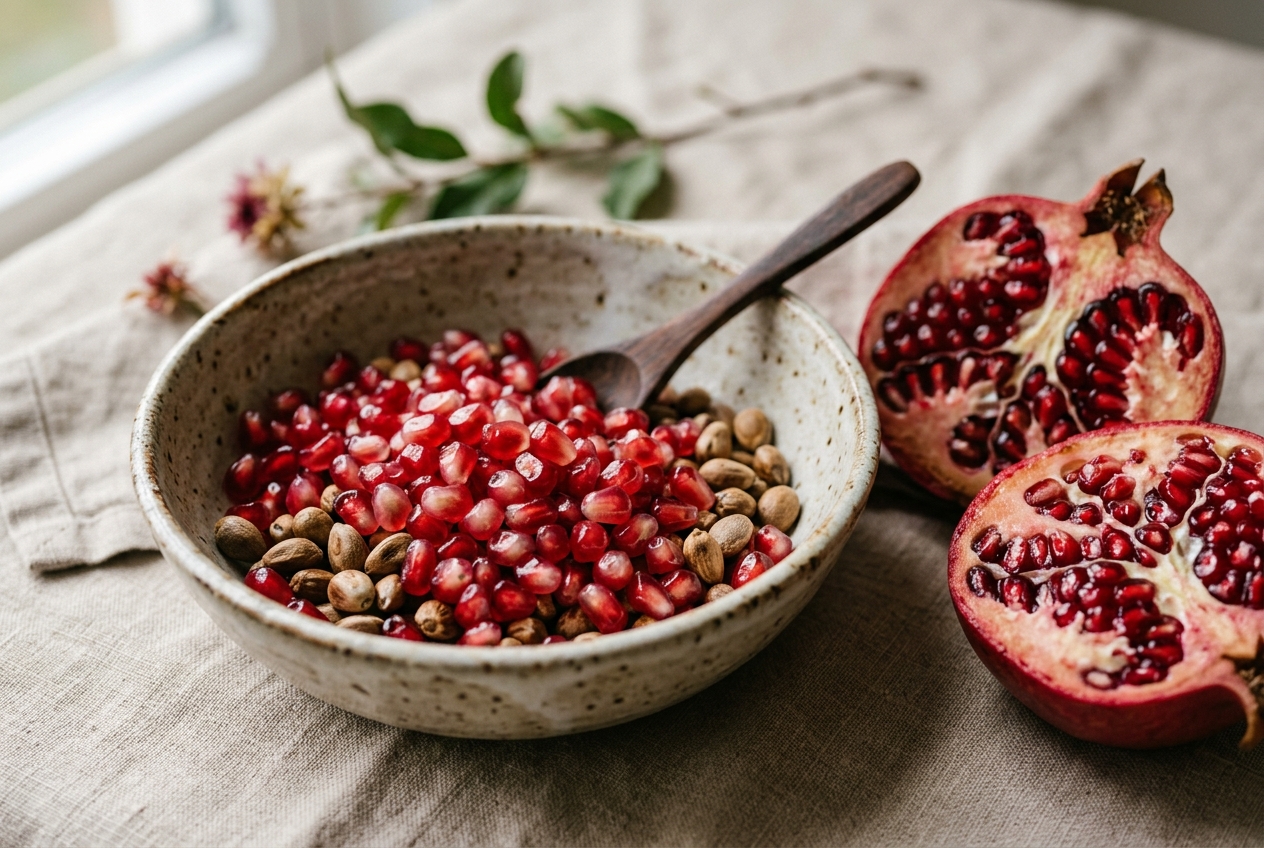
Every autumn, millions of consumers slice open the leathery crimson rind of pomegranate (Punica granatum), marvel at the clusters of ruby-red jewel arils, and face a common culinary dilemma: should you chew and swallow the hard white inner seed, or suck off the sweet juice and spit the seed out?
Can you eat pomegranate seeds: Yes, the woody inner seed of the pomegranate aril is completely edible, highly nutritious, and safe. Spitting it out discards the world's most concentrated natural source of punicic acid (Omega-5)—a rare conjugated fatty acid comprising 70% to 80% of the seed's lipid profile that activates PPAR-gamma pathways to combat visceral fat and cellular lipid peroxidation.
Most people discard the seed because of its crunchy, slightly fibrous texture. In doing so, they throw away the botanical crown jewel of Punica granatum: the only widely available conjugated Omega-5 fatty acid on Earth.
Above-the-Fold Fatty Acid & Bioactive Matrix
Review how the woody pomegranate seed compares to conventional healthy seed lipids and animal-derived conjugated linoleic acid (CLA) across a standard 30-gram (approx. 2-tablespoon) serving:
| Lipid / Seed Source | Primary Conjugated Isomer | Punicic Acid (Omega-5) % | Visceral Adiposity Impact | Lipid Peroxidation Resistance | Dietary Fiber (per 30g) |
|---|---|---|---|---|---|
| Pomegranate Seed (Whole / Oil) Omega-5 Super-Lipid | Punicic Acid (18:3 cis-9, trans-11, cis-13) | 72% – 82% of total lipids | High (PPAR-γ & GLUT4 upregulation) | Exceptional (High natural tocopherols) | 3.5 g (Insoluble lignin & cellulose) |
| Dairy / Beef CLA | Rumenic Acid (18:2 cis-9, trans-11) | 0% (Omega-6 family) | Moderate | Moderate | 0 g (Animal origin) |
| Flaxseed (Cold-Milled) | Alpha-Linolenic Acid (18:3 non-conjugated) | 0% (Standard Omega-3) | Moderate (Endothelial support) | Vulnerable to rapid oxidation | 8.2 g (Mucilage & lignin) |
| Chia Seed (Whole Hydrated) | Alpha-Linolenic Acid (ALA Omega-3) | 0% (Standard Omega-3) | Moderate (Prebiotic gel transit) | Moderate (Polyphenol shield) | 10.2 g (Soluble hydrocolloid) |
1. The Biochemistry of Punicic Acid: Nature’s Conjugated Omega-5
While the sweet translucent pulp of the aril delivers water, fructose, vitamin C, and anthocyanins, the hard white center contains the seed embryo, packed with 12% to 20% oil by dry weight.
Punicic Acid: C₁₈H₃₀O₂ (cis-9, trans-11, cis-13 Conjugated Octadecatrienoic Acid)
[ Punicic Acid (Pomegranate Seed) ]
                 │
                 ▼ (Oral Ingestion & Intestinal Absorption)
[ Lymphatic Transport via Chylomicrons ]
                 │
                 ▼
[ Activates PPAR-γ & Downregulates SREBP-1c in Adipocytes ]
                 │
                 ▼
┌─────────────────────────────────┬─────────────────────────────────┐
▼                                 ▼                                 ▼
Inhibits Visceral Fat Storage     Improves Peripheral Insulin       Suppresses Mammary & Prostate
(Lipogenesis Suppression)         Sensitivity via GLUT4             Lipid Hydroperoxides
The Conjugated Double-Bond Advantage
In conventional polyunsaturated fatty acids (like linoleic or alpha-linolenic acid), double bonds are separated by an inactive methylene bridge (-CH₂-). In punicic acid, three double bonds are conjugated—arranged in a direct alternating sequence: 1. Delocalized Pi Electrons: This conjugated arrangement delocalizes electrons across the hydrocarbon chain, acting as an electrochemical free-radical sink that intercepts reactive oxygen species (ROS) before they can damage cell membranes. 2. Selective Cytotoxicity: In clinical oncology models, punicic acid demonstrates selective growth inhibition against hormonally sensitive breast and prostate tumor cell lines while remaining completely non-toxic to normal epithelial cells. 3. Inhibition of 5-Lipoxygenase: Like thymoquinone in black cumin seed, punicic acid inhibits 5-LOX, blunting the synthesis of leukotriene B₄ (LTB₄) and dampening chronic inflammatory bowel inflammation.
2. Visceral Adiposity & Metabolic Modulation
Excess visceral adipose tissue—the metabolically active fat surrounding abdominal organs—is the primary driver of systemic insulin resistance, cardiovascular disease, and non-alcoholic fatty liver disease (NAFLD).
🌱 Editor's Recommended Pomegranate Formulations
Clinical Grade & Solvent-Free- Combines cold-pressed seed oil with standardized punicalagin fruit extract
- Guaranteed >65% active punicic acid (Omega-5) per serving
- Delivers polyphenol antioxidant equivalent to 24-30 pomegranates
- Third-party tested for solvent residues and heavy metals
- Single-ingredient, unrefined, virgin hydraulic cold-pressed
- Dark amber pharmaceutical glass bottle with dropper
- Dual-use: oral botanical supplementation and topical skin renewal
- Certified USDA Organic, non-GMO, zero chemical hexane extraction
Epigenetic Regulation of Fat Storage:
In randomized animal and human pilot trials, daily administration of cold-pressed pomegranate seed oil or whole seeds produced decisive metabolic remodeling: * Suppression of TNF-Alpha in Adipocytes: Punicic acid downregulates adipose expression of pro-inflammatory cytokines, reversing obesity-induced macrophage infiltration into abdominal fat pads. * GLUT4 Glucose Translocation: Like 4-hydroxyisoleucine in soaked fenugreek seeds, punicic acid enhances insulin-stimulated glucose uptake in skeletal muscle, normalizing fasting insulin curves.
3. Digestion & The Cellulose Husk: How to Chew Safely
Why do some people experience mild stomach fullness after eating pomegranate seeds? The hard seed coat (sclerotesta) is reinforced with crystalline cellulose, hemicellulose, and lignin.
- The Mastication Rule: Never swallow pomegranate seeds whole like pills. You must bite through the aril and crunch the inner seed to fracture the woody hull, exposing the rich punicic acid core to pancreatic lipases.
- Hydration Requirement: A single cup of whole pomegranate arils supplies nearly **7 grams of insoluble fiber**. Always drink a glass of water alongside whole seeds to ensure smooth colonic motility.
- Diverticulosis Precaution: Individuals with active diverticulitis, strictures, or severe gastroparesis should consume cold-pressed pomegranate seed oil rather than whole in-shell seeds to prevent mechanical irritation.
The Fiber Synergy
When you chew the seed, the insoluble fiber acts as an intestinal broom, accelerating transit and sweeping excess bile salts into the stool. Furthermore, polyphenols from the pulp (punicalagins and ellagic acid) reach the lower colon intact, where your microbiome converts them into Urolithin A—the longevity metabolite that stimulates mitochondrial autophagy (mitophagy).
4. How to Integrate Pomegranate Seeds into Your Daily Routine
To extract maximal cardiovascular and lipid benefits from fresh pomegranates:
Method 1: The Whole Aril Breakfast Crunch
Sprinkle 1/2 cup of fresh whole arils over a bowl of cold-soaked chia pudding or organic Greek yogurt. The healthy dairy or seed fats enhance the micellar absorption of fat-soluble punicic acid. Compare how chia mucilage balances whole seeds in our chia seeds hydration protocol.
Method 2: High-RPM Cold-Pressed Oil Supplementation
If you prefer not to chew woody seeds every day, take 1/2 teaspoon (2.5ml) of certified organic, cold-pressed virgin pomegranate seed oil with a meal. Read our comprehensive investigation into the seed oil spectrum: cold-pressed vs industrial refining to understand why gentle hydraulic extraction preserves conjugated double bonds.
5. Connecting Pomegranate Seeds to Your Plant Diversity Score
Because pomegranate (Lythraceae) represents an uncommon botanical family, consuming whole seeds earns an immediate plant diversity point toward your gut health targets.
You can log pomegranates in our zero-server 30-Plants Microbiome Diversity Tracker, learn the science of plant points in our 30-plants per week microbiome protocol, and calculate complete mineral yields with our Daily Seed Nutrition & Protein Stacker. You can also explore another overlooked seed in our clinical guide on eating watermelon seeds for L-citrulline and protein.
Frequently Asked Questions About Eating Pomegranate Seeds
Yes, the hard woody seed inside each ruby aril (Punica granatum) is completely edible, non-toxic, and medically beneficial. While many people suck off the sweet juice and spit out the hard seed, doing so discards over 80% of the fruit's therapeutic lipid compounds—most notably punicic acid (Omega-5) and insoluble dietary fiber.
Punicic acid (trichosanic acid) is an ultra-rare conjugated linolenic polyunsaturated fatty acid (CLnA, 18:3 cis-9, trans-11, cis-13) that comprises up to 80% of the oil inside pomegranate seeds. It is nature's only widely available botanical Omega-5, clinically demonstrated to activate PPAR-gamma receptors, downregulate adipogenesis, and inhibit mammary and prostate lipid peroxidation.
In normal dietary portions (1/2 to 1 cup of whole arils daily), thoroughly chewed pomegranate seeds accelerate bowel regularity due to their high insoluble cellulose and lignin content. However, consuming large quantities of unchewed seeds with inadequate hydration can, in rare cases of slow colonic transit or strictures, form an obstructive phytobezoar. Always chew them thoroughly.
Cold-pressed virgin pomegranate seed oil provides an ultra-concentrated therapeutic dose of punicic acid (approx. 700 to 800 mg per gram) without the fibrous cellulose husk, making it ideal for targeted topical skin barrier repair and systemic anti-inflammatory supplementation. However, whole chewed seeds supply synergistic punicalagins, dietary fiber, and polyphenols.