
Can You Eat Watermelon Seeds? Why Sprouted Kernels Pack More Protein Than Pumpkin Seeds & Natural Citrulline
A nutritional biochemistry breakdown of Citrullus lanatus seeds: analyzing 31% protein density, L-citrulline vascular kinetics, phytate deactivation via sprouting, and how to roast or shell watermelon kernels.
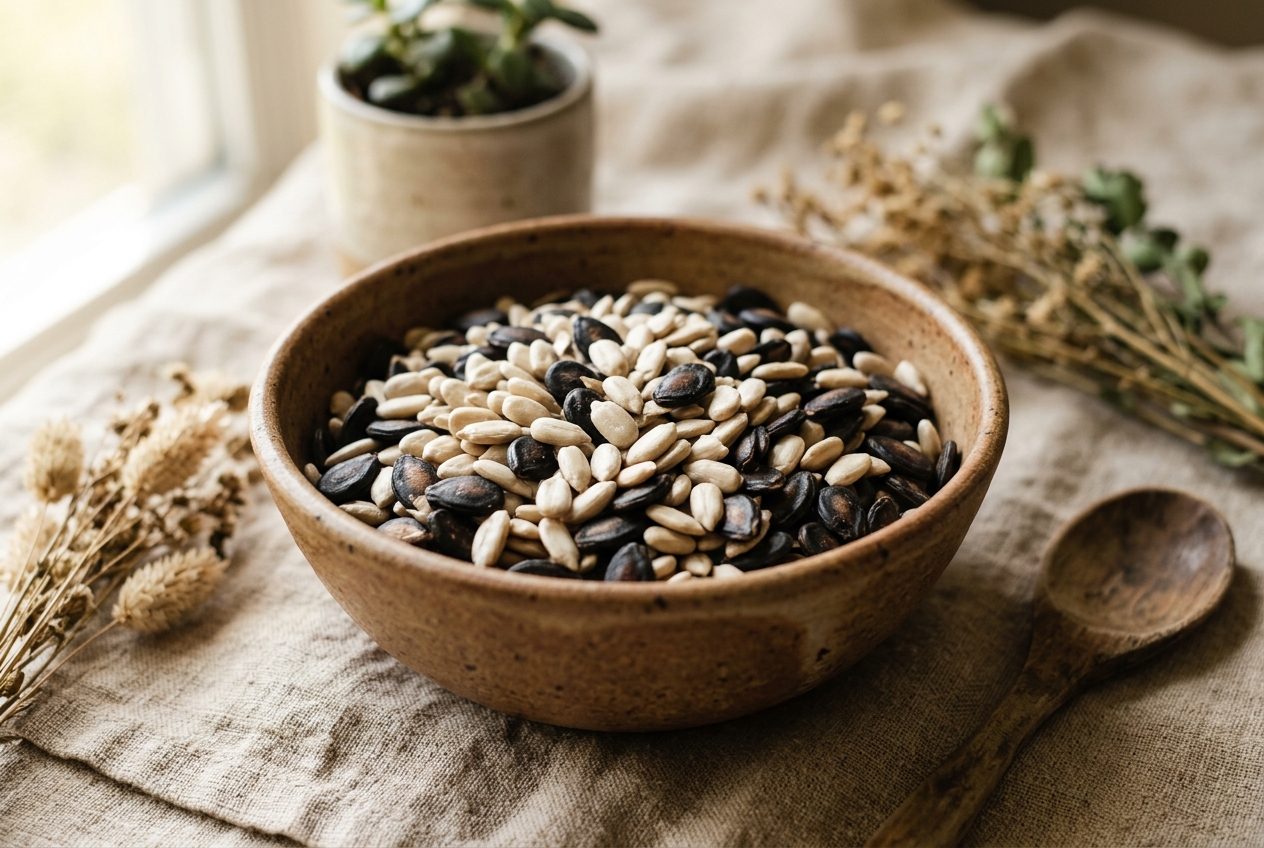
For generations, children were warned that swallowing black watermelon seeds would cause a vine to sprout in their stomachs. While adult consumers recognize this as harmless folklore, millions of households still reflexively spit out the black seeds or pay premium prices for genetically modified seedless melons.
Can you eat watermelon seeds: Yes, watermelon seeds (Citrullus lanatus) are completely non-toxic, digestible, and rank among the most nutrient-dense seeds on Earth. When sprouted or shelled, watermelon seed kernels deliver 31 grams of complete protein per 100 grams (surpassing chia and rivaling pumpkin seeds), high concentrations of the vascular vasodilator L-citrulline, 140% DV magnesium, and bioavailable non-heme iron.
In West African, Middle Eastern, and Asian culinary traditions, watermelon seeds—known variously as Egusi or Karat—are cultivated specifically for their medicinal kernels. Dismissing them as agricultural trash discards one of the most concentrated nitric oxide engines and anabolic plant proteins in the botanical kingdom.
Above-the-Fold Macronutrient & Vascular Comparison
To understand how watermelon seed kernels compare to established superfood seeds, review the nutritional metrics of a standard two-tablespoon (30-gram) serving of shelled sprouted watermelon seeds against pumpkin seeds and hemp hearts:
| Nutritional Metric | Shelled Watermelon Kernels (30g) | Shelled Pumpkin Seeds (30g) | Hemp Hearts (30g) | Metabolic Advantage |
|---|---|---|---|---|
| Total Energy | 168 kcal | 170 kcal | 166 kcal | Balanced caloric density |
| Complete Protein | 8.8 g | 9.2 g | 9.5 g | Near-Parity with Hemp & Pumpkin |
| Total Dietary Fiber | 1.5 g (Shelled) / 5.0 g (In-Shell) | 1.8 g (Pepita) | 1.2 g | Whole-seed in-shell aids colonic transit |
| L-Citrulline / L-Arginine | 1,480 mg Total Precursors | 1,210 mg | 1,120 mg | Watermelon (Highest Nitric Oxide) |
| Total Healthy Lipids | 13.9 g | 14.2 g | 14.6 g | High monounsaturated & linoleic fats |
| Magnesium (% Daily Value) | 38% DV (154 mg) | 37% DV (156 mg) | 48% DV (210 mg) | Potent NMDA neural calming |
| Elemental Zinc (% Daily Value) | 21% DV (2.3 mg) | 20% DV (2.2 mg) | 28% DV (3.0 mg) | Immune cell proliferation & testosterone |
| Non-Heme Iron (% Daily Value) | 16% DV (2.8 mg) | 14% DV (2.5 mg) | 16% DV (2.8 mg) | Hemoglobin synthesis |
1. The Vascular Engine: L-Citrulline and Endothelial Nitric Oxide
The hallmark biochemical signature of Citrullus lanatus (from which citrulline takes its scientific name) is its extraordinary concentration of L-citrulline, an organic amino acid with profound cardiovascular properties.
[ L-Citrulline (Watermelon Seeds) ]
               │
               ▼ (Bypasses Liver Metabolism)
    [ Converted in Kidneys to L-Arginine ]
               │
               ▼ (Endothelial Nitric Oxide Synthase - eNOS)
        [ Nitric Oxide (NO) ] ──► Guanylyl Cyclase ──► cGMP
               │
               ▼
   [ Smooth Muscle Relaxation & Arterial Vasodilation ]
   (Lower Blood Pressure & Enhanced Capillary Perfusion)
The Splanchnic Bypass Advantage
Unlike supplemental L-arginine, which undergoes massive first-pass degradation in the liver (splanchnic extraction) by the enzyme arginase: 1. Direct Renal Conversion: Oral L-citrulline passes intact through the liver into systemic circulation. In the vascular endothelial cells and kidneys, it is enzymatically recycled into bioavailable L-arginine. 2. Sustained Plasma Nitric Oxide: Clinical trials show that citrulline consumption raises circulating arginine and nitric oxide (NO) levels significantly higher and for longer durations than direct arginine supplementation. 3. Endothelial Flexibility: Nitric oxide relaxes vascular smooth muscle, reducing arterial stiffness, lowering mean systolic blood pressure, and increasing capillary blood supply during endurance exercise.
2. Protein Architecture: How Watermelon Kernels Compare to Anabolic Seeds
Many fitness enthusiasts rely exclusively on whey or soy isolates, unaware that sprouted watermelon seed protein is one of the highest-quality complete plant proteins available.
🌱 Editor's Recommended Organic Watermelon Seeds
Sprouted & Third-Party Lab Tested- 100% Sprouted to deactivate 50%+ of anti-nutritional phytic acid
- 8g complete plant protein per 30g serving with zero shells
- Gently dried below 150°F to protect unoxidized linoleic fats
- Lightly seasoned with mineral-rich Celtic sea salt
- Heirloom Citrullus lanatus kernel endosperm (shell-free)
- Unroasted, unpasteurized, non-GMO verified
- Exceptional for blending into dairy-free seed milk and pestos
- Tested clean for heavy metals and chemical pesticides
Complete Amino Acid Integrity
Watermelon seed protein consists primarily of globulins and albumins: * BCAAs for Muscle Protein Synthesis: A 100g serving delivers 2.1g leucine, 1.4g isoleucine, and 1.6g valine, satisfying clinical thresholds for leucine-induced mTOR activation. * Glutamic Acid & Arginine: Abundant glutamic acid supports enterocyte gut barrier integrity, while arginine modulates cellular immune response.
To compare amino acid densities across diverse seeds, use our zero-server Daily Seed Nutrition & Protein Stacker, or read our comparison of hemp vs chia vs flax seed nutrient density.
3. The Whole Seed vs. Shelled Kernel Dilemma: Phytic Acid & Fiber
Why do whole raw seeds from fresh watermelon feel hard and woody? The seed coat contains an impenetrable layer of sclerenchyma and crystalline cellulose.
- Raw Black Seeds from Fresh Watermelon: Non-toxic, but the hard outer shell passes undigested unless thoroughly masticated. Chewing releases a nutty flavor reminiscent of sunflower kernels.
- Commercial Sprouted Kernels (White Pepitas): The black hulls are mechanically removed, leaving the soft, nutrient-dense white endosperm. This provides maximum protein bioavailability with zero mechanical gut abrasion.
- Saline Soaking Protocol: Soaking whole seeds in warm saltwater for 12 hours activates endogenous phytase, reducing phytic acid by up to 45% and unlocking elemental zinc.
Phytic Acid Chelation
Like pumpkin seeds, unsoaked watermelon seeds contain approximately 1,150 mg of phytic acid per 100g. In the duodenum, this binds polyvalent minerals into insoluble precipitates:
Phytic Acid + Zn²⁺ / Mg²⁺ → Insoluble Chelate (Excreted Unabsorbed)
By sprouting the seeds before drying or roasting, the dormant embryonic plant hydrolyzes its own phytic acid reserves, dramatically boosting mineral bioavailability. Read our laboratory protocol on roasting vs soaking pumpkin seeds to understand the identical temperature thresholds.
4. How to Roast Watermelon Seeds at Home (The 3-Step Kitchen Protocol)
If you have a fresh watermelon at home, do not discard the seeds. Follow this simple 3-step culinary procedure:
Step 1: Clean and Rinse
Scoop seeds into a fine stainless colander. Run cold water over the seeds while rubbing gently with your hands to detach remaining fruit pulp and sugars.
Step 2: The Saline De-Phytinizing Soak
Submerge clean seeds in warm water (100°F) with 1 teaspoon of unrefined sea salt. Allow them to soak for 12 to 18 hours at room temperature. This activates endogenous phytase and tenderizes the outer cellulose hull. Drain and pat dry on clean cotton towels.
Step 3: Low-Temperature Roasting
Preheat your oven to 250°F to 300°F (121°C–149°C). Spread damp seeds evenly over parchment paper. Roast for 15 to 20 minutes, stirring once. They are ready when they pop subtly, turn brittle, and emit a warm, toasted sunflower-like fragrance. Allow them to cool before eating hull and all.
5. Integrating Watermelon Seeds Into Your Microbiome Stacking
Because watermelon seeds represent a distinct botanical family (Cucurbitaceae), incorporating them into your weekly diet counts as a valuable diversity point toward your optimal 30-plant goal.
You can log watermelon seeds in our 30-Plants Microbiome Diversity Tracker and discover the cellular mechanics of plant variety in our 30-plants per week microbiome protocol.
To explore how watermelon seeds compare to other high-mineral kernels, visit our showdown on pumpkin vs sunflower seeds, or review how to prevent digestive blockage when hydrating mucilage seeds in our chia seeds hydration protocol.
Frequently Asked Questions About Watermelon Seed Nutrition
Yes, black watermelon seeds are completely safe, non-toxic, and edible. While childhood folklore suggested they might sprout in your stomach, human gastric acid breaks them down safely. However, because the black outer hull is composed of tough insoluble cellulose, swallowing them whole yields minimal nutrients; they must be chewed thoroughly, roasted, or sprouted to unlock their protein and minerals.
Yes, shelled and sprouted watermelon seeds are exceptionally high in protein. They contain approximately 30 to 31 grams of complete plant protein per 100 grams (about 8.5 to 9.0 grams per 30-gram ounce), rivaling pumpkin seeds and hemp hearts while delivering high concentrations of arginine and BCAAs.
Yes. Watermelon seeds (Citrullus lanatus) and their surrounding rind are nature's richest whole-food sources of L-citrulline, a non-essential amino acid that bypasses splanchnic extraction in the liver to directly stimulate endothelial nitric oxide (NO) production and arterial vasodilation.
Rinse raw seeds in a colander to remove sticky fruit flesh. Soak them in warm salted water for 12 hours to initiate phytase activation, drain, and pat completely dry. Spread on a baking sheet and slow-roast at 250°F to 300°F (121°C–149°C) for 15 to 20 minutes until crisp. Alternatively, purchase pre-shelled, sprouted watermelon seed kernels for immediate snacking.