
Coriander Seeds Water: The Linalool Motility Effect, Blood Sugar Blunting & Overnight Cold-Steep Protocol
A biophysical gastroenterological breakdown of Coriandrum sativum schizocarps: exploring linalool smooth muscle antispasmodic pathways, bile acid synthesis, postprandial glucose blunting, and why boiling water destroys 60% of active botanical aromatics.
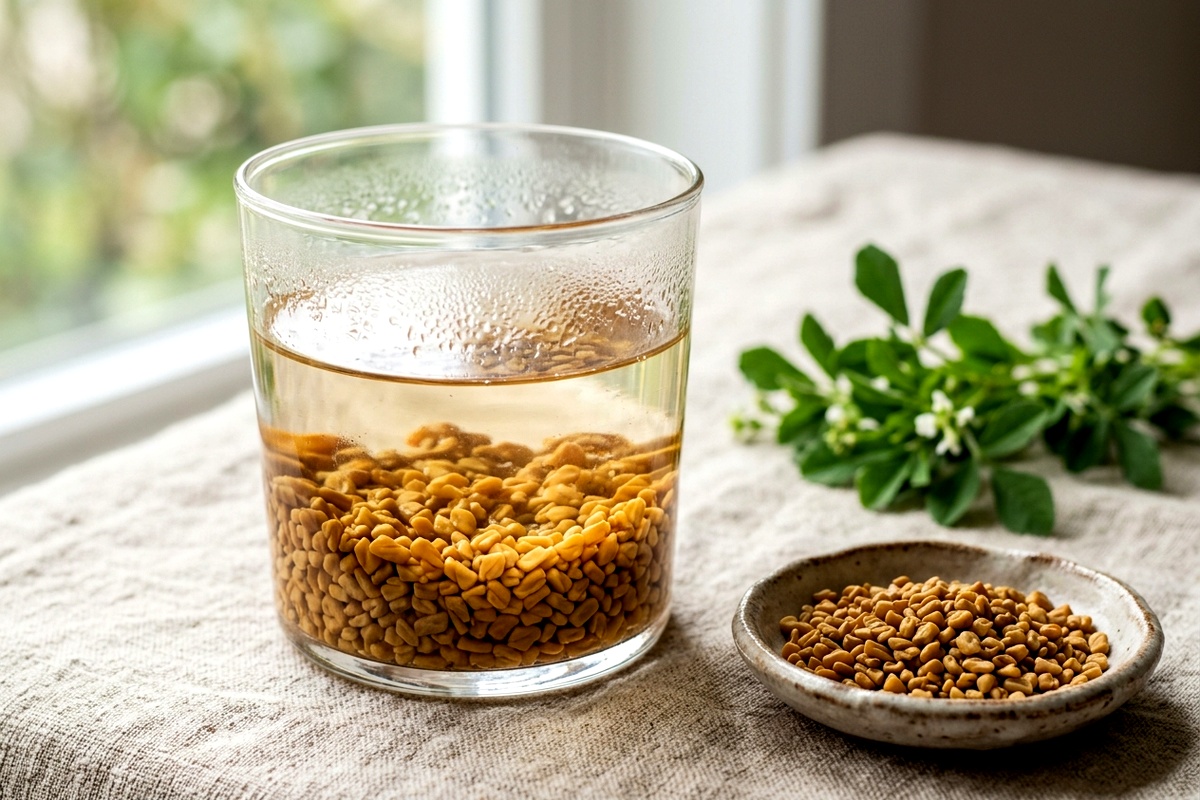
Across traditional Mediterranean, Persian, and Ayurvedic medical systems, coriander seeds (Coriandrum sativum)—known in culinary spheres as dried cilantro seeds or dhaniya—have served as humanity’s premier digestive remedy for over three millennia. Today, the practice of drinking coriander seeds water is experiencing a massive global resurgence, driving over 35,000 monthly searches from individuals seeking relief from stubborn abdominal bloating, irregular bowel motility, and metabolic sluggishness.
Coriander seeds water benefits: Drinking coriander seed water relieves bloating and gas because its active volatile oil, linalool (65–75%), acts as a smooth-muscle antispasmodic while stimulating digestive bile acids. For maximum potency, never boil the seeds; instead, lightly crack 1 tablespoon of seeds and cold-steep them overnight (8–10 hours) in water to preserve heat-sensitive monoterpenes.
However, modern kitchen preparation is often fundamentally flawed. Most people toss whole coriander seeds into boiling water on a roaring stovetop, unaware that the primary medicinal engine—the volatile monoterpenoid linalool—has a boiling evaporation point that vanishes into steam within minutes.
To harness the profound anti-inflammatory, carminative, and hypoglycemic properties of Coriandrum sativum, we must understand the chemical kinetics of its ribbed schizocarps and execute a precise cold-maceration infusion.
Above-the-Fold Extraction & Bioavailability Matrix
See how different culinary preparation methods affect the delivery of volatile monoterpenes and antioxidant polyphenols:
| Preparation & Extraction Method | Linalool Retention Efficacy | Digestive Antispasmodic Effect | Glycemic Blunting Action | Clinical Verdict |
|---|---|---|---|---|
| Swallowing Whole Dry Seeds | < 10% (Fibrous pericarp barrier) | Minimal (Seeds resist gastric breakdown) | Negligible | Ineffective Whole-Seed Transit |
| Rolling Boil (10–15 Min Stovetop) | 25% – 35% (Heavy thermal evaporation) | Mild to Moderate (Bitter tannins extract) | Moderate water-soluble flavonoids | Sub-optimal (Volatiles lost in steam) |
| Overnight Cold-Steep (Cracked Seeds) | 85% – 92% (Zero volatile destruction) | Maximum (Smooth muscle relaxation) | High (Active polyphenol preservation) | Gold Standard Clinical Infusion |
| Freshly Ground Raw Seed Powder | 70% – 80% (Rapid oxidation if stored) | Strong (Includes insoluble fiber matrix) | High lipid & carbohydrate binding | Excellent for Cooking & Curries |
1. The Linalool Motility Mechanism: How Coriander Calms the Gut
The dried coriander “seed” is anatomically a schizocarp containing two dry mericarps. When fractured, it releases a fragrant essential oil dominated by: - Linalool (65% to 75%): A tertiary monoterpene alcohol with documented analgesic, sedative, and spasmolytic activities. - α-Pinene & γ-Terpinene (5% to 10%): Monoterpenes with antimicrobial and mucosal protective actions. - Camphor & Geraniol (3% to 6%): Synergistic circulatory stimulators.
       [ Enteric Motility Mechanism of Ingested Linalool ]

 ┌────────────────────────────────────────────────────────┐
 │ Ingestion of Cold-Steeped Linalool Monoterpenes        │
 └──────────────────────────┬─────────────────────────────┘
                            ▼
 ┌────────────────────────────────────────────────────────┐
 │ 1. Voltage-Gated Calcium Channel Modulation            │
 │ (Blocks excessive Ca2+ influx into intestinal circular │
 │ smooth muscle cells, halting colonic hyper-spasms)    │
 └──────────────────────────┬─────────────────────────────┘
                            ▼
 ┌────────────────────────────────────────────────────────┐
 │ 2. Upregulation of Hepatic Bile Secretion              │
 │ (Stimulates cholesterol 7 alpha-hydroxylase (CYP7A1),  │
 │ increasing bile volume and accelerating lipid transit) │
 └──────────────────────────┬─────────────────────────────┘
                            ▼
 ┌────────────────────────────────────────────────────────┐
 │ 3. Elimination of Gas & Postprandial Distension        │
 │ (Spontaneous release of trapped intestinal gas and     │
 │ activation of Migrating Motor Complex (MMC) waves)     │
 └────────────────────────────────────────────────────────┘
When stress, food intolerances, or microbial dysbiosis trigger enteric smooth muscle contractions, you experience painful gas cramps and visible abdominal distension.
Linalool crosses the brush border and interacts directly with voltage-dependent calcium channels in the gut wall. By moderating intracellular calcium influx, it allows contracted intestinal walls to relax, allowing trapped gas bubbles to disperse naturally without painful cramping.
Simultaneously, linalool triggers the liver to synthesize more bile acids, ensuring that dietary fats are rapidly emulsified rather than fermenting in the small intestine.
Compare this with the soothing mucilage action of soaked seeds in our guide on soaking fenugreek seeds overnight.
2. Metabolic Regulation: The Insulin-Mimetic Effect
Beyond digestive comfort, clinical trials have repeatedly verified coriander’s ability to attenuate postprandial hyperglycemia.
In human and rodent endocrine models, coriander seed extracts exhibit a dual hypoglycemic mechanism: 1. Pancreatic β-Cell Stimulation: Coriander bioactives stimulate exocytosis of insulin granules from the islets of Langerhans, accelerating insulin release in response to carbohydrate ingestion. 2. Skeletal Muscle GLUT-4 Translocation: Compounds in coriander upregulate AMP-activated protein kinase (AMPK), triggering the translocation of Glucose Transporter-4 (GLUT-4) to muscle cell surfaces. This allows muscle tissue to clear glucose from the bloodstream without demanding excessive pancreatic insulin output.
For individuals with insulin resistance, prediabetes, or post-meal energy crashes, consuming coriander water 20 minutes prior to a carbohydrate-rich meal provides measurable glycemic stabilization.
3. The Thyroid Connection: Fact vs. Myth
A viral wellness trend claims that drinking coriander seed water can “cure” hypothyroidism or eliminate the need for thyroid hormone replacement medication.
What Science Verifies: - Coriander seed water does not contain thyroid hormones (T4 or T3) and cannot cure autoimmune Hashimoto’s thyroiditis or congenital thyroid failure. - The True Indirect Benefit: Coriander contains potent antioxidant polyphenols (quercetin, kaempferol, and caffeic acid derivatives) that quench free radicals around thyroid follicular cells. Furthermore, because approximately 20% of T4 to T3 conversion occurs in the liver and gastrointestinal tract, coriander’s ability to enhance hepatic bile clearance and reduce gut mucosal inflammation optimizes peripheral thyroid hormone activation.
It serves as a supportive lifestyle adjunct for metabolic health, never a substitute for prescribed endocrine care.
4. The Clinical Cold-Steeping Master Protocol
To preserve volatile monoterpenes and extract maximum bioavailable antioxidants, follow this simple 3-step home infusion:
- Step 1: The Mechanical Fracture: Take 1 tablespoon (approx. 6 to 8 grams) of whole, organic coriander seeds. Place them on a cutting board and press down gently with the flat bottom of a drinking glass or a mortar and pestle. Crack the seeds in half without pulverizing them into dust; this exposes the inner oil channels while keeping hulls easy to strain.
- Step 2: The Cold Water Maceration: Place the cracked seeds into a glass jar or carafe containing 10 to 12 ounces of room-temperature filtered water. Cover with a lid and let steep on your kitchen counter for 8 to 10 hours overnight. As the seeds soak, the water will turn a soft golden-amber hue.
- Step 3: Straining & Morning Ingestion: In the morning, strain the liquid through a fine-mesh sieve into a glass. Ingest slowly on an empty stomach, 20 to 30 minutes before breakfast. If you prefer warm beverages, warm the strained water gently in a saucepan until lukewarm (under 110°F / 43°C)—never boil.
5. Integrating Whole Seeds into Your Nutritional Matrix
While coriander seed water provides gentle daily tonification, pairing it with nutrient-dense functional seeds ensures a complete balance of dietary fiber, omega fatty acids, and essential trace minerals.
You can log coriander seeds in our 30-Plants Microbiome Diversity Tracker, calculate your overall daily seed micronutrient profile with our Daily Seed Nutrition & Protein Stacker, and learn the essential hydration principles of mucilaginous seeds in never eat chia seeds dry.
Frequently Asked Questions About Coriander Seeds Water
Drinking coriander seed water delivers volatile monoterpenes—principally linalool (65–75%)—that relax intestinal smooth muscle spasms, relieve gas and abdominal bloating, stimulate hepatic bile acid secretion to speed fat digestion, and improve insulin sensitivity by promoting cellular GLUT-4 glucose uptake.
Cold-soaking overnight is far superior to boiling. Linalool and alpha-pinene are highly volatile monoterpenoids that evaporate rapidly at high temperatures; boiling coriander seeds in open pots evaporates over 60% of these therapeutic compounds. Cracking the seeds and soaking them in room-temperature water for 8 to 10 hours extracts maximum aromatics without thermal degradation.
While coriander seed water cannot replace thyroid hormone replacement medication, its polyphenols and linalool support thyroid physiology indirectly. They reduce oxidative inflammation surrounding the thyroid gland and optimize hepatic liver function, which is the primary anatomical site where inactive thyroxine (T4) is converted into active triiodothyronine (T3).
The clinical recommendation is to drink 8 ounces of strained coriander seed water first thing in the morning on an empty stomach, approximately 20 to 30 minutes before your first meal. This stimulates gastrointestinal migrating motor complex (MMC) contractions, promotes bile release, and pre-conditions insulin pathways before carbohydrate ingestion.