
Soaking Fenugreek Seeds Overnight: The 4-Hydroxyisoleucine Blood Sugar & Free Testosterone Protocol
A clinical biochemical analysis of Trigonella foenum-graecum: dissecting 4-hydroxyisoleucine insulin sensitization, furostanolic saponins for free testosterone elevation, galactomannan gel kinetics, and the morning methi water protocol.
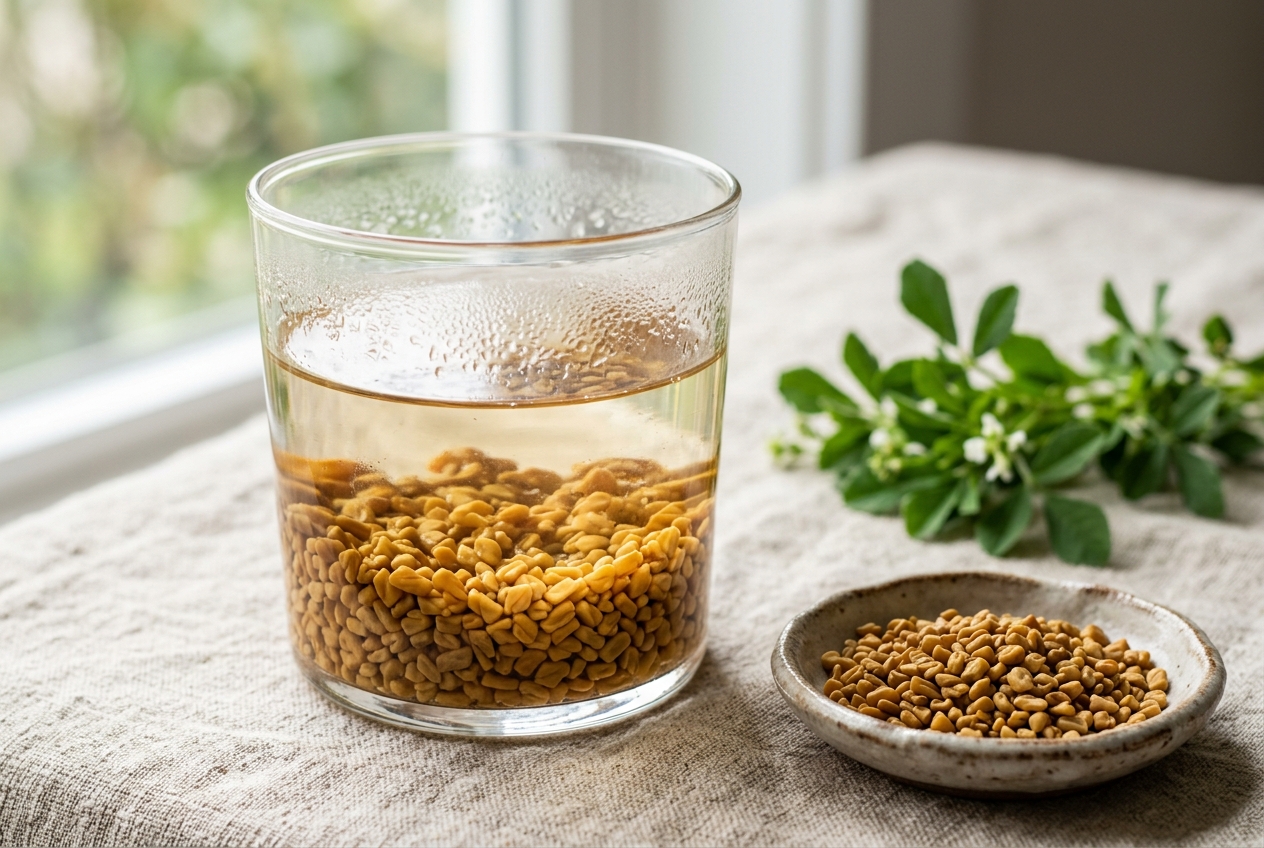
In the rich pharmacopeia of Ayurvedic and Mediterranean botanical medicine, few functional seeds possess the clinical versatility of fenugreek (Trigonella foenum-graecum), universally known across South Asia as Methi.
Fenugreek seeds soaked in water overnight: Soaking 1 to 2 teaspoons of fenugreek seeds in water for 8 to 12 hours softens their dense galactomannan fiber and mobilizes two primary therapeutic phytochemicals: 4-hydroxyisoleucine (which directly sensitizes pancreatic beta-cells to blunt blood glucose surges) and furostanolic saponins (which inhibit aromatase to elevate free testosterone in men). Drink the infused water and chew the softened seeds on an empty stomach each morning.
While casual tea drinkers brew fenugreek for digestion, modern endocrinology has identified Trigonella foenum-graecum as a clinical powerhouse for metabolic syndrome, insulin resistance, and endocrine hormone modulation.
Understanding why overnight aqueous hydration is non-negotiable allows you to harness its glycemic and hormonal potential without bitter palatability barriers.
Above-the-Fold Biochemical & Clinical Matrix
Review how dry unsoaked fenugreek seeds compare against overnight-soaked seeds and standardized extracts across key metabolic parameters:
| Preparation Protocol | 4-Hydroxyisoleucine Release | Galactomannan Viscosity | Digestive Tolerance | Glycemic Blunting Speed | Hormonal Efficacy |
|---|---|---|---|---|---|
| Raw Dry Unsoaked Seeds | Minimal (Locked in seed matrix) | Hard, unhydrated kernel | Poor (Severe gastric friction & bitter) | Delayed / Inefficient | Negligible systemic uptake |
| Overnight Aqueous Soak (Gold Standard) Clinical Kitchen Standard | Rapidly Bioavailable in Infused Water | Softened, expanded hydrogel | Excellent (Gentle on stomach lining) | Immediate postprandial control | High free saponin absorption |
| Boiled / Decoction Tea | High in liquid fraction | Moderate (Heat thins gel) | Good | Moderate (Partial saponin degradation) | Moderate (Heat-sensitive sterols reduced) |
| Standardized Furostanolic Extract (500mg) Maximum Testosterone | Concentrated fraction | N/A (Capsule) | High | Moderate | Highest Free Testosterone Elevation |
1. The Glycemic Revolution: 4-Hydroxyisoleucine and Galactomannan
Unlike typical culinary spices, fenugreek contains an exceptionally rare non-proteinogenic branched-chain amino acid found almost exclusively in Trigonella foenum-graecum: 4-Hydroxyisoleucine (4-OH-Ile).
[ Ingestion of Soaked Fenugreek Water ]
                 │
                 ▼
[ 4-Hydroxyisoleucine Reaches Pancreatic Islets ]
                 │
                 ▼
[ Glucose-Dependent Stimulation of Beta-Cells ] ──► Controlled Insulin Secretion
                 │
                 ▼
[ Upregulation of GLUT4 Transporters in Muscle ] ──► Blood Glucose Normalization
(Zero Hypoglycemic Risk in Normal Fasting States)
The Glucose-Dependent Insulin Secretagogue
- Zero Hypoglycemia Danger: Unlike pharmaceutical sulfonylureas that forcibly stimulate pancreatic insulin regardless of blood sugar levels (frequently triggering dangerous hypoglycemia), 4-hydroxyisoleucine is strictly glucose-dependent. It only triggers insulin release in the presence of elevated circulating blood glucose concentrations (> 5.5 mmol/L).
- Insulin Receptor Phosphorylation: Clinical trials demonstrate that 4-OH-Ile directly activates the insulin receptor substrate 1 (IRS-1) and PI3K pathways in skeletal muscle tissue, enhancing GLUT4 glucose transporter translocation to muscle cell membranes.
The 50% Soluble Mucilage Sponge
In addition to 4-OH-Ile, over 45% to 50% of the fenugreek seed consists of galactomannan, a complex hydrophilic heteropolysaccharide composed of a (1→4)-linked beta-D-mannopyranosyl backbone with alpha-D-galactopyranosyl residues. When soaked overnight: * The Viscous Intestinal Barrier: Galactomannan swells into a slippery gel that physically retards the gastric emptying rate and inhibits intestinal brush-border alpha-glucosidase and sucrase enzymes. * Clinical HbA1c Reductions: Randomized clinical trials in patients with Type 2 diabetes demonstrate that 10 grams of soaked fenugreek seeds daily produced statistically significant reductions in fasting blood glucose (-25%) and glycosylated hemoglobin (HbA1c -1.2%) within 8 weeks.
2. Hormonal Modulation: Furostanolic Saponins & Testosterone in Men
In clinical sports nutrition and endocrinology, fenugreek seed extract is one of the very few botanicals with multiple randomized, double-blind trials demonstrating significant elevations in free bioavailable testosterone.
🌱 Editor's Recommended Organic Fenugreek Formulations
Clinical Grade- 100% Whole, certified organic Trigonella foenum-graecum
- Golden-amber heirloom seeds with potent volatile aroma
- Ideal germination and soaking kinetics for morning methi water
- Non-irradiated, non-ETO, tested for heavy metal purity
- Patented single-ingredient extract standardized to 20% Protodioscin
- Clinically shown in published trials to elevate free testosterone
- Supports lean muscle synthesis, recovery, and androgenic vigor
- Pharmaceutical grade, zero proprietary blends or synthetic binders
The Biochemical Mechanism of Testosterone Elevation:
The active phytochemicals responsible for androgenic support are furostanolic saponins, particularly protodioscin:
Protodioscin → Inhibits Aromatase (CYP19A1) + Inhibits 5α-Reductase
- Aromatase Inhibition: Protodioscin competitively inhibits the peripheral cytochrome P450 enzyme aromatase (CYP19A1), the enzyme responsible for converting free testosterone into estradiol. By suppressing this conversion pathway, a higher percentage of testosterone remains in active, circulating androgenic form.
- Sex Hormone-Binding Globulin (SHBG) Dissociation: Fenugreek saponins displace testosterone from SHBG, increasing the biologically active free testosterone fraction—the only fraction capable of entering muscle cell nuclei to stimulate protein accretion.
- Clinical Study Confirmation: A landmark 2017 double-blind study on 50 male subjects (aged 35–65) taking 500 mg daily of standardized fenugreek extract demonstrated a 46% increase in free testosterone levels in 90% of participants, alongside improvements in sperm morphology and mental alertness.
3. The 3-Step Morning Fenugreek Soaking Protocol
To experience the metabolic and hormonal benefits of fenugreek without suffering from unpalatable bitterness, follow this clinical preparation method:
- The 8-to-12 Hour Window: Never rush the soak. A quick 1-hour soak leaves the galactomannan core rock-hard. Seeds must absorb water until they double in volume and turn pale amber-tan.
- Room Temperature Aqueous Medium: Use filtered, ambient room-temperature water. Extreme boiling water degrades heat-sensitive furostanolic saponins.
- Empty Stomach Cadence: Consume 15 to 30 minutes before your morning meal to establish the protective viscous mucosal coating in the stomach.
- Note on Maple Syrup Aroma: Fenugreek contains sotolon, an intensely aromatic lactone. Daily consumption frequently imparts a subtle, harmless sweet maple scent to sweat and urine.
Step-by-Step Instructions:
- Evening Measure: Place 1 tablespoon (approx. 10–12 grams) of whole organic fenugreek seeds into a clean 8-ounce glass tumbler.
- Pour & Submerge: Cover with 1 cup of filtered room-temperature water. Stir gently and leave uncovered or loosely capped on your kitchen counter overnight (10 to 12 hours).
- Morning Consumption: Upon waking, drink the amber-tinted infusion on an empty stomach. Using a small spoon, scoop out the softened, swollen seeds and chew them thoroughly.
4. Synergistic Seed Stacking for Metabolic Longevity
Fenugreek seeds (Fabaceae) belong to the legume and pulse family, bringing unique prebiotic galactooligosaccharides to your weekly plant diversity checklist.
You can log your daily fenugreek in our zero-server 30-Plants Microbiome Diversity Tracker and discover the broader health implications of dietary species count in our 30-plants per week microbiome protocol.
To balance fenugreek’s glycemic blunting with complete proteins and high bioavailable zinc, stack your meals with pumpkin seeds vs chia nutrients or model your complete amino acid yields in our Daily Seed Nutrition & Protein Stacker. You can also explore another potent medicinal seed extract in our clinical guide on black cumin seed oil and thymoquinone.
Frequently Asked Questions About Soaked Fenugreek Seeds
Soaking hard angular fenugreek seeds (Trigonella foenum-graecum) in water for 8 to 12 hours hydrates their outer seed coat and softens their dense galactomannan soluble fiber core. This overnight hydration leaches water-soluble bioactive compounds—specifically the non-proteinogenic amino acid 4-hydroxyisoleucine and furostanolic saponins—into the liquid, significantly improving gastrointestinal absorption while muting harsh, bitter alkaloids.
Fenugreek operates through a dual biochemical mechanism: its high-viscosity galactomannan fiber (approx. 50% of the seed) forms a physical hydrogel that delays carbohydrate enzymatic hydrolysis in the intestine, while its unique compound 4-hydroxyisoleucine directly stimulates glucose-dependent insulin secretion from pancreatic beta-cells without causing hypoglycemic crashes.
Yes, multiple randomized controlled clinical trials demonstrate that standardized fenugreek seed extract (rich in furostanolic saponins, specifically protodioscin) significantly elevates total and bioavailable free testosterone by inhibiting aromatase and 5-alpha reductase degradation, improving libido and muscular strength over 8 to 12 weeks.
Yes, for maximum metabolic and digestive benefit, drink the amber-infused soaking water first thing in the morning on an empty stomach, and then thoroughly chew the softened seeds. The liquid delivers rapidly absorbed soluble saponins, while the chewed seeds provide viscous prebiotic bulk that feeds short-chain fatty acid-producing gut microbiota.