
How to Eat Milk Thistle Seeds: Why Whole Seeds Pass Undigested and the Proven Bioavailability Protocol
A molecular hepatoprotective guide to Silybum marianum achenes: dissecting the hard pericarp barrier, silymarin lipophilicity, and the exact grinding-plus-lipid protocol required for true hepatic glutathione regeneration.
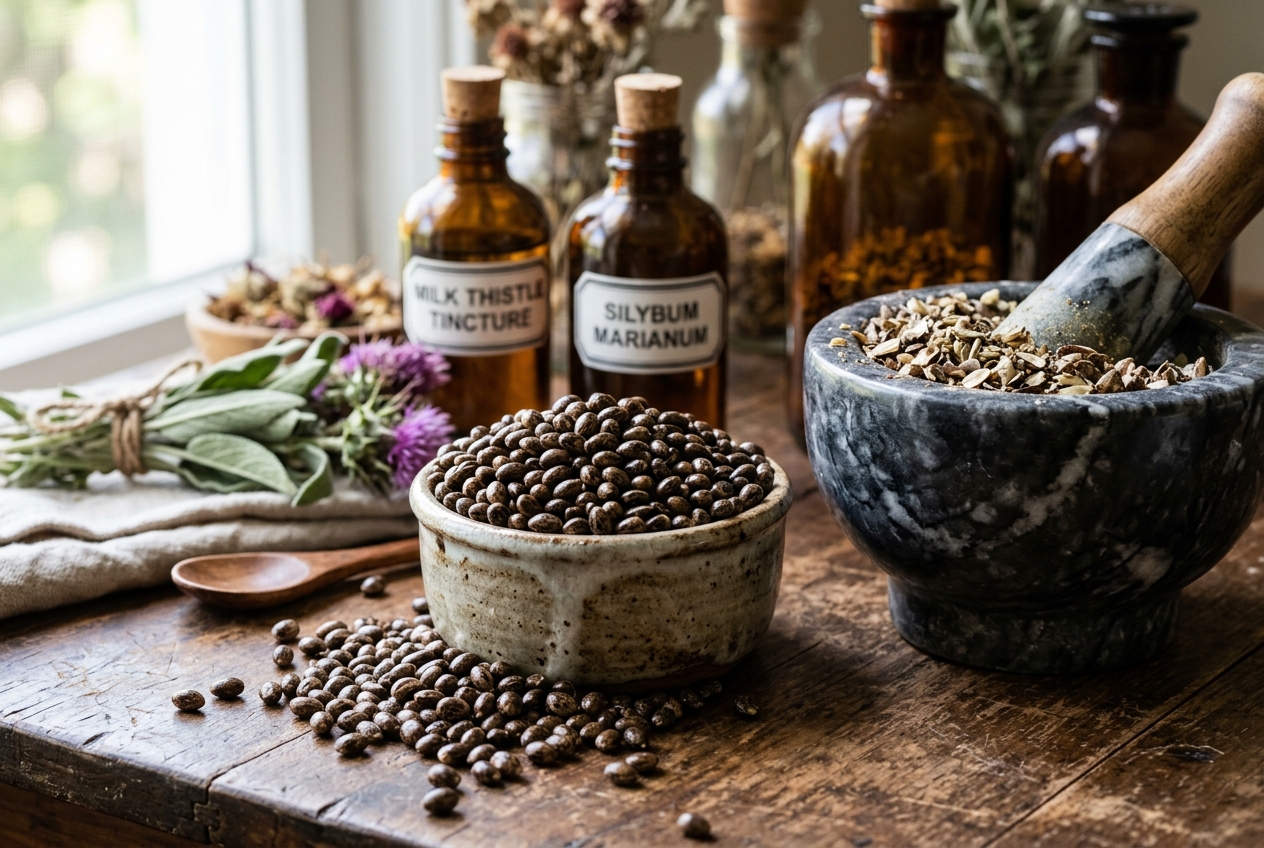
Milk thistle (Silybum marianum) is celebrated across modern phytotherapy as the premier botanical guardian of hepatic tissue. For over two millennia, herbalists and clinical researchers have utilized its glossy, mottled achenes (seeds) to shield liver cells against toxic insults, oxidative stress, and metabolic inflammation.
How to eat milk thistle seeds: Eating whole milk thistle seeds is ineffective because their rock-hard, lignified seed coats pass through the gastrointestinal tract completely intact. To unlock active silymarin, you must cold-mill the seeds into a fine powder immediately before eating, and always ingest them with a dietary fat source (avocado, olive oil, or yogurt) because silymarin is lipophilic and requires lipid micelles for intestinal absorption.
However, the overwhelming majority of people consuming raw milk thistle seeds receive virtually zero therapeutic benefit. They purchase whole bulk seeds, swallow them by the spoonful, or pour boiling water over uncrushed seeds for a quick three-minute steep. In both scenarios, the body absorbs virtually zero active medicine.
To understand why this happens—and how to extract the maximum hepatoprotective power from every single seed—we must examine the microscopic anatomy of the achene and the biophysical solubility of its bioactive crown jewel: silymarin.
Above-the-Fold Bioavailability & Intake Method Matrix
Before adopting a daily regimen, see how raw intake methods compare against standardized phytomedicine across critical physiological markers:
| Intake Method & Preparation | Silymarin Bioaccessibility | Digestive Tolerance | Hepatoprotective Delivery | Clinical Verdict |
|---|---|---|---|---|
| Swallowing Whole Raw Seeds | < 2% (Pericarp impenetrable) | High GI transit, zero absorption | Negligible (Excreted intact in stool) | Complete Inefficacy |
| Casual 3-Min Hot Tea Steep | < 5% (Hydrophobic barrier) | Pleasant bitter taste, zero lipids | Trace water-soluble polyphenols only | Sub-therapeutic |
| Freshly Cold-Milled + Dietary Fat | 75% – 85% (Optimal Micellization) | Gentle prebiotic fiber bulk | High silybin delivery + native vitamin E & minerals | Gold Standard Whole-Food Protocol |
| 20-Minute Simmered Decoction | 40% – 50% (Thermal wall breakdown) | Liquid hydration, soothing astringency | Moderate flavonolignan extraction | Effective Traditional Method |
| Standardized 80% Extract Capsule | 80% – 90% (Pre-isolated silybin) | Requires liver first-pass metabolism | High isolated silymarin, zero whole-seed fiber | Potent Pharmaceutical Alternative |
1. The Anatomy of an Achene: Why Whole Seeds Pass Undigested
Like whole flaxseeds (which we detailed in our clinical guide on why whole flaxseeds pass through you unabsorbed), milk thistle achenes are biological survival capsules designed by nature to resist the acidic digestive juices of birds, rodents, and grazing herbivores.
       [ Microscopic Anatomy of a Milk Thistle Achene ]

 ┌────────────────────────────────────────────────────────┐
 │ 1. LIGNIFIED PERICARP (Rock-hard chitinous armor)     │ <- Hydrochloric acid CANNOT penetrate
 ├────────────────────────────────────────────────────────┤
 │ 2. ENDOSPERM / ALEYRONE (Rich in silymarin & lipids)  │ <- Therapeutic target (trapped inside)
 ├────────────────────────────────────────────────────────┤
 │ 3. EMBRYONIC AXIS (Vitamin E, sterols, linoleic acid) │ <- Micronutrient reservoir
 └────────────────────────────────────────────────────────┘
The outer shell (pericarp) consists of densely packed sclerenchyma cells bonded with cross-linked lignin and structural cellulose.
When you swallow whole milk thistle seeds: 1. Hydrochloric Acid Fails: Human gastric acid (pH 1.5 to 2.5) lacks the cellulase enzymes required to dissolve cross-linked lignin. 2. Pancreatic Enzymes Rebound: Proteases and lipases in the duodenum cannot contact the underlying lipid-rich endosperm. 3. Zero Active Extraction: The seeds travel through your twenty-two feet of intestines undisturbed, exiting in your stool without donating a single microgram of silymarin to your portal circulation.
2. The Solubility Conundrum: Silymarin is Lipophilic, Not Water-Soluble
Even when people grind milk thistle seeds, they frequently make a second physiological mistake: pouring boiling water over the powder and drinking the liquid while throwing away the grounds, expecting a potent “liver cleanse.”
The active therapeutic engine of Silybum marianum is silymarin—a specialized polyphenolic complex composed primarily of six flavonolignans: - Silybin A and Silybin B (the most biologically active components, comprising 50% to 70% of silymarin) - Isosilybin A and Isosilybin B - Silychristin - Silydianin
Silybin Chemical Characteristic:
- Water Solubility: Extremely Poor (~0.04 to 0.4 mg/mL at 25°C)
- Lipid Solubility: High (freely soluble in lipids, ethanol, and bile salt micelles)
Because flavonolignans are deeply hydrophobic, boiling water extracts less than 5% of the total silymarin content during standard brewing. To extract the flavonolignans naturally, you require thermal cellular disruption (decoction) or intestinal micelle formation via dietary lipids.
3. How Silymarin Actually Heals Hepatic Tissue: The 3 Mechanisms
When absorbed properly through the intestinal mucosa, silybin enters the mesenteric circulation and travels directly to the liver via the hepatic portal vein. Here, it triggers three profound molecular cascades:
Mechanism A: Upregulation of Cellular Glutathione (GSH)
Glutathione is the body’s master endogenous antioxidant, essential for Phase II hepatic detoxification. Exposure to alcohol, pharmaceutical metabolites (such as acetaminophen), environmental toxins, and industrial seed oils rapidly depletes hepatocyte glutathione reserves. Silymarin upregulates the Nrf2-ARE (Antioxidant Response Element) gene pathway, accelerating the enzymatic transcription of glutamate-cysteine ligase and increasing intrahepatic glutathione concentrations by up to 35% to 50% in clinical models.
Mechanism B: Hepatocyte Cell Membrane Stabilization
Silybin incorporates directly into the phospholipid bilayer of hepatic plasma membranes. By doing so, it competitively blocks transport receptors and prevents xenobiotics, mycotoxins (such as Amanita phalloides death cap toxins), and lipid peroxidative radicals from penetrating the cell interior.
Mechanism C: Ribosomal RNA Transcription & Tissue Regeneration
Unlike synthetic compounds that solely reduce inflammation, silymarin stimulates nucleolar polymerase I. This accelerates the transcription of ribosomal RNA (rRNA), sparking protein synthesis and promoting the structural regeneration of damaged hepatocyte architecture without promoting pathological fibrotic scarring.
4. The 3-Step Bioavailability Protocol: How to Eat Milk Thistle Seeds
To capture both the potent flavonolignans and the rich native matrix of linoleic acid, vitamin E, and dietary fiber, execute this step-by-step home protocol:
- Step 1: Fresh Cold-Milling: Measure 1 to 2 teaspoons (approx. 5 to 7 grams) of organic, whole milk thistle seeds. Place them into a dedicated high-speed coffee/spice grinder and pulse for 15 to 20 seconds until reduced to a coarse, oily powder. *Never purchase pre-ground milk thistle seeds; their polyunsaturated lipids oxidize within 48 hours of air exposure.*
- Step 2: Combine with Dietary Lipids: Stir the freshly ground powder directly into a food matrix containing healthy fats: full-fat organic yogurt, coconut kefir, overnight oats with chia and hemp seeds, or folded into an avocado smash. The fats stimulate cholecystokinin (CCK) secretion, triggering gallbladder bile release that envelops the hydrophobic silybin in absorbable micelles.
- Step 3: Immediate Ingestion: Consume within 10 minutes of grinding to prevent air oxidation of the delicate botanical lipids. Take once or twice daily with your primary meal.
Alternative Protocol: The 20-Minute Simmered Herbal Decoction
If you prefer consuming milk thistle as a warm therapeutic tonic: 1. Crush 1 tablespoon of whole seeds coarsely in a mortar and pestle to crack open the hulls. 2. Add the crushed seeds to 16 ounces of cold filtered water in a small stainless-steel saucepan. 3. Bring to a gentle boil, then reduce heat to low, cover with a tight-fitting lid, and simmer for 15 to 20 minutes. 4. Strain the liquid into a mug, stir in 1/2 teaspoon of cold-pressed virgin coconut oil or heavy cream to provide a fat carrier, and drink warm.
5. Whole Seeds vs Standardized Extracts: Which Should You Choose?
A common question among natural health enthusiasts is whether eating ground seeds matches taking a standardized capsule containing 80% silymarin.
- Ground Whole Seeds: Provide the full botanical synergy: active silymarin, 25% prebiotic dietary fiber, plant phytosterols, squalene, and protective tocotrienols (vitamin E). They deliver steady, continuous liver nourishment while optimizing colonic health.
- Standardized Extracts (80% Silymarin): Ideal for acute therapeutic interventions (such as elevated liver enzymes, non-alcoholic fatty liver protocols, or recovery from hepatotoxic drug therapy) where concentrated doses (200 to 420 mg of pure silybin daily) are clinically indicated.
Pairing both—consuming ground seeds in your morning smoothie alongside a standardized extract during times of heavy metabolic stress—provides both structural fiber and concentrated flavonolignan protection.
Discover how milk thistle synergizes with other master antioxidant seeds in our guide to black cumin seed oil and thymoquinone potency and our cellular detoxification review of broccoli sprouts and sulforaphane.
6. Tracking Botanical Diversity & Nutrient Synergy
Adding freshly milled milk thistle seeds to your daily ritual introduces a resilient wild botanical family (Asteraceae) that dramatically bolsters your weekly plant score.
You can log milk thistle seeds in our 30-Plants Microbiome Diversity Tracker, calculate your overall daily seed micronutrient profile with our Daily Seed Nutrition & Protein Stacker, and learn how living seed oils protect cell membranes in the seed oil spectrum: cold-pressed vs industrial refining.
Frequently Asked Questions About Milk Thistle Seeds
No. Whole milk thistle seeds feature an extremely dense, lignified pericarp (outer hull) that human gastric acid and pancreatic digestive enzymes cannot break down. Swallowing whole seeds results in virtually 100% passing through the digestive tract unabsorbed, delivering zero active silymarin to your liver. They must be crushed or freshly cold-milled before consumption.
A standard clinical maintenance dose is 1 to 2 teaspoons (approx. 3 to 7 grams) of freshly ground milk thistle seeds daily. For enhanced hepatic support, this can be titrated up to 1 tablespoon (approx. 10 grams) divided across two meals, always consumed alongside dietary fats like extra virgin olive oil, yogurt, or avocado to facilitate silymarin absorption.
Standard hot water tea steeping extracts only negligible amounts of silymarin because the active flavonolignans (silybin A & B) are hydrophobic (poorly water-soluble). To extract therapeutic silymarin into liquid, you must perform a prolonged decoction: gently simmering crushed seeds in water for 15 to 20 minutes, preferably adding a small fat source or consuming whole freshly milled powder instead.
Clinical trials measuring hepatic enzymes (ALT and AST) demonstrate measurable biomarker improvement within 4 to 8 weeks of consistent, bioavailable silymarin intake. Acute antioxidant upregulation—including cellular glutathione synthesis via the Nrf2 pathway—begins within several hours of lipid-assisted intestinal absorption.