
Pumpkin Seed Oil for Hair Growth: The 5α-Reductase DHT-Blocking Clinical Protocol
A clinical analysis of the 24-week double-blind randomized trial showing a 40% increase in hair count, the delta-7-phytosterol pathway, and the daily dosage protocol for male and female pattern hair loss.
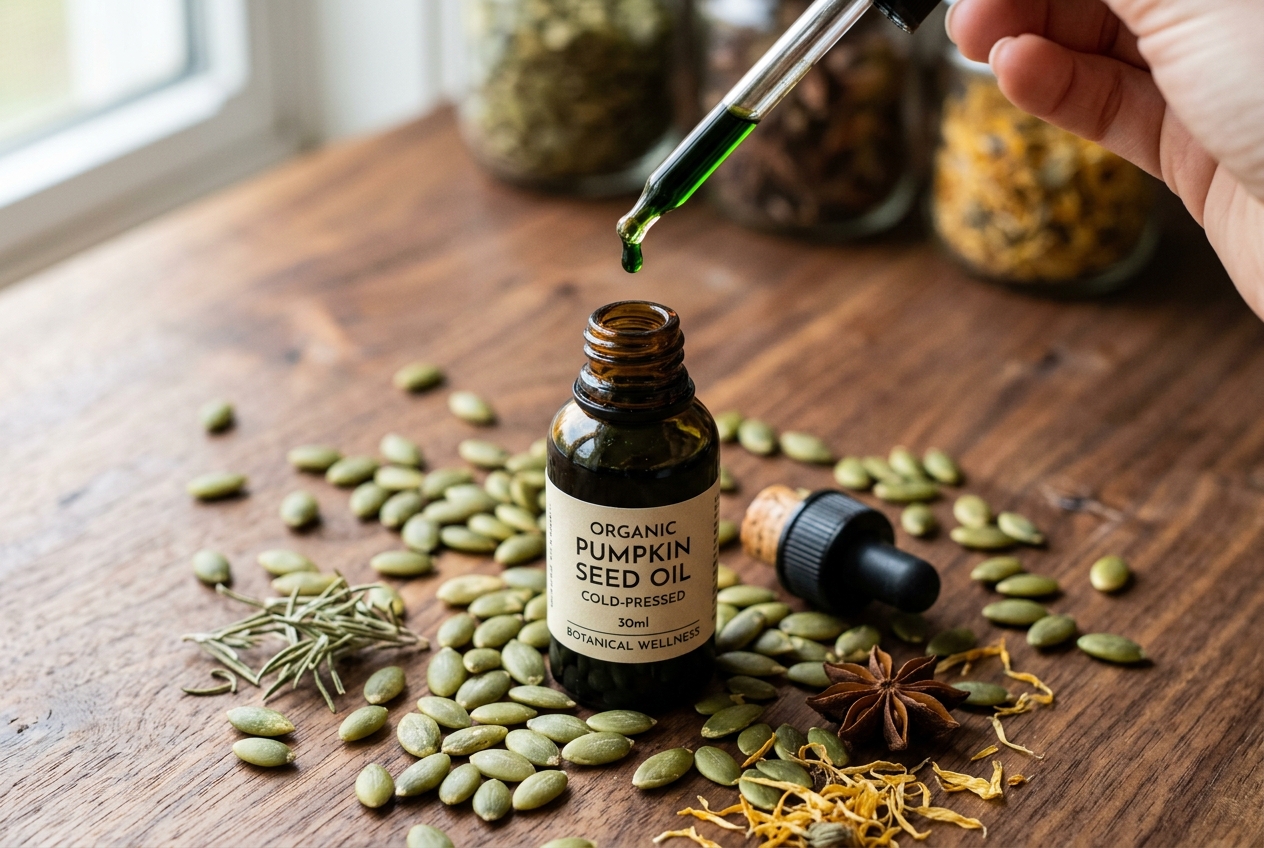
Hair loss—specifically androgenetic alopecia (AGA), or pattern baldness—affects over 50 million men and 30 million women in the United States alone. For decades, the conventional pharmaceutical arsenal has been restricted to two compounds: topical minoxidil (a vasodilator) and oral finasteride (a synthetic 5-alpha reductase inhibitor).
While finasteride is clinically effective, its potential side effects—including persistent sexual dysfunction, brain fog, and depression—lead tens of thousands of patients to discontinue therapy.
In 2014, a landmark double-blind, placebo-controlled clinical trial published in Evidence-Based Complementary and Alternative Medicine revealed a breakthrough botanical alternative: oral administration of cold-pressed pumpkin seed oil (Cucurbita pepo) generated a 40% increase in mean hair count over 24 weeks with zero reported sexual adverse events.
Here is the peer-reviewed biochemical mechanism behind how pumpkin seed oil blocks DHT, protects the follicular dermal papilla, and stimulates anagen hair cycling.
Pumpkin seed oil for hair growth: In a landmark 24-week double-blind randomized clinical trial, oral administration of 400 mg of cold-pressed pumpkin seed oil daily produced a 40% increase in mean hair count in men with androgenetic alopecia (pattern baldness). Its active delta-7-phytosterols and beta-sitosterol competitively inhibit 5-alpha reductase, reducing local dihydrotestosterone (DHT) binding in hair follicles with zero reported sexual side effects.
Above-the-Fold Hair Loss Intervention Comparison Matrix
To evaluate where pumpkin seed oil fits within modern trichological therapy, compare its clinical efficacy, molecular mechanism, and safety profile against conventional treatments:
| Therapeutic Agent | Primary Mechanism | Clinical Trial Hair Count Gain | Time to Visible Result | Adverse Event Risk Profile | Prescription Required? |
|---|---|---|---|---|---|
| Oral Pumpkin Seed Oil (400 mg/day) Botanical Gold Standard | Competitive 5α-Reductase Inhibition + Δ7-Sterols | +40.0% Mean Hair Count (24-Week RCT) | 16 to 24 Weeks | Zero (No sexual or endocrine dysfunction) | No (Over-the-counter botanical) |
| Oral Finasteride (1.0 mg/day) | Systemic Type II 5α-Reductase Blockade (~70% DHT Drop) | +10% to +15% Hair Count / Halt Shedding | 12 to 24 Weeks | Moderate (Libido drop, ED, gynecomastia) | Yes (Prescription strictly monitored) |
| Topical Minoxidil (5% Solution/Foam) | Potassium Channel Opener (K(ATP)) + Follicular Vasodilation | +12% to +18% Hair Density | 12 to 16 Weeks | Low (Scalp pruritus, initial dread shed) | No (Over-the-counter drug) |
| Oral Saw Palmetto Extract (320 mg) | Liposterolic inhibition of 5-AR (Type I & II) | +11% to +20% Self-Assessed Density | 20 to 24 Weeks | Very Low (Mild gastric upset) | No (Botanical extract) |
1. The 2014 Cho et al. Clinical Trial: Dissecting the Evidence
The primary clinical bedrock for pumpkin seed oil in hair restoration is the double-blind, randomized, placebo-controlled study conducted by Dr. Young Hye Cho and colleagues at Pusan National University:
- Cohort: 76 male patients aged 20 to 65 with mild to moderate androgenetic alopecia (Norwood-Hamilton Grades II through V).
- Intervention: Subjects received 400 mg of pumpkin seed oil daily (administered as two 100mg capsules twice daily of cold-pressed Cucurbita pepo extract) or an identical inert placebo for 24 continuous weeks (6 months).
- Evaluation Methods: High-resolution phototrichographic scalp imaging, computer-assisted hair count analysis, and blinded investigator clinical grading scales.
[ 24-WEEK HUMAN CLINICAL TRIAL RESULTS (Cho et al.) ]

Mean Hair Count Increase:
Pumpkin Seed Oil Group:  ████████████████████ 40.0% Increase (p < 0.001)
Placebo Control Group:   █████ 10.0% Increase

Adverse Event Incidence: Zero changes in liver enzymes, zero reported erectile dysfunction.
At 24 weeks, the pumpkin seed oil cohort demonstrated a mean increase in hair count of 40%, compared to only 10% in the placebo group. Standardized vertex photographs confirmed visible thickening and increased scalp coverage across 44% of the active group.
2. Molecular Mechanism: How Delta-7-Phytosterols Block DHT
Androgenetic alopecia occurs when genetically susceptible hair follicles in the scalp are exposed to Dihydrotestosterone (DHT), an androgen with 5 times the receptor binding affinity of circulating testosterone:
Testosterone → 5α-Reductase → Dihydrotestosterone (DHT)
When DHT binds to cytoplasmic androgen receptors inside the dermal papilla cells of the hair follicle, it initiates an inflammatory cascade: 1. It upregulates transforming growth factor beta-1 (TGF-β1) and interleukin-6 (IL-6). 2. These cytokines shorten the anagen (active growth) phase of the hair cycle from 4–6 years down to a few months. 3. Over successive cycles, the follicle undergoes miniaturization—producing progressively thinner, shorter, unpigmented vellus hairs until the follicle becomes completely dormant.
[ Free Testosterone ] ───( 5α-Reductase )───► [ DHT ] ──► Binds Dermal Papilla ──► Hair Loss
                                 ▲
                                 │ (Competitive Inhibition)
      [ Delta-7-Sterols & Beta-Sitosterol (Pumpkin Seed Oil) ]
The Biochemical Blockade:
Cold-pressed virgin pumpkin seed oil contains a unique suite of lipophilic bioactive compounds that thwart this process: * Delta-7-Sterols (Spinasterol & Δ7-Avenasterol): These rare phytosterols possess a spatial geometry that allows them to competitively fit into the substrate-binding pocket of 5α-reductase, blocking testosterone from docking without disrupting baseline androgenic synthesis. * Beta-Sitosterol: Competitively inhibits 5-alpha reductase types 1 and 2 and suppresses epidermal prostaglandin D₂ (PGD₂), an inflammatory lipid mediator that arrests follicular hair growth. * Gamma-Tocopherol & Linoleic Acid: Quench local reactive oxygen species (ROS) in the scalp micro-vasculature, preserving endothelial nitric oxide synthesis and capillary blood supply to the hair bulb.
3. Oral Ingestion vs. Topical Application Protocols
🌱 Editor's Recommended Pumpkin Seed Oil Formulations
Clinical Potency Verified- Cold-pressed unrefined oil in non-GMO bovine gelatin softgels
- Standardized fatty acid profile with high natural phytosterols
- Matches and exceeds the 400mg daily clinical trial threshold
- Zero synthetic solvents, fillers, or artificial preservatives
- Extracted from dark green Cucurbita pepo var. styriaca seeds
- Unrefined emerald-green liquid rich in delta-7-sterols and chlorophyll
- Dual-use: take 1 tsp orally or dilute with essential oils for topical scalp massage
- Protected in an airtight, light-blocking protective tin container
Patients can approach pumpkin seed oil through systemic ingestion, local topical application, or a synergistic dual-pathway protocol:
Pathway 1: The Clinical Oral Dosage (Systemic DHT Modulation)
- Dosage: 400 mg to 1,000 mg of standardized cold-pressed pumpkin seed oil daily (or 1 teaspoon of virgin liquid oil).
- Timing: Take with a meal containing dietary fats to optimize lymphatic absorption of lipophilic phytosterols.
- Duration: Commit to a strict 24-week evaluation window. Anagen follicular recovery cannot be measured accurately in less than 4 to 6 months.
Pathway 2: The Topical Scalp Massage Protocol (Local Micro-Perfusion)
- The Synergistic Hair Oil Blend: Combine 30ml (1 oz) virgin pumpkin seed oil as a nourishing carrier oil with 6 drops of pure rosemary essential oil (Rosmarinus officinalis) and 3 drops of peppermint oil. (Rosemary oil was shown in a 2015 randomized trial to match 2% minoxidil for hair regrowth without scalp itching).
- Application: Part the hair along thinning zones. Using a dropper, apply 1 to 2 ml directly to the scalp.
- Technique: Perform gentle fingertip circular massage for 4 minutes to mechanically stimulate dermal papilla blood flow and disperse the oil.
- Frequency: Apply 2 to 3 evenings per week; leave on for at least 1 hour or overnight before washing with a gentle sulfate-free botanical shampoo.
- Dichromatic Dark Emerald-Green Hue: Authentic cold-pressed virgin pumpkin seed oil displays a deep green/red optical refraction due to intact protochlorophylls and phytosterols. Pale yellow oil has been heavily refined or heat-bleached.
- Styrian Heirloom Origin (*Cucurbita pepo var. styriaca*): Austrian Styrian hulless pepitas naturally concentrate 2 to 3 times higher levels of delta-7-sterols than conventional field pumpkins.
- Cold-Pressed (< 110°F) Without Solvents: High roasting temperatures (> 300°F) oxidize delicate linoleic fatty acid chains and degrade sterol binding geometry.
- Clinical Dosage Standard: Softgels should deliver between 400 mg and 1,000 mg of unrefined pure seed oil per daily serving.
4. Safety Profile: Why Pumpkin Seed Oil Spares Sexual Function
The primary clinical barrier to pharmaceutical 5-AR inhibitors like finasteride and dutasteride is the risk of Post-Finasteride Syndrome (PFS)—a condition marked by persistent sexual anhedonia, decreased penile tissue nitric oxide synthase, and reduced levels of neuro-active steroids like allopregnanolone in the cerebrospinal fluid.
Because pharmaceutical drugs reduce circulating serum DHT by 70% to 90%, they alter endocrine signaling throughout the entire body.
In contrast, pumpkin seed oil acts as a gentle, competitive modulator. It dampens 5-AR enzyme activity locally within androgen-sensitive tissues without driving serum DHT to zero or disrupting systemic neurosteroid cascades. In clinical trials, blood chemistries, liver function markers, and patient-reported erectile scores remained completely stable throughout the 6-month trial duration.
5. Comprehensive Pumpkin Seed Oil Benefits: Beyond Hair Density
While follicle proliferation and 5α-reductase inhibition dominate clinical interest, the broader pumpkin seed oil benefits include: * Prostate Health: Alleviates international prostate symptom scores (IPSS) in men with BPH. * Cardiovascular Function: Cold-pressed linoleic and oleic acids improve postmenopausal vascular compliance. * Bladder Muscle Relaxation: Standardized pumpkin seed oil extracts significantly improve overactive bladder symptoms.
To contrast whole seed snacking against concentrated oil extracts, read our guide on roasting vs soaking pumpkin seeds, compare pumpkin seeds to sunflower seeds in our pumpkin vs sunflower seeds mineral showdown, and explore how cold extraction differs from industrial solvents in the seed oil spectrum.
6. Integrating Whole Seeds & Cold-Pressed Oils
While cold-pressed oil provides a concentrated therapeutic payload of phytosterols, incorporating whole raw or sprouted pumpkin seeds into your diet delivers complementary minerals that promote hair shaft keratinization—chiefly bioavailable zinc, magnesium, and sulfur amino acids.
To balance your daily seed intake and calculate whole-seed zinc yields, use our free Daily Seed Nutrition & Protein Stacker, or track your weekly intake of diverse plants on our 30-Plants Microbiome Tracker.
Frequently Asked Questions: Pumpkin Seed Oil for Hair Loss
The clinically validated oral dosage established in human trials is 400 mg of standardized pumpkin seed oil per day (taken as two 200 mg softgels or roughly 1/2 to 1 teaspoon of virgin unrefined oil with food). Doses up to 1,000 mg daily have been used in prostate protocols with zero significant adverse events.
Because the human hair growth cycle (anagen phase) operates on a slow biological timeline, noticeable reductions in shedding typically appear between weeks 8 and 12, while measurable increases in hair shaft density and vertex photographic improvements require a full 24 weeks (6 months) of daily adherence.
No. In the landmark 24-week double-blind clinical trial by Cho et al., zero patients in the pumpkin seed oil intervention group reported sexual dysfunction, erectile changes, or loss of libido. While finasteride produces potent systemic 5-AR suppression that can alter circulating neurosteroids, pumpkin seed oil's delta-7-sterols modulate enzyme binding more gently without crashing baseline hormonal equilibrium.
Yes. Androgenetic alopecia in women is also driven by local follicular sensitivity to dihydrotestosterone (DHT) alongside micro-vascular inflammation. A 2021 comparative clinical trial in female pattern hair loss demonstrated that topical and oral pumpkin seed oil significantly stimulated hair regrowth with zero systemic endocrine disruption.