
Pumpkin vs. Sunflower Seeds: The Mineral Showdown for Sleep, Zinc & Testosterone
A laboratory-grade comparison of zinc, magnesium, selenium, and alpha-tocopherol. Learn how these two quintessential botanical seeds regulate sleep architecture, endocrine health, and cellular longevity.
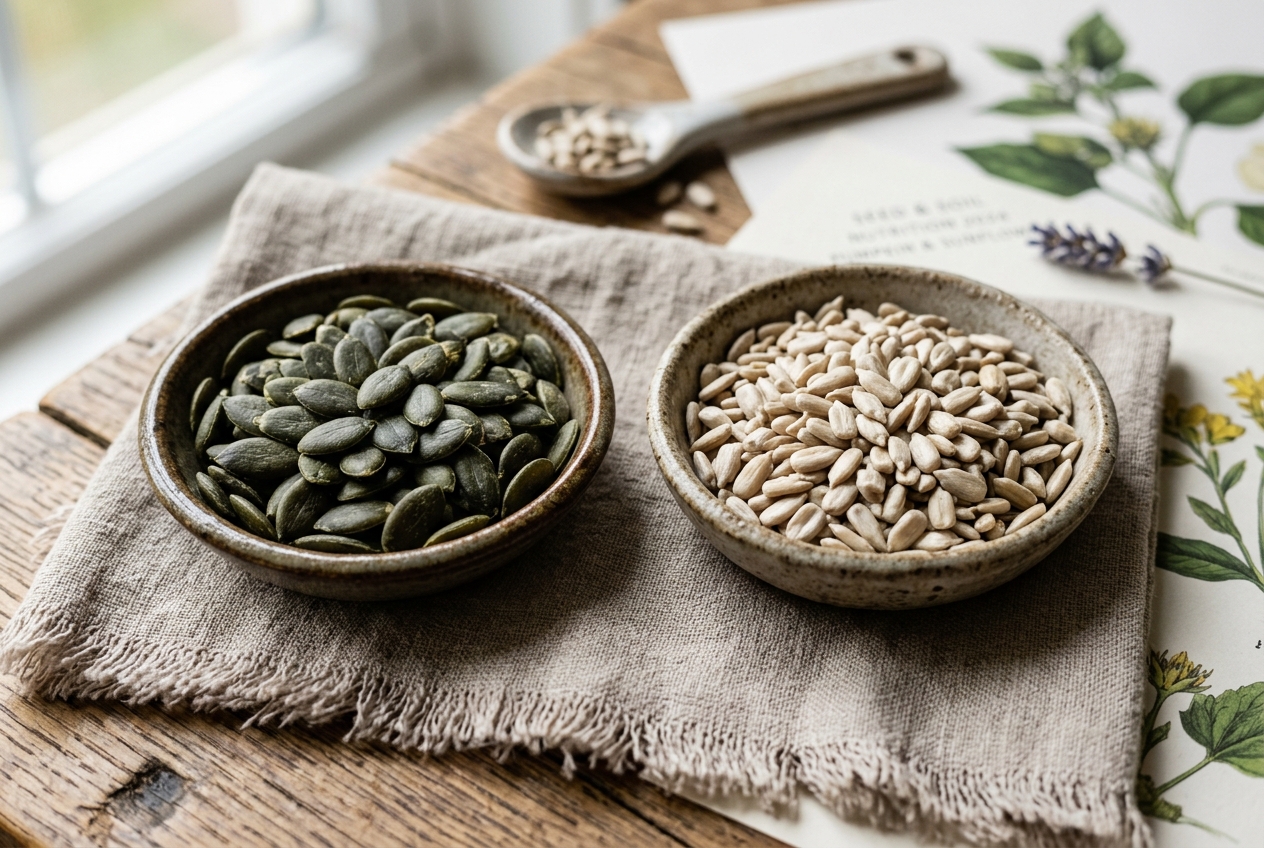
In the world of functional snacking and whole-food mineral supplementation, two botanical powerhouses stand above the rest: raw pumpkin seeds (Cucurbita pepo) and shelled sunflower seeds (Helianthus annuus). Both are economical, widely available, and dense in plant proteins and healthy lipids.
Yet consumer confusion remains widespread. Searchers frequently ask whether sunflower seeds can replace pumpkin seeds for sleep and testosterone support, or whether pumpkin seeds supply adequate antioxidant vitamin E and selenium.
The biochemical reality is that these two seeds operate on entirely different physiological axes. One is an endocrine and neuro-calming mineral powerhouse; the other is the botanical kingdom’s undisputed master of lipophilic antioxidant defense and thyroid metabolism.
Above-the-Fold Complete Mineral Density Comparison
To evaluate their clinical potential, we analyzed the USDA FoodData Central laboratory metrics for standard 1-ounce (28-gram / approx. 2 tablespoons) raw, shelled servings of both seeds:
| Nutritional Metric (per 28g Serving) | Raw Pumpkin Pepitas | Shelled Sunflower Kernels | Showdown Winner | Primary Physiological Benefit |
|---|---|---|---|---|
| Total Calories | 158 kcal | 165 kcal | Pumpkin (Slightly leaner) | Metabolic energy density |
| Complete Protein | 8.5 g | 5.5 g | Pumpkin (+54%) | Skeletal muscle protein synthesis |
| Dietary Fiber | 1.8 g (Hulless) | 3.1 g | Sunflower (+72%) | Colonic motility & short-chain fats |
| Elemental Zinc | 2.2 mg (20% DV) | 1.5 mg (14% DV) | Pumpkin | Testosterone & immune surveillance |
| Magnesium | 156 mg (37% DV) | 91 mg (22% DV) | Pumpkin (+71%) | GABA activation, ATP & muscle relaxation |
| Vitamin E (Alpha-Tocopherol) | 0.6 mg (4% DV) | 7.4 mg (49% DV) | Sunflower (+1,133%) | Cell membrane lipid peroxidation shield |
| Selenium | 1.6 mcg (3% DV) | 22.5 mcg (41% DV) | Sunflower (+1,300%) | Thyroid deiodinase & glutathione enzymes |
| L-Tryptophan | 160 mg | 98 mg | Pumpkin | Serotonin & melatonin sleep pathway |
| Non-Heme Iron | 2.3 mg (13% DV) | 1.5 mg (8% DV) | Pumpkin | Erythrocyte hemoglobin oxygen transport |
1. The Sleep & Neuro-Endocrine Axis: The Pumpkin Seed Advantage
If your primary health goal is optimizing sleep quality, lowering nighttime cortisol, or supporting male hormonal architecture, pumpkin seeds are mathematically unmatched by sunflower kernels.
The L-Tryptophan to Melatonin Cascade
Sleep onset and restorative slow-wave architecture depend on the synthesis of melatonin (N-acetyl-5-methoxytryptamine) in the pineal gland. However, melatonin cannot be synthesized without its dietary amino acid precursor, L-tryptophan:
L-Tryptophan → 5-HTP → Serotonin → N-Acetylserotonin → Melatonin
A single 28-gram serving of pumpkin seeds delivers 160 milligrams of L-tryptophan.
Crucially, pumpkin seeds accompany this amino acid with 156 milligrams of elemental magnesium (37% of your Daily Value). Magnesium acts as an essential cofactor for tryptophan hydroxylase (TPH) while simultaneously binding to GABA-A receptors in the brain, reducing neuronal excitability and easing the transition into deep stage-3 REM sleep.
Zinc and Testosterone Leydig Cell Kinetics
Testosterone synthesis in testicular Leydig cells is an enzyme-driven process requiring zinc-finger proteins and 17β-hydroxysteroid dehydrogenase. Zinc deficiency blunts luteinizing hormone (LH) receptor sensitivity, causing systemic drops in circulating free testosterone.
With 2.2mg of bioavailable zinc per ounce, pumpkin seeds supply the cellular cofactors required to maintain normal androgenic output. Furthermore, pumpkin seeds contain unique delta-7-sterols (spinasterol), which competitively inhibit 5-alpha reductase, protecting against follicular miniaturization (hair loss) and benign prostatic hyperplasia (BPH).
2. Sunflower Seeds Nutrition & Cellular Antioxidants: The Tocopherol Powerhouse
While sunflower kernels concede the sleep and zinc crowns to pumpkin, they deliver an unmatched payload of two critical micronutrients: alpha-tocopherol (Vitamin E) and selenium.
[ Atmospheric Oxidative Stress / PUFA Intake ]
                       │
                       ▼ (Generates Lipid Peroxyl Radicals)
         [ Alpha-Tocopherol (Sunflower) ] ──► Neutralizes Free Radicals
                       │
                       ▼ (Oxidized Tocopheroxyl Radical)
        [ Glutathione Peroxidase + Selenium ] ──► Regenerates Active Vitamin E
The Alpha-Tocopherol Protective Shield
Sunflower seeds are the second most concentrated whole-food source of vitamin E on Earth (behind wheat germ oil). Just one ounce delivers 7.4 mg of d-α-tocopherol, fulfilling 49% of the adult Daily Value.
Alpha-tocopherol is the human body’s primary fat-soluble antioxidant. It intercalates directly into the phospholipid bilayers of cell membranes and circulating LDL particles, donating a hydrogen atom to quench free-radical chain reactions before polyunsaturated fatty acids (PUFAs) can oxidize into cytotoxic lipid hydroperoxides.
Selenium and the Thyroid Deiodinase System
Sunflower seeds deliver 22.5 mcg of selenium per ounce (41% DV). Selenium is not merely an antioxidant; it is an obligate structural constituent of selenoproteins: 1. Glutathione Peroxidase (GPx): The primary intracellular enzyme that converts toxic hydrogen peroxide into harmless water (H₂O₂ → 2H₂O). 2. Iodothyronine Deiodinases (DIO1 & DIO2): The selenoenzymes responsible for cleaving an iodine atom from inactive thyroxine (T4) to produce biologically active triiodothyronine (T3), governing baseline metabolic rate and mitochondrial energy production.
Individuals struggling with sluggish thyroid conversion or chronic oxidative stress reap immediate biochemical benefits from adding sunflower kernels to their daily nutrition.
3. Protein Bioaccessibility and Amino Acid Differences
🌱 Editor's Recommended Organic Seeds
Clinical Grade Purity- Heirloom Cucurbita pepo var. styriaca (Dark Green Hulless)
- Cold-grown in rich Austrian soils for maximal zinc and magnesium
- Unpasteurized, raw, and unroasted to preserve delta-7-sterols
- Delivers 8.5g complete plant protein per 1-ounce serving
- 100% USDA Certified Organic & Non-GMO Project Verified
- Shelled raw without chemical bleaches or mineral oils
- Third-party lab tested for heavy metals and microbial purity
- Delivers 49% DV Vitamin E and 41% DV Selenium per ounce
When comparing plant protein density, pumpkin seeds outperform sunflower kernels significantly: * Pumpkin Seeds: 8.5g protein per 28g (30% protein by weight). Contains exceptionally high concentrations of L-arginine (over 1,200mg per serving), promoting endothelial nitric oxide (NO) release and vascular vasodilation. * Sunflower Seeds: 5.5g protein per 28g (19% protein by weight). While lower in total protein, sunflower seed storage proteins contain notable levels of methionine and cysteine, the sulfur amino acids often deficient in standard legume-based vegan diets.
4. Pumpkin Seeds vs Chia Nutrients: Mineral Showdown vs. Soluble Fiber
When evaluating pumpkin seeds vs chia nutrients, the biological benefits serve complementary metabolic roles: * Elemental Zinc & Magnesium: Pumpkin seeds provide more than double the bioavailable zinc (2.2mg vs 1.0mg per 30g) and substantially higher magnesium (156mg vs 95mg) than chia seeds, making pumpkin seeds vastly superior for neuro-endocrine and testosterone synthesis. * Soluble Fiber & ALA Omega-3: Conversely, chia seeds dominate in soluble mucilage fiber (10g vs 1.8g per serving) and anti-inflammatory alpha-linolenic acid (over 5,000mg ALA vs negligible levels in pumpkin seeds). * The Synergy: Stacking 1 tablespoon of sprouted pumpkin seeds with 1 tablespoon of cold-soaked chia seeds creates an optimal mineral-to-fiber ratio for gut transit and nocturnal relaxation.
To master whole-seed thermal preparation, visit our clinical guide on roasting vs soaking pumpkin seeds, or examine pumpkin seed oil for hair growth to understand targeted delta-7-phytosterol therapy. You can also review how both seeds compare against hemp in our hemp vs chia vs flax comparison guide.
5. The Synergistic Stacking Prescription: How to Consume Both
Rather than viewing pumpkin and sunflower seeds as competitors, functional medicine practitioners prescribe them together to achieve antioxidant-mineral complementarity.
[ 1 tbsp Raw Pumpkin Seeds ] + [ 1 tbsp Shelled Sunflower Seeds ]
             │                                   │
             ▼                                   ▼
    Zinc (10% DV) + Magnesium (18% DV)     Vitamin E (25% DV) + Selenium (20% DV)
             └───────────────────┬───────────────────┘
                                 ▼
             The Ultimate 30-Gram Mineral & Antioxidant Shield
The Daily Dual-Seed Serving Protocol:
- Dosage: 1 tablespoon (14g) raw pumpkin seeds + 1 tablespoon (14g) shelled sunflower kernels.
- Timing: Consume in the late afternoon or evening with dinner. The magnesium and tryptophan from pumpkin seeds support nighttime neurotransmitter relaxation, while the fat-soluble vitamin E from sunflower seeds absorbs seamlessly alongside dietary dinner lipids.
- Preparation: Buy both seeds raw and unroasted. If sensitive to phytic acid, perform a gentle 6-hour room-temperature soak in salted water followed by low-temperature dehydration (under 200°F / 93°C).
To see how combining pumpkin and sunflower seeds impacts your total daily macronutrient targets, utilize our interactive Daily Seed Nutrition & Protein Stacker, or cross-reference your weekly botanical diversity on the 30-Plants Microbiome Tracker.
Frequently Asked Questions: Pumpkin vs Sunflower Seeds
Pumpkin seeds are mathematically superior for promoting deep sleep. A 1-ounce serving contains over 160 mg of bioavailable L-tryptophan alongside 156 mg of magnesium. Tryptophan is the rate-limiting amino acid precursor for serotonin and melatonin synthesis, while magnesium binds to GABA receptors in the brain to reduce central nervous system excitation.
Yes, sunflower seeds dominate pumpkin seeds in both vitamin E and selenium. Just one ounce of shelled sunflower kernels delivers 7.4 mg of alpha-tocopherol (nearly 50% of the adult Daily Value) and 22.5 mcg of selenium (41% DV), compared to negligible selenium and low vitamin E in pumpkin seeds.
Yes. Pumpkin seeds support male endocrine health through two distinct mechanisms: their dense elemental zinc content (2.2 mg per ounce, or 20% DV) is essential for testicular Leydig cell steroidogenesis, while unique delta-7-phytosterols competitively inhibit 5α-reductase, preventing excessive conversion of testosterone into dihydrotestosterone (DHT).
Not only is it safe, but consuming them together creates powerful nutritional synergy. Combining pumpkin seeds (rich in zinc and magnesium) with sunflower seeds (rich in vitamin E and selenium) delivers the complete co-factor spectrum needed for endogenous glutathione peroxidase and superoxide dismutase (SOD) antioxidant defense.