
Sacha Inchi vs. Walnuts: The 93% Unsaturated Fat & Complete Protein King
A nutritional biochemistry comparison of Plukenetia volubilis vs Juglans regia: analyzing 93% unsaturated lipid profiles, 3x higher Omega-3 density, complete amino acid scores, and why raw sacha inchi must always be roasted.
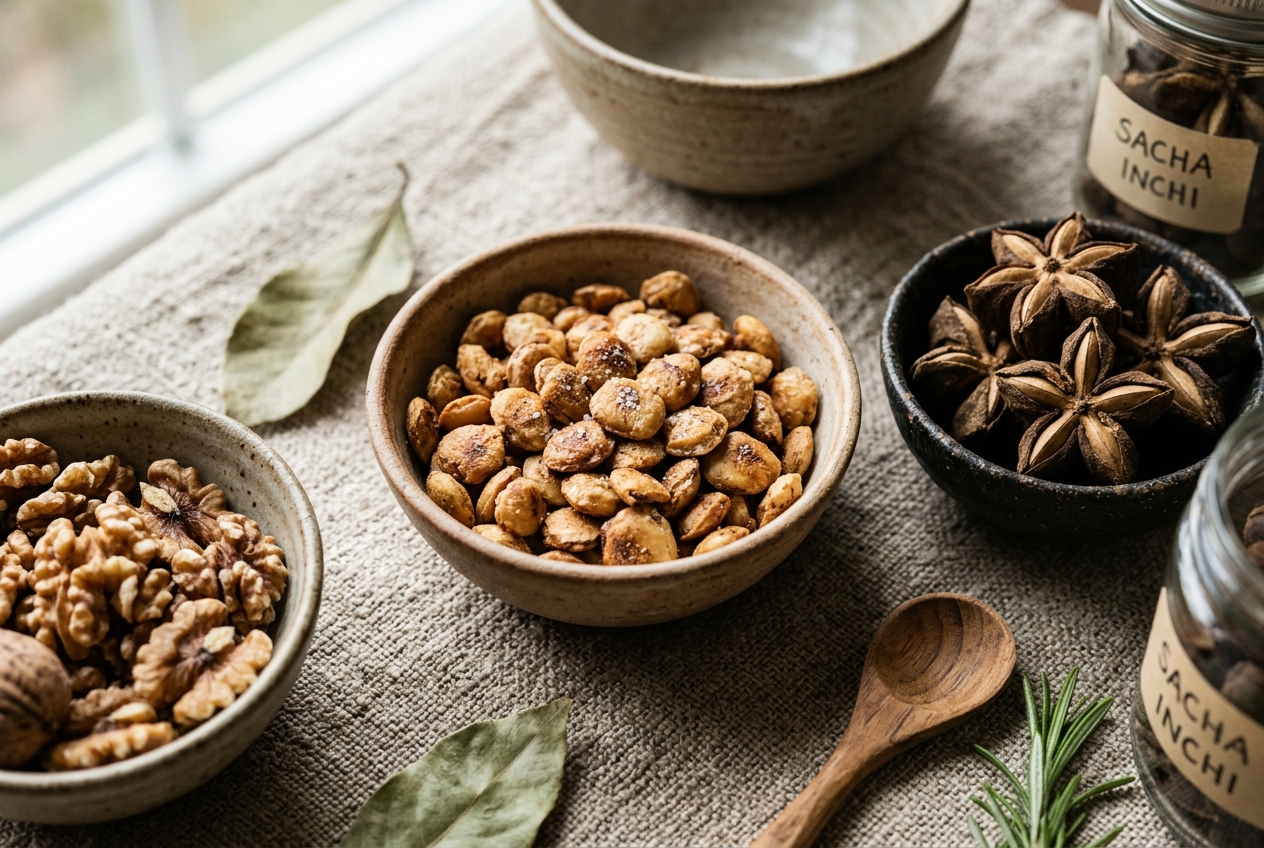
For decades, mainstream nutritionists and functional cardiologists have crowned the English walnut (Juglans regia) as the undisputed king of plant-based Omega-3s and neuro-protective brain foods.
Sacha inchi vs walnuts: Sacha inchi (*Plukenetia volubilis*) outperforms walnuts across nearly every critical metric, delivering three times more Alpha-Linolenic Acid (ALA Omega-3) (7,000mg vs 2,500mg per 30g serving), double the protein (9g vs 4.3g), and an astonishing 93% unsaturated lipid profile. However, while walnuts can be eaten raw, sacha inchi must always be roasted to neutralize bitter defensive alkaloids.
Hailing from the high-altitude Amazonian rainforests of Peru, Sacha Inchi (Plukenetia volubilis)—historically known as the Inca Peanut or Mountain Peanut—is not actually a true tree nut, but an oilseed harvested from star-shaped green pods.
Comparing sacha inchi to walnuts reveals a biochemical masterclass in plant lipid engineering and amino acid bioavailability.
Above-the-Fold Head-to-Head Comparison Matrix
Review the macronutrient and micronutrient metrics across a standard 30-gram (approx. 2-tablespoon) serving of roasted sacha inchi seeds against whole English walnuts:
| Nutritional Metric | Roasted Sacha Inchi Seeds (30g) | Raw English Walnuts (30g) | Biochemical Advantage & Winner |
|---|---|---|---|
| Total Energy | 170 kcal | 196 kcal | Sacha Inchi (Lower caloric density) |
| Complete Protein | 9.0 g (Complete Amino Acid Panel) | 4.3 g | Sacha Inchi (+109% Protein) |
| Alpha-Linolenic Acid (Omega-3) | 7,200 mg | 2,570 mg | Sacha Inchi (2.8x Higher Omega-3) |
| Linoleic Acid (Omega-6) | 5,100 mg | 11,400 mg | Sacha Inchi (Far lower Omega-6 burden) |
| Omega-6 to Omega-3 Ratio | 0.7 : 1 (Ideal Anti-Inflammatory) | 4.4 : 1 (Higher Omega-6) | Sacha Inchi (Superior Metabolic Ratio) |
| Total Dietary Fiber | 5.0 g | 2.0 g | Sacha Inchi (+150% Fiber) |
| L-Tryptophan (Serotonin Precursor) | 87 mg | 48 mg | Sacha Inchi (Sleep & Neuro-Calming) |
| Raw Edibility Status | Must Be Roasted | Ready to Eat Raw | Walnuts (Zero culinary prep needed) |
1. The 93% Unsaturated Lipid Architecture: ALA Dominance
In the botanical kingdom, seeds rarely exceed 80% unsaturated fat without vulnerability to rancidity. Sacha inchi is a biological marvel: over 93% of its total lipid profile consists of unsaturated fatty acids, predominantly polyunsaturated:
[ SACHA INCHI LIPID SPECTRUM ]
┌───────────────────────────┬───────────────────────────┬──────────────┐
│ 48% - 54% Alpha-Linolenic │ 34% - 37% Linoleic Acid   │ 8% - 10%     │
│ Acid (ALA Omega-3)        │ (Omega-6)                 │ Oleic (Mono) │
└───────────────────────────┴───────────────────────────┴──────────────┘
                         ▲
                         │ (Protected from Oxidation by)
       [ 220 mg / 100g Intact Gamma & Delta Tocopherols ]
The Natural Tocopherol Shield
Why doesn’t sacha inchi oil oxidize immediately despite its extreme polyunsaturated fatty acid (PUFA) density? 1. Intense Tocopherol Concentrations: Sacha inchi seeds pack over 220 mg of vitamin E tocopherols per 100g, chiefly gamma-tocopherol and delta-tocopherol. These lipid-soluble chain-breaking antioxidants neutralize peroxyl radicals directly at the oil-air interface. 2. Endothelial Desaturation Kinetics: High intake of sacha inchi ALA stimulates endothelial nitric oxide and suppresses hepatic synthesis of very-low-density lipoproteins (VLDL), improving circulating lipid panels.
2. Complete Protein & Tryptophan for Neurological Balance
Unlike most tree nuts that are limited by low lysine or methionine, sacha inchi provides a fully balanced amino acid score (DIAAS > 0.90):
🌱 Editor's Recommended Organic Sacha Inchi Products
Heirloom Amazonian Harvest- 100% Certified Organic, sustainably wild-harvested in Peru
- Slow-roasted with unrefined mineral salt; nutty and crunchy
- Delivers 8.5g complete protein and 7,000mg ALA per serving
- Third-party tested for purity, aflatoxins, and heavy metals
- Extra-virgin, hydraulic cold-pressed below 104°F (40°C)
- Unrefined, rich in natural gamma-tocopherols and plant sterols
- Exceptional for drizzling on grain bowls, pestos, and salads
- Packaged in nitrogen-flushed dark amber glass bottle
The Tryptophan & Serotonin Connection
Sacha inchi is exceptionally rich in L-tryptophan (approx. 290 mg / 100g): * Blood-Brain Barrier Transport: When consumed with healthy fats and carbohydrates, tryptophan competes for large neutral amino acid (LNAA) transporters, crossing the blood-brain barrier to synthesize serotonin and melatonin. * Cortisol Mitigation: Clinical trials in hypercholesterolemic and stressed cohorts show that daily sacha inchi consumption significantly blunts evening cortisol and improves subjective sleep latency.
3. The Roasting Requirement: Why Raw Sacha Inchi Is Dangerous
A critical food safety rule must be emphasized: never harvest or consume sacha inchi seeds raw.
- Raw Seeds Contain Toxic Defenses: Raw unroasted *Plukenetia volubilis* contains high levels of bitter saponins, trypsin inhibitors, and toxic alkaloids designed by evolution to deter rainforest insects and mammals.
- Thermal Denaturing (The Roasting Rule):** Heating seeds at 250°F–300°F (121°C–149°C) deactivates 100% of these heat-labile anti-nutrients and destroys trypsin inhibitors, rendering the protein fully digestible.
- Always Purchase Pre-Roasted: All reputable commercial brands sell sacha inchi pre-roasted. Look for labels confirming "Slow-Roasted" or "Cold-Pressed from Roasted Seed".
4. How Sacha Inchi Fits into the Modern Seed Ecosystem
To compare sacha inchi with other high-potency seeds: * Vs. Pumpkin Seeds: Pumpkin seeds win on elemental zinc and magnesium, while sacha inchi crushes pumpkin seeds on Omega-3 ALA (7,000mg vs negligible). Review our mineral breakdown on pumpkin seeds vs chia nutrients. * Vs. Flaxseed: While ground flax delivers lignans, flax oxidizes within 15 minutes of milling. Sacha inchi seeds remain crunch-stable for months due to high tocopherols. Read our guide on why whole flaxseeds pass right through you. * Vs. Chia Seeds: Chia provides soluble mucilage fiber for blood sugar control, but sacha inchi delivers nearly double the complete protein. See our chia seeds hydration protocol.
5. Daily Stacking and Microbiome Diversity
Because Plukenetia volubilis belongs to the spurge family (Euphorbiaceae), eating sacha inchi introduces a rare evolutionary plant species into your weekly microbiome rotation.
You can log sacha inchi in our zero-server 30-Plants Microbiome Diversity Tracker, model your daily essential amino acid intake with our Daily Seed Nutrition & Protein Stacker, and discover the wider benefits of living botanical lipids in our investigation into the seed oil spectrum: cold-pressed vs industrial refining.
Frequently Asked Questions About Sacha Inchi Seeds
Yes, significantly higher. A standard 30-gram (approx. 2-tablespoon) serving of roasted sacha inchi seeds delivers approximately 7,000 to 8,000 mg of Alpha-Linolenic Acid (ALA Omega-3), compared to approximately 2,500 mg of ALA in an equivalent serving of English walnuts—delivering roughly 300% more plant-based Omega-3 per gram.
No, you must never consume raw, unroasted sacha inchi seeds. Raw Plukenetia volubilis contains high levels of bitter anti-nutritional alkaloids, saponins, and trypsin inhibitors that cause acute gastrointestinal nausea. Thermal roasting deactivates these compounds 100%, transforming the seeds into a crisp, nutty, and completely safe superfood.
Yes, sacha inchi is one of the few plant seeds classified as a complete protein, containing all nine essential amino acids in balanced ratios. It provides approximately 8.5 to 9.0 grams of protein per 30-gram ounce (nearly 30% protein by weight), with especially high concentrations of tryptophan, cysteine, and tyrosine.
Sacha inchi is the richest botanical source of L-tryptophan among edible tree nuts and seeds, containing approximately 290 mg of tryptophan per 100 grams. Tryptophan is the rate-limiting amino acid precursor to 5-HTP, serotonin (mood regulation), and melatonin (sleep onset).