
Pumpkin Seeds vs. Chia Seeds: The Ultimate Nutrient Density & Mineral Showdown
A clinical laboratory comparison of pumpkin seeds vs chia nutrients: analyzing elemental zinc, bioavailable magnesium, hydrophilic mucilage, complete amino acids, and daily stacking protocols.
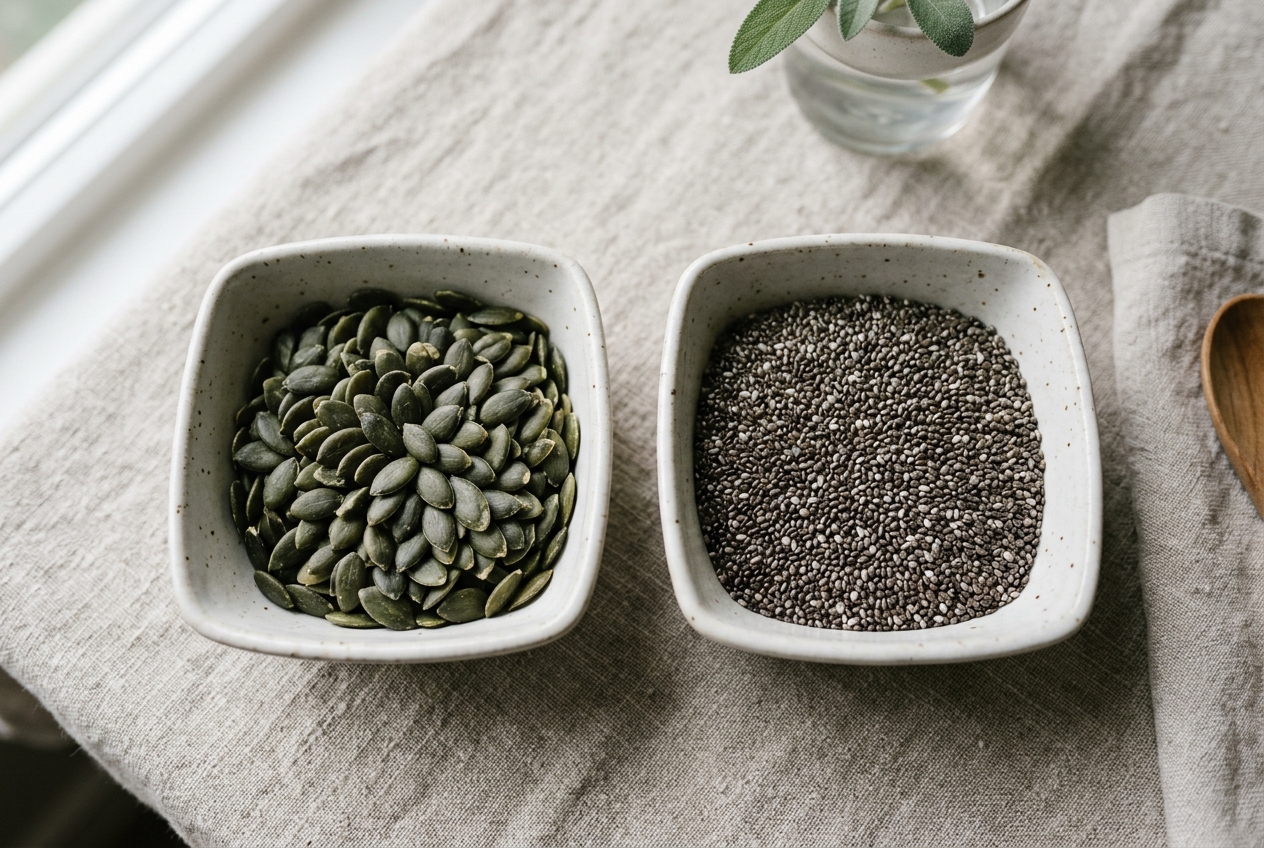
When optimizing plant-based metabolic nutrition, two botanical powerhouses consistently headline clinical discussions: pumpkin seeds (Cucurbita pepo) and chia seeds (Salvia hispanica). While wellness influencers frequently treat them as interchangeable superfood toppings, their cellular architecture, micronutrient distribution, and physiological targets could not be more polarized.
Pumpkin seeds vs chia nutrients: Pumpkin seeds outperform chia seeds in muscle-building complete protein (9.2g vs 4.7g per 30g serving), elemental zinc (2.2mg vs 1.0mg), and bioavailable magnesium (156mg vs 95mg). Conversely, chia seeds dominate in soluble prebiotic mucilage fiber (10.2g vs 1.8g) and anti-inflammatory ALA Omega-3 fatty acids (5,050mg vs negligible amounts).
Understanding the biochemical divide between pumpkin seeds and chia seeds allows you to strategically target either endocrine mineral replenishment or digestive glycemic regulation.
Above-the-Fold Functional Nutrient Comparison
To establish clinical parity, both seeds are evaluated based on a standard two-tablespoon (30-gram) serving size of raw, unadulterated botanical material:
| Nutritional Metric | Shelled Pumpkin Seeds (Pepitas, 30g) | Whole Chia Seeds (30g) | Biochemical Advantage & Winner |
|---|---|---|---|
| Total Energy | 170 kcal | 138 kcal | Chia Seeds (Lower caloric density) |
| Complete Protein | 9.2 g | 4.7 g | Pumpkin Seeds (+95% Protein) |
| Total Dietary Fiber | 1.8 g (Hulless) | 10.2 g (80% Soluble) | Chia Seeds (+466% Fiber) |
| Net Carbohydrates | 1.4 g | 1.8 g | Pumpkin Seeds (Marginally lower net carbs) |
| Total Lipids (Fats) | 14.2 g | 8.7 g | Chia Seeds (Lower total fat mass) |
| Alpha-Linolenic Acid (Omega-3) | 50 mg (Negligible) | 5,050 mg | Chia Seeds (100x ALA Dominance) |
| Linoleic Acid (Omega-6) | 6,800 mg | 1,700 mg | Chia Seeds (Lower inflammatory PUFA ratio) |
| Magnesium (% Daily Value) | 37% DV (156 mg) | 23% DV (95 mg) | Pumpkin Seeds (+64% Magnesium) |
| Elemental Zinc (% Daily Value) | 20% DV (2.2 mg) | 9% DV (1.0 mg) | Pumpkin Seeds (+120% Zinc) |
| Non-Heme Iron (% Daily Value) | 14% DV (2.5 mg) | 12% DV (2.2 mg) | Pumpkin Seeds (Slightly higher iron density) |
| L-Tryptophan (Precursor) | 160 mg | 110 mg | Pumpkin Seeds (Serotonin / Melatonin) |
1. Protein Bioaccessibility and Amino Acid Architecture
When examining chia seeds vs pumpkin seeds protein, the structural difference in plant globulins is stark:
The Pumpkin Seed Anabolic Engine
Shelled pumpkin seeds (pepitas) are among the richest plant-based protein reservoirs in existence, rivaling hemp hearts. Their storage globulins—predominantly cucurbitin—contain an exceptional amino acid profile: * Branched-Chain Amino Acids (BCAAs): A single 30g serving delivers 0.62g leucine, 0.44g isoleucine, and 0.55g valine, providing the critical molecular trigger required for mammalian target of rapamycin (mTOR) activation and myofibrillar protein synthesis. * L-Arginine Density: Pumpkin seeds deliver over 1.4g of L-arginine per serving, serving as the enzymatic substrate for endothelial nitric oxide synthase (eNOS), enhancing vascular perfusion.
Chia Seed Protein Limitations
While chia seeds contain a respectable 4.7 grams of protein per 30 grams, their cellular matrix is encased in an intractable polysaccharide gel layer. Unless chia seeds are finely milled or thoroughly soaked, proteolytic enzymes (pepsin and trypsin) struggle to penetrate the mucilage shield, lowering actual amino acid absorption efficiency.
2. The Mineral Divide: Zinc, Magnesium, and Neuro-Endocrine Signatures
In clinical functional medicine, chia vs pumpkin seeds magnesium and zinc in pumpkin seeds vs chia seeds represent the most decisive nutritional comparisons:
[ PUMPKIN SEEDS ] ──► Zinc: 2.2mg (20% DV)  ──► 5α-Reductase & Testosterone
                  ──► Magnesium: 156mg (37% DV) ──► NMDA Receptor Calming & ATP
                  ──► Tryptophan: 160mg      ──► Serotonin ──► Melatonin

[ CHIA SEEDS ]    ──► Zinc: 1.0mg (9% DV)   ──► Baseline Cellular Support
                  ──► Magnesium: 95mg (23% DV)  ──► Enzymatic Cofactor Activity
                  ──► ALA Omega-3: 5,050mg  ──► Resolvins & Protectins (Anti-Inflammatory)
- Zinc for Endocrine Defense: Pumpkin seeds provide 2.2mg of zinc per ounce. Zinc is the primary inorganic cofactor for testosterone synthesis and cellular mitotic division. Furthermore, raw pumpkin seeds concentrate unique delta-7-phytosterols, which competitively block 5-alpha reductase from converting testosterone into inflammatory dihydrotestosterone (DHT). To read about concentrated DHT inhibition, consult our clinical investigation on pumpkin seed oil for hair growth.
- Magnesium for Deep Sleep Architecture: With 156mg of elemental magnesium per 30 grams, pumpkin seeds provide 37% of your daily cellular quota. Magnesium acts as a physiological calcium channel blocker, damping down excitatory NMDA receptors in the brain to facilitate stage-3 slow-wave sleep.
3. Hydration Kinetics & Soluble Mucilage: The Chia Superpower
While pumpkin seeds conquer minerals and amino acids, chia seeds possess a hydrocolloid property unmatched in the plant kingdom.
🌱 Editor's Verified Organic Seed Recommendations
Clinical Grade- Heirloom Cucurbita pepo var. styriaca
- Naturally hulless, intensely green, high unoxidized zinc
- Cold-grown without synthetic fertilizers or chemical fumigation
- Over 3.5mg bioavailable zinc per 30g serving
- 100% Raw, certified organic, non-GMO verified
- Over 5,000mg Alpha-Linolenic Acid (Omega-3) per serving
- 10.2g prebiotic dietary fiber per 30g ounce
- Tested clean for heavy metals and chemical residue
The 12x Mucilage Gel Matrix
The epidermal cell layer of chia seeds is packed with branched polysaccharide mucilage (composed of D-xylose, D-glucose, and 4-O-methyl-D-glucuronic acid). When exposed to aqueous liquids: * Gastric Emptying Delay: Chia seeds trap water, forming an elastic hydrogel that physical slows the rate at which gastric chime enters the small intestine. This prevents glucose spikes following carbohydrate meals. * Intestinal Motility & Colon Transit: The soluble fiber fraction serves as high-yield prebiotic fuel for Bifidobacteria and Faecalibacterium prausnitzii, producing anti-inflammatory butyrate. * Safety Warning: Because chia seeds absorb up to 12 times their dry weight in water, they should never be swallowed completely dry. Review our clinical warning and safety protocol on why you must never eat chia seeds dry.
4. Bioavailability Protocols: Roasting, Soaking, and Mashing
Neither seed delivers its advertised nutrient panel if prepared incorrectly:
Pumpkin Seeds Preparation Protocol
Raw pumpkin seeds contain approximately 1,280 mg of phytic acid per 100 grams, which binds to ionic zinc and magnesium. * The Saline Soak Solution: Soak raw green pepitas in warm salted water for 8 to 12 hours to activate endogenous phytase enzymes, degrading phytic acid by up to 45%. * The 250°F Heat Threshold: Never roast pumpkin seeds above 300°F (149°C), as extreme heat degrades delicate delta-7-phytosterols and oxidizes polyunsaturated linoleic fats. Review our laboratory temperature guide on roasting vs soaking pumpkin seeds.
Chia Seeds Hydration Protocol
- The 1:6 Hydration Ratio: Mix 2 tablespoons (30g) of chia seeds with 3/4 cup of water, plant milk, or kefir.
- Soak Duration: Allow 15 to 20 minutes at room temperature for quick gelation, or store in the refrigerator overnight for deep hydrophilic expansion.
- For Even Faster Gel Formation: If you require a soluble fiber seed that expands in under 5 minutes without clumping, examine our head-to-head showdown on basil seeds vs chia seeds.
5. The Clinical Stacking Prescription: How to Combine Both
Rather than choosing one seed exclusively, metabolic longevity is achieved through botanical diversity:
┌────────────────────────────────────────────────────────┐
│             THE DAILY ENDOCRINE & GUT STACK            │
├──────────────────────────┬─────────────────────────────┤
│ 1 Tbsp Sprouted Pepitas  │ 1 Tbsp Cold-Soaked Chia     │
├──────────────────────────┼─────────────────────────────┤
│ • 4.6g Complete Protein  │ • 5.1g Soluble Fiber        │
│ • 78mg Magnesium         │ • 2,525mg ALA Omega-3       │
│ • 1.1mg Elemental Zinc   │ • Slow-Release Hydration    │
│ • Delta-7-Phytosterols   │ • Postprandial Glucose Blun │
└──────────────────────────┴─────────────────────────────┘
By combining 1 tablespoon of sprouted pumpkin seeds with 1 tablespoon of soaked chia seeds, you supply your body with 2,500mg of anti-inflammatory Omega-3s, over 5 grams of prebiotic fiber, 1.1mg of bioavailable zinc, and over 75mg of cellular magnesium—covering muscle, endocrine, and gut motility pathways in a single meal.
To track your daily seeds against total plant diversity, use our zero-server 30-Plants Microbiome Diversity Tracker, or model dynamic mineral yields with our Daily Seed Nutrition & Protein Stacker. You can also see how both seeds compare against hemp hearts and flax in our flagship hemp vs chia vs flax seed nutrient density guide, or explore the mineral profile of sunflower kernels in our pumpkin vs sunflower seeds mineral showdown.
Frequently Asked Questions: Pumpkin Seeds vs Chia Nutrients
Pumpkin seeds provide nearly double the protein of chia seeds. A standard 30-gram (2-tablespoon) serving of shelled pumpkin seeds (pepitas) delivers approximately 9.0 to 9.5 grams of complete plant protein with high concentrations of leucine and arginine, compared to 4.7 grams of protein in whole chia seeds.
Pumpkin seeds are significantly superior for both elemental magnesium and zinc. A 30-gram serving of pumpkin seeds delivers 156mg of magnesium (37% DV) and 2.2mg of zinc (20% DV), whereas chia seeds yield 95mg of magnesium (23% DV) and 1.0mg of zinc (9% DV). For testosterone support, sleep architecture, and immune cell proliferation, pumpkin seeds are mathematically superior.
Chia seeds are vastly more effective for appetite suppression and glycemic control due to their soluble prebiotic mucilage. Chia seeds expand 12 times their weight in water, delaying gastric emptying and delivering 10 grams of dietary fiber per ounce (over 80% soluble) compared to under 2 grams of fiber in shelled pepitas.
Yes, combining 1 tablespoon of sprouted pumpkin seeds with 1 tablespoon of pre-soaked chia seeds creates a synergistic super-blend. You obtain dense anabolic amino acids, high bioavailable zinc, and relaxing magnesium from pumpkin seeds, balanced by the cardioprotective ALA Omega-3s and bowel-regulating soluble gel from chia seeds.