
Sunflower Microgreens vs Sprouts: The 25% Complete Protein Guide & Indoor Growing Protocol
A molecular agronomic analysis of Helianthus annuus germination: contrasting water-sprouted radicles against photosynthesizing microgreens, examining 25% complete protein density, zinc bioavailability, and a 10-day indoor harvest protocol.
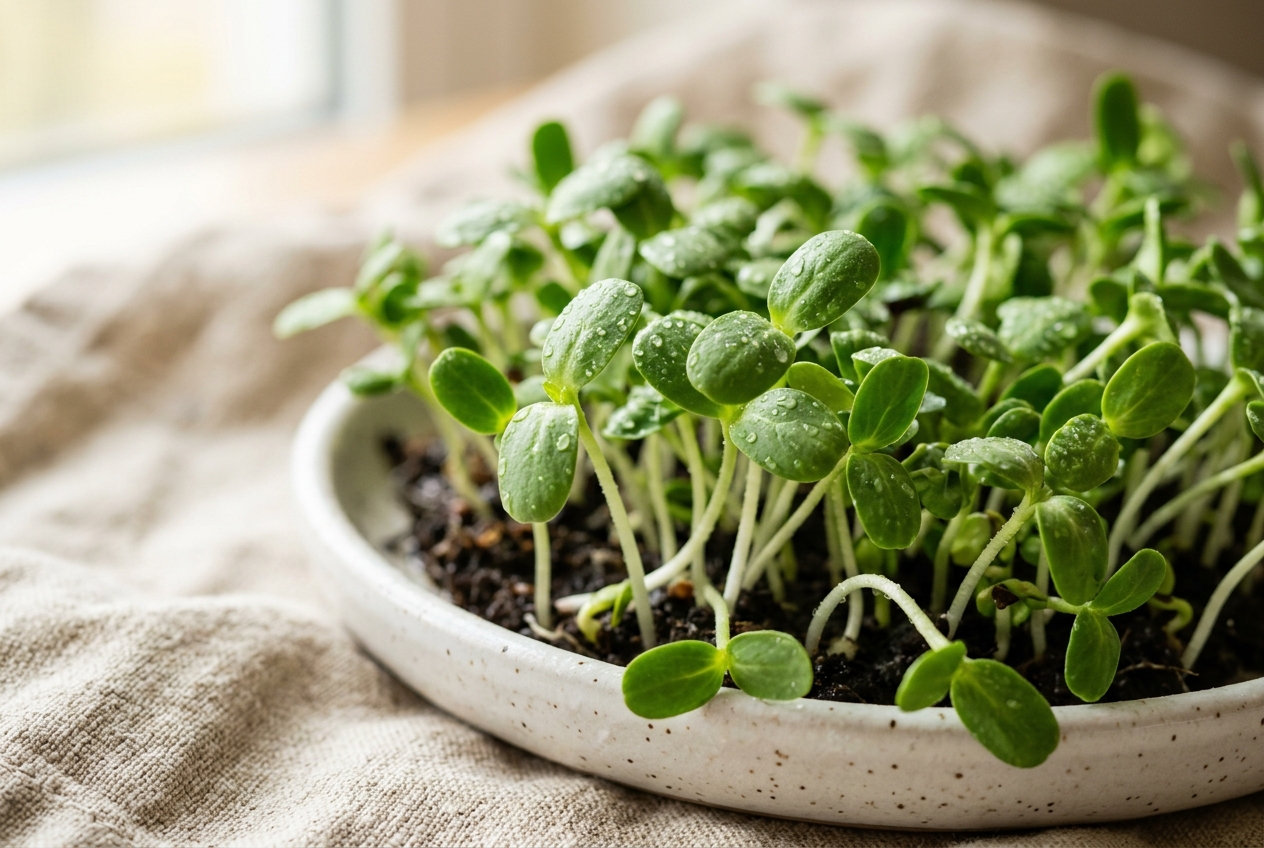
Among modern functional foods, few living plants rival the rapid nutritional transformation of the humble sunflower seed (Helianthus annuus).
Within ten days of moisture and light, a dormant, oil-dense seed undergoes an enzymatic explosion, converting stored fatty acids into structural carbohydrates, synthesising high concentrations of chlorophyll, and concentrating an astonishing 25% complete plant protein within its succulent emerald stems.
Sunflower microgreens vs sprouts: While sunflower sprouts are quickly germinated in dark water jars for 3–5 days (carrying microbial humidity risks), sunflower microgreens are grown in living soil for 8–12 days under sunlight. Microgreens contain up to 25% complete bioavailable protein, 8x the iron of spinach, and eliminate bacterial safety concerns by harvesting only the pristine photosynthetic shoots above the soil line.
Yet, many culinary enthusiasts and home growers confuse sunflower sprouts with sunflower microgreens. This distinction is not mere botanical trivia: it dictates food safety, enzymatic activity, digestive comfort, and bioaccessible micronutrient density.
Above-the-Fold Nutritional & Cultivation Matrix
Compare how 10-day photosynthesizing sunflower microgreens stack up against raw sunflower seeds, dark-jar sprouts, and supermarket baby spinach across critical nutritional metrics:
| Nutritional & Culinary Metric | Sunflower Microgreens (10-Day Soil Grown) | Sunflower Sprouts (3-Day Water Jar) | Raw Hulled Sunflower Seeds (Dormant) | Organic Mature Baby Spinach |
|---|---|---|---|---|
| Protein Density (Dry Weight) | 24% – 26% (Complete EAA Profile) | 20% – 22% (Partial cleavage) | 21% (Storage globulins) | 15% – 18% (Low absolute yield) |
| Digestive Enzyme Activity | Maximum (Active phytases & proteases) | High (Early stage enzymes) | Dormant (Enzyme inhibitors active) | Low (Mature foliage) |
| Bioavailable Iron (per 100 kcal) | 12.4 mg (8x Spinach) | 6.1 mg | 4.2 mg (Phytate bound) | 1.5 mg |
| Bioavailable Zinc (per 100 kcal) | 7.8 mg (5x Spinach) | 4.5 mg | 5.0 mg | 1.2 mg |
| Chlorophyll Concentration | Abundant (Photosynthesizing cotyledons) | Zero to Trace (Etiolated yellow) | Zero | Moderate to High |
| Pathogen & Mold Risk | Negligible (Clipped above soil line) | Moderate to High (*Salmonella/E. coli*) | Low (Shelf stable) | Low (Rinsed) |
1. Sprouts vs. Microgreens: The Vital Botanical & Safety Distinction
The confusion between sprouts and microgreens stems from commercial grocery labeling, where both terms are often used interchangeably. Physiologically and microbiologically, they represent two completely different developmental stages:
    [ Stage 1: Sprout (Days 1–4) ]            [ Stage 2: Microgreen (Days 8–12) ]
          (Darkness / Water)                     (Sunlight / Living Substrate)

               Seed Coat                                  True Cotyledons
                 │                                        (Chlorophyll Synthesis)
             ┌───┴───┐                                      ┌───┴───┐
             │       │                                     \ \     / /
             └───┬───┘                                      \ \___/ /
                 │ (Pale Radicle)                            │     │  (Succulent Stem)
                 ▼                                           │     │
          Eaten whole in jar                                 ▼     ▼
        (High humidity / rot risk)                     Clipped ABOVE soil line
                                                       (Zero root / zero pathogen)
The Water-Jar Sprout
- Environment: Rinsed with water 2 to 3 times daily in a dark jar or tray without growing medium.
- Harvest: Eaten within 3 to 5 days, consuming the root radicle, unexpanded seed coat, and embryonic stem.
- Safety Risk: The warm, wet, and stagnant environment inside a sprouting jar provides an ideal breeding ground for pathogenic bacteria like Salmonella enterica and Escherichia coli.
The Soil-Grown Microgreen
- Environment: Sown into a well-drained organic soil or coco coir medium, exposed to full-spectrum sunlight or LED grow lights once roots anchor.
- Harvest: Cut at 9 to 11 days cleanly 1/2 inch above the soil level, leaving the root system and substrate behind.
- Safety Advantage: Because microgreens grow in well-ventilated, well-draining air and are never harvested with roots or soaked hulls, microbial risk is virtually eliminated.
To understand countertop sprouting mechanics for smaller seeds like radishes and lentils, review our countertop sprouting protocol for bioactive nutrients.
2. The 25% Protein Miracle: How Germination Unlocks Amino Acids
Raw, dormant sunflower seeds store their nitrogen in high-molecular-weight globulins (helianthinin) and albumins. While nutritious, these storage proteins are tightly bound within the seed’s lipid structure and guarded by anti-nutritional compounds:
- Phytic Acid (Inositol Hexaphosphate): Binds divalent cations (Fe²⁺, Zn²⁺, Mg²⁺), preventing their intestinal absorption.
- Trypsin Inhibitors: Interfere with human pancreatic enzymes, reducing total protein digestibility.
During the 10-day microgreen lifecycle, water uptake triggers the release of endogenous gibberellic acids, initiating rapid biochemical liberation:
[ Dormant Seed ] ──> Hydration ──> [ Phytase Activation ] ──> 70% Phytic Acid Cleavage
                                  [ Protease Surge ]     ──> Helianthinin Breakdown
                                                                 │
                                                                 ▼
                                                  [ Free Amino Acids & Dipeptides ]
                                                  (25% Complete Bioavailable Protein)
The seedling’s endogenous phytase enzymes break down inositol hexaphosphate bonds, freeing previously trapped iron and zinc atoms. Simultaneously, seed proteases cleave dense storage globulins into easily absorbed free amino acids and bioactive dipeptides.
The resulting microgreen shoot contains all 9 essential amino acids, boasting an Amino Acid Score exceeding 100 and exceptionally high concentrations of: - Branched-Chain Amino Acids (BCAAs): Leucine, isoleucine, and valine for muscle preservation and glycogen synthesis. - L-Glutamine: Fuel for intestinal enterocytes and gut barrier mucosal integrity. - L-Arginine: Essential for endothelial nitric oxide production and tissue vasodilation.
Compare how sunflower seeds compare with pumpkin seeds for mineral density in our pumpkin vs sunflower seeds mineral showdown.
3. The 10-Day Master Indoor Growing Protocol
Growing crisp, nutty, restaurant-quality sunflower microgreens on your kitchen counter or balcony requires no green thumb—only disciplined adherence to three distinct environmental phases:
- Step 1: Seed Selection & Cold Water Soak (Day 0): Source organic, untreated black oil sunflower seeds specifically labeled for sprouting/microgreens. Measure 1 cup (approx. 100g to 120g) for a standard 10x20 tray. Soak in cold filtered water for 8 to 12 hours to awaken dormant enzymes.
- Step 2: Soil Preparation & Dense Seeding (Day 1): Fill a shallow tray with drainage holes with 1 inch of moist organic potting soil or coco coir. Scatter the soaked seeds evenly across the surface in a single, dense layer without overlapping. Lightly mist with clean water.
- Step 3: The Weighted Blackout Phase (Days 1 to 4): Place an identical tray directly on top of the seeds, and add a 5 to 10 lb weight (a brick, paving stone, or heavy books). This critical step forces the seedling roots to dig deep into the substrate and push upward with immense hydraulic force, naturally shedding their tough black hulls! Keep in complete darkness for 3 to 4 days, misting once daily.
- Step 4: The Photosynthetic Light Phase (Days 5 to 9): Remove the weight and top tray. You will see pale, yellow 1-inch stems standing straight up. Place the tray directly under bright morning sunlight or full-spectrum LED grow lights (14–16 hours daily). Within 24 hours, the cotyledons will synthesize massive quantities of deep emerald chlorophyll. Water from the bottom to prevent mold.
- Step 5: The Crisp Harvest (Days 9 to 11): When the first two cotyledon leaves are broad, flat, and succulent—and just before the secondary "true jagged leaves" begin to emerge in the center—harvest the greens. Use clean kitchen shears to cut the stems cleanly 1/2 inch above the soil.
4. Culinary Preparation & Micronutrient Preservation
To preserve the heat-sensitive enzymes, vitamins, and delicate polyunsaturated fatty acids developed during germination:
- Raw Crunch in High-Protein Bowls: Sunflower microgreens possess a distinctively sweet, nutty, sunflower-seed-like crunch. Toss 2 cups into grain bowls or massaged kale salads to immediately add 6 to 8 grams of complete raw protein.
- The Smoothie Phytochemical Booster: Blend a handful of freshly harvested microgreens into morning fruit smoothies alongside broccoli sprouts for sulforaphane synergy.
- Post-Cooking Garnish: If adding to warm soups, stir-fries, or grain dishes, always fold in microgreens in the final 30 seconds off heat. Sustained boiling or frying degrades active phytase enzymes and oxidizes delicate chlorophyll.
5. Elevate Your Weekly Botanical Diversity
Incorporating fresh living sunflower microgreens into your meals supplies rich cotyledon plant bioactives that count toward optimal gut health.
Track your weekly live microgreens in our 30-Plants Microbiome Diversity Tracker, calculate real-time protein and amino acid yields with our Daily Seed Nutrition & Protein Stacker, and discover how to optimize unrefined plant lipids in the seed oil spectrum: cold-pressed vs industrial refining.
Frequently Asked Questions About Sunflower Microgreens
Sunflower sprouts are germinated in water or dark jars for 3 to 5 days and consumed whole (root, seed hull, and embryonic shoot), carrying higher bacterial contamination risks. Sunflower microgreens are grown in soil or coco coir under photosynthetic light for 8 to 12 days until broad green cotyledons develop, harvested by cutting stems above the soil line for superior chlorophyll density, crisp nutty texture, and negligible bacterial risk.
Yes. Sunflower microgreens contain approximately 24% to 26% protein by dry weight and provide all nine essential amino acids required by the human body. They are particularly rich in branched-chain amino acids (leucine, isoleucine, valine), glutamic acid, and arginine, making them one of the highest-protein fresh greens in human nutrition.
Sunflower microgreens take 9 to 11 days from seed to harvest. The protocol requires an initial 8 to 12-hour seed soak, 3 to 4 days of weighted blackout to force root anchorage, and 5 to 6 days under direct sunlight or LED grow lights to synthesize chlorophyll and succulent cotyledon leaves.
Yes. Calorie-for-calorie, sunflower microgreens contain up to 8 times the non-heme iron, 5 times the zinc, and over 4 times the active vitamin E (alpha-tocopherol) of mature spinach. Compared to raw seeds, the 10-day photosynthetic germination process activates phytase enzymes, reducing phytic acid and dramatically boosting mineral bioavailability.