
The Seed Oil Spectrum: Cold-Pressed vs. Industrial Refined (Why Hexane & Oxidation Drive Inflammation)
A biochemical investigation into hexane solvent extraction, high-heat deodorization, toxic 4-HNE aldehydes, and the vital physiological difference between industrial cooking oils and unrefined virgin seed extracts.
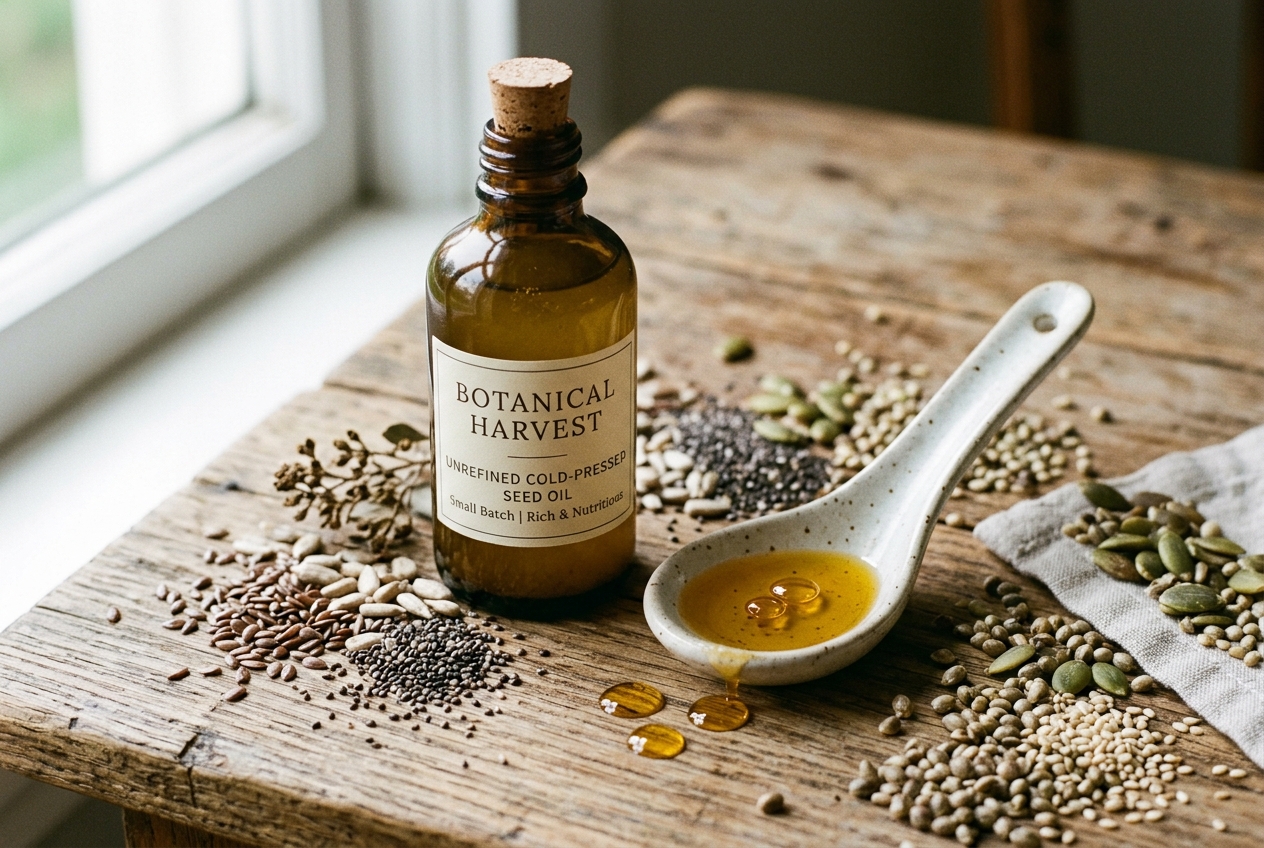
In the contemporary health landscape, few topics ignite as much fierce controversy as seed oils. Online wellness communities routinely label seed oils as toxic poisons responsible for obesity, metabolic syndrome, autoimmune disease, and cardiovascular decline. Conversely, mainstream dietetic organizations continue to promote vegetable oils as heart-healthy alternatives to saturated animal fats.
Both extremes miss the underlying botanical and biochemical truth. The problem is not the botanical seed itself; the problem is the violent, petrochemical industrial refining process used to produce commercial cooking oil.
There is a vast physiological chasm between an industrial solvent-extracted soybean oil deodorized at 450°F and an unrefined, virgin cold-pressed flaxseed or pumpkin seed oil extracted mechanically at room temperature. Understanding the chemistry of lipid peroxidation, hexane washing, and oxidative aldehydes is essential for protecting cellular health.
What are seed oils and why are seed oils bad: Seed oils are lipids extracted from plant seeds. Industrial seed oils (soybean, canola, corn, cottonseed) are widely considered harmful because they undergo harsh chemical refining—including petroleum hexane washing, caustic bleaching, and deodorization up to 500°F (260°C)—which degrades delicate polyunsaturated fatty acids into inflammatory oxidized lipid peroxides (4-HNE, MDA). Conversely, mechanical cold-pressed therapeutic seed oils (black cumin, pumpkin, flax) retain intact polyphenols and protective sterols.
Above-the-Fold Extraction & Processing Spectrum Matrix
To visualize the spectrum from industrial toxicity to therapeutic botanical medicine, examine the technical differences across four distinct categories of plant lipids:
| Oil Category | Extraction Method | Hexane / Solvent Exposure | Heat Level | Lipid Oxidation (ALOPs) | Omega 6:3 Ratio | Cellular Health Impact |
|---|---|---|---|---|---|---|
| Industrial Refined Cooking Oils (Canola, Soy, Corn) | Solvent Hexane Wash + Bleaching | Heavy (Petroleum Wash) | Extreme (450°F / 232°C) | Severe (High 4-HNE & MDA) | 15:1 to 50:1 (Pro-Inflammatory) | Mitochondrial stress, oxidized LDL, endotoxemia |
| Commercial Expeller-Pressed | Mechanical screw press (Friction) | Zero (Chemical-free) | Moderate (180°F–210°F) | Moderate to Low | High Omega-6 | Better than solvent-refined, but still oxidized |
| Virgin Cold-Pressed Botanical Seed Oils (Flax, Pumpkin, Black Cumin) Therapeutic Grade | Hydraulic / Low-Friction Screw | Zero (100% Mechanical) | Strictly < 104°F (40°C) | Negligible (Intact Tocopherols) | 0.3:1 to 3:1 (Anti-Inflammatory) | Endothelial protection, cellular membrane fluidity |
| Traditional Unrefined Fruit Oils (Extra Virgin Olive & Avocado) | Cold centrifugation / Malaxation | Zero | Cold (< 80°F / 27°C) | Very Low (Rich in Polyphenols) | Stable Monounsaturates (Oleic Acid) | Cardiovascular longevity, mitochondrial integrity |
1. What Are Seed Oils and Why Are Seed Oils Bad in Industrial Refining?
To understand what are seed oils and clarify why are seed oils bad in mainstream metabolic discourse, one must examine the violent thermochemical processing required to force oil out of low-fat industrial crops (soybeans, corn, rapeseeds, and cottonseeds). Unlike culinary fruit oils (olive, avocado) that release virgin lipid droplets under gentle mechanical stone pressure, industrial seed oils require a toxic sequence: 1. Solvent Extraction: High-heat washing in petroleum-derived hexane solvent at 150°F to extract residual triglycerides. 2. Caustic De-gumming: Acid neutralization using phosphoric acid and sodium hydroxide. 3. Bleaching: Filtration through acid-activated bentonite clay to strip dark pigments and natural chlorophyll. 4. Thermal Deodorization: Vacuum steam heating up to 500°F (260°C) to volatilize pungent aldehydes, fracturing delicate polyunsaturated fatty acid chains into mutagenic cyclic hydrocarbons and trans-fatty acid isomers.
To understand why refined seed oils are biologically problematic, follow the standard industrial processing sequence applied to conventional canola, soybean, and cottonseed crops:
[ Raw Seeds Crushed ] ──► High-Friction Pre-Heating (160°F–200°F)
                                 │
                                 ▼
         [ Hexane Solvent Wash ] (Petroleum Distillate Extracts 98% Oil)
                                 │
                                 ▼
  [ Degumming & Caustic Wash ] (Phosphoric Acid + Sodium Hydroxide Alkali)
                                 │
                                 ▼
   [ Bleaching with Clay ] (Removes Natural Chlorophyll, Beta-Carotene & Color)
                                 │
                                 ▼
[ High-Heat Deodorization (450°F / 232°C) ] (Steam Strips Foul Rancid Chemical Odors)
                                 │
                                 ▼
         Clear, Odorless, Chemically Altered Yellow Supermarket Oil
The 4 Stages of Degradation:
- Hexane Extraction: After crude mechanical pressing, the residual seed meal is washed in n-hexane (C₆H₁₄), a neurotoxic petrochemical solvent derived from refined crude oil. While the solvent is boiled off, trace residues remain.
- Caustic Neutralization: The crude oil contains free fatty acids that would spoil rapidly. Refiners add concentrated phosphoric acid to remove gums, followed by sodium hydroxide (caustic soda) to precipitate free fatty acids into soapstock.
- Bleaching: The dark, murky oil is filtered through acid-activated diatomaceous earth and bleaching clay to strip out natural antioxidant pigments like beta-carotene, lutein, and chlorophyll.
- Thermal Deodorization: The chemical treatments leave the oil with an acrid, repulsive odor. Refiners pump the oil into vacuum distillation towers heated to 400°F–460°F (204°C–238°C) for up to 90 minutes.
This final deodorization step strips the foul smell, but the prolonged high heat violently fractures double bonds, producing trans-fatty acid isomers and triggering massive lipid auto-oxidation.
2. Advanced Lipid Oxidation Products: 4-HNE, MDA, and OXLAMs
The structural vulnerability of seed oils lies in their high polyunsaturated fatty acid (PUFA) content, predominantly linoleic acid (18:2 n-6).
Because linoleic acid possesses two non-conjugated cis double bonds separated by a methylene carbon (bis-allylic position), the hydrogen atoms on that carbon are easily stripped by heat, light, and ambient oxygen:
Linoleic Acid + O₂ + Heat → Lipid Hydroperoxides → 4-HNE + MDA
The Cytotoxic Aldehydes:
- 4-Hydroxy-2-Nonenal (4-HNE): A highly reactive cytotoxic aldehyde. 4-HNE rapidly forms covalent bonds with histidine, lysine, and cysteine residues in human cellular proteins, causing mitochondrial dysfunction, endothelial permeability, and insulin resistance.
- Malondialdehyde (MDA): A direct mutagen that cross-links DNA base pairs, triggering cellular apoptosis and mutagenic changes in the vascular wall.
- OXLAMs (Oxidized Linoleic Acid Metabolites): 9-HODE and 13-HODE, which integrate into circulating Low-Density Lipoprotein (LDL) particles, converting them into oxidized LDL (oxLDL)—the primary biochemical trigger for macrophage foam cell formation and arterial atherosclerosis.
When you consume french fries or restaurant foods fried in commercial seed oils heated repeatedly over days, you are directly ingesting these cytotoxic aldehydes.
3. The Cold-Pressed Virgin Exception: Living Botanical Lipids
The critical nuance that social media influencers overlook is that unrefined, cold-pressed seed oils do not undergo this oxidative nightmare.
🌱 Editor's Recommended Cold-Pressed Botanical Oils
100% Unrefined & Chemical-Free- Extracted mechanically in an oxygen-free, dark environment
- Cold-pressed strictly below 104°F (40°C) with zero hexane
- Packaged in black opaque pharmaceutical-grade bottles
- Over 7,600mg unoxidized Alpha-Linolenic Acid per tablespoon
- Authentic European Cucurbita pepo var. styriaca extraction
- Deep emerald-green hue indicating rich chlorophyll and delta-7-sterols
- Unrefined and non-deodorized with a rich, nutty flavor profile
- Packaged in a light-blocking protective tin
When seeds like golden flax, Austrian pumpkin seeds, or Nigella sativa (black cumin) are cold-pressed mechanically: 1. Low Friction Temperature: Seeds are squeezed through hydraulic or low-friction screw presses kept strictly below 104°F (40°C). 2. Zero Solvents: No hexane, no chemical degumming, and no caustic soda are introduced. 3. Preserved Phytonutrient Shield: The resulting oil retains its natural deep green, amber, or gold hue, full of chlorophyll, polyphenols, delta-7-phytosterols, and natural tocopherols that actively shield the polyunsaturated bonds from oxidation.
These oils are not cooking fats; they are botanical functional medicines designed to be consumed raw, drizzled over warm vegetables, or blended into morning smoothies.
4. The Complete List of Seed Oils: Cold-Pressed Therapeutic vs. Industrial Solvent-Extracted
Here is the definitive clinical list of seed oils, classifying botanical lipids by extraction integrity, oxidative stability, and biological impact:
| Classification | Representative Seed Oils | Extraction Method | Lipid Stability & Bioactivity |
|---|---|---|---|
| Therapeutic Botanical Oils | Cold-Pressed Pumpkin Seed Oil, Black Cumin Seed Oil, Cold-Pressed Flaxseed Oil, Hemp Seed Oil | Mechanical Hydraulic Cold-Pressing (< 110°F) | Exceptional. High intact polyphenol count, active delta-7-sterols, zero chemical solvents. |
| Culinary Whole Oils | Extra Virgin Olive Oil, Unrefined Sesame Oil, Virgin Avocado Oil | Centrifugal Cold Extraction | High monounsaturated (Oleic acid) stability; rich in squalene, tyrosol, and sesamin. |
| Industrial Refined Oils | Soybean Oil, Canola (Rapeseed) Oil, Corn Oil, Cottonseed Oil, Industrial High-PUFA Sunflower | Hexane, High Heat (450°F+), Deodorized | Severe peroxidation risk; high Omega-6:Omega-3 ratio (> 20:1); stripped of natural antioxidants. |
To explore specific therapeutic seed oils, examine our clinical breakdown of pumpkin seed oil for hair growth and our laboratory dosage guide for black cumin seed oil with thymoquinone. You can also see how whole seeds compare against oils in our guide on roasting vs soaking pumpkin seeds.
To eliminate confusion in your kitchen, use this definitive classification table:
[ HIGH-HEAT COOKING FATS (Stable Saturated & Monounsaturated) ]
• Extra Virgin Avocado Oil (Smoke Point: 500°F / 260°C)
• Unrefined Coconut Oil (Smoke Point: 350°F / 177°C)
• Grass-Fed Ghee / Tallow (Smoke Point: 450°F / 232°C)

[ MEDIUM-HEAT DRESSINGS & LIGHT SAUTÉ ]
• Authentic Extra Virgin Olive Oil (Smoke Point: 375°F–410°F / 190°C–210°C)
• High-Oleic Cold-Pressed Sunflower Oil (Non-Refined)

[ RAW MEDICINAL DRIZZLING OILS (NEVER HEAT) ]
• Virgin Cold-Pressed Flaxseed Oil (Refrigerated)
• Raw Styrian Pumpkin Seed Oil (Rich in Delta-7-Sterols)
• Virgin Cold-Pressed Black Cumin Seed Oil (Thymoquinone-Rich)
• Raw Shelled Hemp Seed Oil (Balanced 3:1 Omega Ratio)

[ THE "HATEFUL EIGHT" INDUSTRIAL OILS (ELIMINATE ENTIRELY) ]
✕ Canola Oil / Rapeseed Oil
✕ Soybean Oil
✕ Corn Oil
✕ Cottonseed Oil
✕ Commercial Refined Sunflower Oil
✕ Safflower Oil
✕ Grapeseed Oil
✕ Rice Bran Oil
- Mechanical Hydraulic / Expeller Cold-Pressed: Ensure oil extraction temperatures remained strictly below 110°F (43°C) without chemical solvents (hexane).
- Unrefined and Virgin: Avoid bottles labeled "Refined", "Bleached", or "Deodorized" (RBD), which strips natural carotenoids, chlorophyll, and tocopherols.
- Opaque Glass or Metal Tins: Polyunsaturated fatty acids undergo rapid photo-oxidation when exposed to supermarket fluorescent lights in clear plastic bottles.
- Refrigeration After Opening: Store unrefined high-PUFA oils (flaxseed, hemp, pumpkin) in the refrigerator and consume within 6 to 8 weeks of opening.
5. Summary: Balancing Your Cellular Fatty Acid Profile
The modern Western diet has driven the ancestral Omega-6 to Omega-3 ratio from an optimal 2:1 up to an alarming 20:1, primarily through the pervasive use of industrial soybean and canola oils in processed foods.
By eliminating industrial refined cooking oils and replenishing your cell membranes with unrefined cold-pressed botanical oils and whole intact seeds, you restore balance to your pro- and anti-inflammatory eicosanoid cascades.
To calculate your exact dietary omega-6 to omega-3 ratios across different seed varieties, use our free Daily Seed Nutrition & Protein Stacker, or track your weekly whole botanical plant count on our 30-Plants Microbiome Tracker.
Frequently Asked Questions About Seed Oils & Inflammation
Seed oils are vegetable oils extracted from the seeds of crops using high-heat industrial processing and petrochemical solvents. The 'Hateful Eight' most heavily consumed industrial seed oils are Canola (rapeseed), Soybean, Corn, Cottonseed, Sunflower, Safflower, Grapeseed, and Rice Bran oil. Together, they represent over 20% of the daily caloric intake in the modern Western diet.
Industrial seed oils are exceptionally high in polyunsaturated linoleic acid (Omega-6), an 18-carbon chain with multiple fragile double bonds. During industrial high-heat deodorization (450°F / 232°C) and repeated deep-frying, these fats break down into toxic Advanced Lipid Oxidation Products (ALOPs), including 4-hydroxy-2-nonenal (4-HNE) and malondialdehyde (MDA), which cross-link with human cellular proteins and induce systemic vascular inflammation.
Because mechanical expeller pressing only recovers roughly 70% of the oil from seeds, manufacturers wash the crushed seed mash in n-hexane—a volatile petroleum distillate and known neurotoxin. The mixture is then heated to 150°F to evaporate the solvent, followed by phosphoric acid degumming, caustic sodium hydroxide neutralization, and high-heat vacuum steam deodorization to remove the foul chemical odor.
Yes. True virgin cold-pressed seed oils (such as unrefined flaxseed, black cumin, extra virgin olive, and Styrian pumpkin seed oil) are extracted mechanically under 104°F (40°C) with zero chemical solvents or caustic washes. They retain their natural matrix of chlorophyll, protective vitamin E tocopherols, and polyphenols, providing potent anti-inflammatory and cellular benefits when consumed raw.