
Alfalfa Sprouts vs. Broccoli Sprouts: The Canavanine Risk, Sulforaphane Potency & Nutrient Showdown
A molecular comparative analysis of Medicago sativa versus Brassica oleracea germination: evaluating L-canavanine arginine-analog toxicity against glucoraphanin-sulforaphane Nrf2 pathway induction, vitamin K1 density, and autoimmune safety protocols.
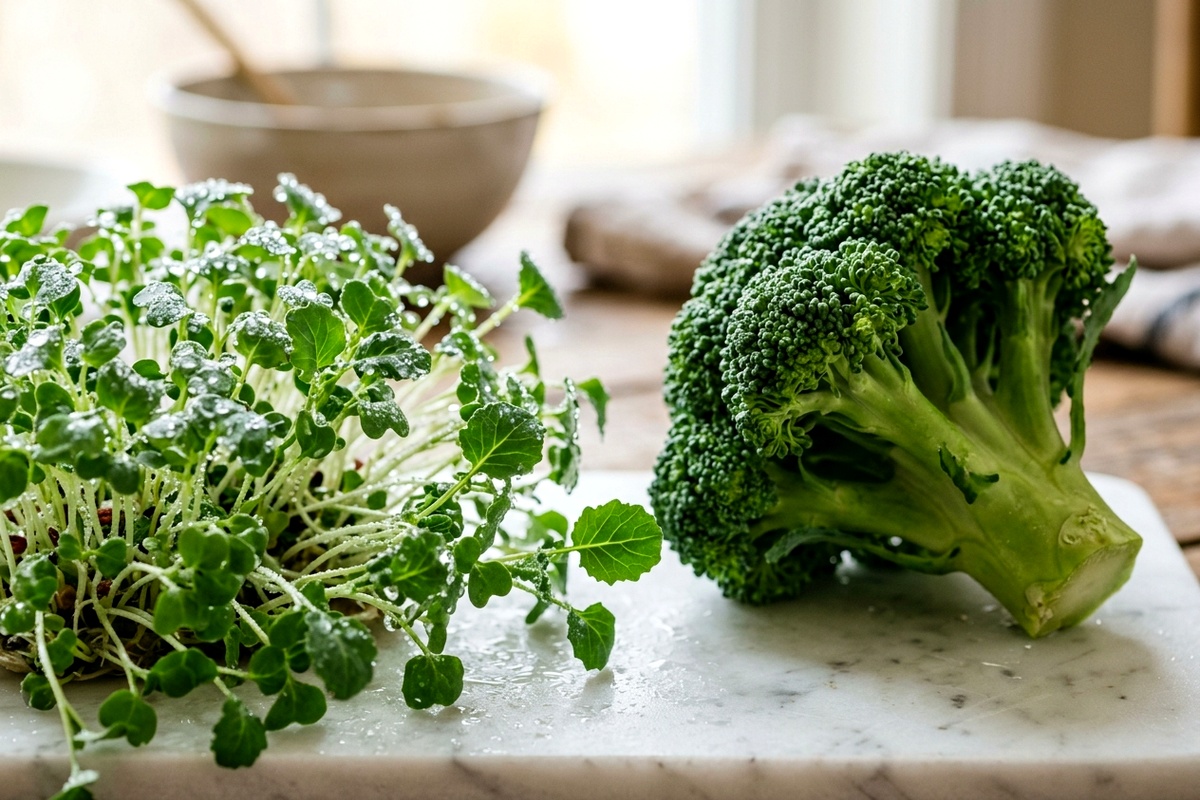
In the world of living countertop nutrition, alfalfa sprouts (Medicago sativa) and broccoli sprouts (Brassica oleracea) represent two of the most popular micro-botanicals on earth. Gracing supermarket deli displays, artisan sandwiches, and wellness salad bowls, both are celebrated as living vitamin powerhouses.
Alfalfa sprouts vs broccoli sprouts: Broccoli sprouts are vastly superior for clinical health, delivering up to 100x the glucoraphanin of mature broccoli to synthesize cancer-fighting sulforaphane and activate Nrf2 detoxification. Alfalfa sprouts provide excellent vitamin K1, but contain L-canavanine—a non-protein amino acid that can trigger autoimmune flare-ups and lupus reactivation in susceptible individuals.
Yet, placing these two sprouts in the same nutritional category is a major pharmacological error. While alfalfa is a legume whose young shoots contain unique phytoestrogenic compounds and a notorious immune-reactive amino acid called L-canavanine, broccoli sprouts are cruciferous dynamos engineered by nature to deliver sulforaphane—the most potent natural activator of cellular Phase II detoxification known to modern science.
Here is what biochemical research reveals when these two popular sprouts go head-to-head.
Above-the-Fold Biochemical & Immunological Showdown Matrix
Review how 3-day living alfalfa sprouts compare against 3-day living broccoli sprouts across critical clinical metrics:
| Biochemical & Nutritional Metric | Broccoli Sprouts (Brassica oleracea) | Alfalfa Sprouts (Medicago sativa) | Clinical Advantage & Winner |
|---|---|---|---|
| Primary Bioactive Molecule | Glucoraphanin → Sulforaphane | Saponins & Coumestrol (Phytoestrogens) | Broccoli (Potent Nrf2 Activator) |
| L-Canavanine Content | 0% (Completely absent) | 0.5% – 1.5% of dry weight | Broccoli (Zero Autoimmune Risk) |
| Nrf2 Phase II Enzyme Induction | Astronomical (50–100x mature veg) | Baseline / Low | Broccoli (Unmatched Detoxification) |
| Vitamin K1 Density (per 100g) | 28 mcg (23% DV) | 30.5 mcg (25% DV) | Alfalfa (Slightly higher K1) |
| Autoimmune (Lupus / SLE) Safety | 100% Safe (Dampens inflammatory cascades) | Caution: Can trigger flares & autoantibodies | Broccoli (Immunologically Safe) |
| Flavor Profile & Kitchen Usability | Peppery, radish-like sulfur bite | Crisp, mild, sweet, grassy crunch | Alfalfa (Milder everyday culinary use) |
1. The Sulforaphane Miracle: Why Broccoli Sprouts Reign Supreme
The overwhelming clinical advantage of broccoli sprouts stems from their astronomical concentration of glucoraphanin, a glucosinolate compound.
When you chew raw broccoli sprouts, you rupture the plant’s microscopic vacuoles. This allows glucoraphanin to mix with an endogenous enzyme called myrosinase, producing sulforaphane (1-isothiocyanato-4-methylsulfinylbutane).
   [ Glucoraphanin ] ──(Chewing / Myrosinase)──> [ Active Sulforaphane ]
                                                          │
                                                          ▼
                                            [ Enters Human Enterocyte ]
                                                          │
                                                          ▼
                                            [ Dissociates Keap1 from Nrf2 ]
                                                          │
                                                          ▼
                                            [ Nrf2 Enters Cell Nucleus ]
                                                          │
                                                          ▼
                        [ Transcribes 200+ Antioxidant Response Element Genes ]
                        (Glutathione Synthesis, Quinone Reductase, Heme Oxygenase-1)
In mature broccoli florets, glucoraphanin is relatively dilute. In 3-day-old sprouted broccoli seedlings, however, the plant concentrates this compound to defend its tender tissues against insects and fungus. As a result, 1 ounce of broccoli sprouts delivers the sulforaphane equivalent of roughly 3 to 5 pounds of raw mature broccoli.
Sulforaphane does not simply scavenge free radicals like vitamin C; it turns on your body’s internal cellular pharmacy by transcribing over 200 protective genes via the Nrf2-ARE pathway, dramatically accelerating heavy metal excretion and benzene elimination.
To master harvesting and maximizing sulforaphane at home, read our clinical guide on broccoli sprouts vs mature broccoli: sulforaphane potency.
2. The Dark Side of Alfalfa: Understanding L-Canavanine
While broccoli sprouts are famous for what they give you, alfalfa sprouts must be understood for what they hide.
Alfalfa is a perennial flowering plant in the legume (Fabaceae) family. To prevent insects and herbivores from devouring its seedlings, Medicago sativa synthesizes high levels of L-canavanine—a non-protein amino acid that is nearly identical in molecular geometry to L-arginine:
Molecular Comparison:
L-Arginine:   H2N-C(=NH)-NH-(CH2)3-CH(NH2)-COOH  <-- Essential protein building block
L-Canavanine: H2N-C(=NH)-NH-O-(CH2)2-CH(NH2)-COOH <-- Structural mimic with reactive oxygen atom
Because of this uncanny structural similarity: 1. Arginyl-tRNA Synthetase Deception: Human protein-synthesis machinery can fail to distinguish between arginine and canavanine, mistakenly inserting canavanine into human polypeptide chains. 2. Protein Misfolding & Autoimmunity: Proteins containing canavanine cannot fold into their native three-dimensional shapes. The immune system identifies these abnormal proteins as foreign antigens, triggering B-cell hyperactivity, anti-double-stranded DNA (anti-dsDNA) autoantibody production, and inflammatory cytokine cascades. 3. Clinical Documentation: In clinical and primate studies, ingestion of alfalfa seeds and sprouts has repeatedly caused reactivation of systemic lupus erythematosus (SLE) symptoms, including joint arthralgia, skin rashes, and abnormal kidney function tests.
For the general healthy population, small amounts of alfalfa sprouts in a salad pose minimal risk because liver enzymes clear canavanine efficiently. However, for anyone with diagnosed autoimmune conditions or a genetic family history of lupus, alfalfa sprouts are strictly contraindicated.
3. Micronutrient Density: Chlorophyll, Vitamin K1, and Saponins
Where alfalfa sprouts legitimately excel is in their mineral, saponin, and vitamin profile:
- Vitamin K1 (Phylloquinone): Alfalfa sprouts deliver roughly 30.5 mcg of vitamin K1 per 100g, essential for gamma-carboxylation of osteocalcin (bone mineral density) and prothrombin synthesis (healthy blood clotting).
- Hypocholesterolemic Saponins: Alfalfa contains high levels of triterpene saponins that bind intestinal cholesterol and bile acids, preventing their reabsorption into portal circulation and supporting healthy LDL profiles.
- Living Chlorophyll: The fine, delicate green leaves of alfalfa are saturated with chlorophyll a and b, which assist in intestinal deodorization and antioxidant binding.
Compare how sprouts compare against whole living microgreens in our breakdown of sunflower microgreens vs sprouts complete protein density.
4. Kitchen Safety & Sprouting Protocol: Preventing Bacterial Overgrowth
Both alfalfa and broccoli sprouts are historically linked to commercial food safety recalls involving Salmonella and E. coli. Because seeds are germinated in warm, humid glass jars, proper sanitation is mandatory.
- Seed Testing & Certification: Only purchase sprouting seeds that are certified pathogen-tested for *Salmonella* and *E. coli 0157:H7*. Never sprout seeds intended for agricultural planting, as they may be treated with chemical fungicides.
- Initial Sanitizing Soak: Before soaking, soak your sprouting seeds for 5 minutes in a 3% food-grade hydrogen peroxide solution or diluted apple cider vinegar, then rinse thoroughly with cold filtered water.
- The 12-Hour Rinsing Rule: Rinse your sprouting jar with cool, clean water a minimum of **twice daily** (every 12 hours). Invert the jar at a 45-degree angle in a well-ventilated draining rack to prevent stagnant standing water.
- Refrigeration & Dehydration: When sprouts reach Day 4–5, spin them dry in a salad spinner. Trapped water breeds mold; bone-dry sprouts stored in an airtight container with a paper towel remain crisp in the refrigerator for up to 7 days.
Read our step-by-step master methodology in the countertop sprouting protocol for bioactive nutrients.
5. Elevate Your Weekly Botanical Diversity
Both alfalfa and broccoli sprouts represent living functional botanicals that add valuable biodiversity points to your weekly meals.
Track your weekly live microgreens in our 30-Plants Microbiome Diversity Tracker, calculate real-time protein and amino acid yields with our Daily Seed Nutrition & Protein Stacker, and discover how to optimize unrefined plant lipids in the seed oil spectrum: cold-pressed vs industrial refining.
Frequently Asked Questions About Alfalfa vs. Broccoli Sprouts
Broccoli sprouts are significantly superior for cellular protection, cancer prevention research, and systemic detoxification because they deliver up to 50 to 100 times more glucoraphanin (sulforaphane precursor) than mature broccoli. While alfalfa sprouts provide higher vitamin K1 and mild salad crunch, they lack sulforaphane and carry non-protein amino acids (L-canavanine) that require caution for individuals with autoimmune conditions.
Alfalfa seeds and young sprouts contain L-canavanine, an amino acid structural analog that mimics L-arginine. The human body can mistakenly incorporate canavanine into newly synthesized proteins, causing structural protein misfolding, aberrant immune recognition, and documented reactivation of systemic lupus erythematosus (SLE) and inflammatory flares.
No. Broccoli sprouts belong to the Brassicaceae botanical family and are 100% free of L-canavanine, which is specific to certain leguminous plants (Fabaceae). Broccoli sprouts are completely safe for individuals with autoimmune predispositions.
Yes, for healthy adults without autoimmune disorders, blending alfalfa sprouts with broccoli sprouts offers a pleasant balance of mild culinary crunch from alfalfa and spicy, sulfurous glucosinolates from broccoli. However, to maximize therapeutic sulforaphane absorption, chew the raw broccoli sprouts thoroughly to activate myrosinase enzymes.