
Mustard Seeds & Myrosinase: The Bio-Hacking Secret That Multiplies Cooked Broccoli Sulforaphane by 400%
A molecular enzymatic investigation of Brassicaceae glucosinolates: how thermal cooking denatures cruciferous myrosinase, the distinct chemistry of Sinapis alba vs Brassica nigra, and the 1/4-teaspoon ground mustard seed rule that restores sulforaphane by over 400%.
Broccoli and cruciferous vegetables are hailed across nutritional oncology as dietary marvels, celebrated primarily for their unique ability to generate sulforaphane—a sulfur-rich isothiocyanate that activates cellular DNA protection, enhances Phase II hepatic detoxification, and induces apoptosis in malignant cells.
Mustard seed myrosinase hack: Cooking broccoli with heat destroys its heat-sensitive myrosinase enzyme, reducing sulforaphane yield by up to 90%. Adding just 1/4 teaspoon of raw ground mustard seeds to warm, cooked broccoli instantly donates active myrosinase, converting dormant glucoraphanin into active sulforaphane and increasing bioavailable absorption by over 400%.
Yet, there is a profound culinary paradox that undermines the health goals of millions: nearly everyone cooks their broccoli. Whether steamed, roasted, stir-fried, or microwaved, exposing broccoli to heat above 140°F (60°C) instantly denatures and inactivates its native myrosinase enzyme. Without this enzyme, your body absorbs less than one-tenth of broccoli’s therapeutic potential.
Fortunately, nature provided an elegant biochemical solution hidden in the ancient mustard seed (Sinapis alba and Brassica nigra).
Above-the-Fold Sulforaphane Bioavailability Matrix
Compare how various culinary preparation methods affect total sulforaphane delivery and enzymatic conversion in human intestinal digestion:
| Broccoli Preparation Method | Endogenous Myrosinase Activity | Sulforaphane Yield (Human Plasma) | Digestive Tolerance | Clinical Verdict |
|---|---|---|---|---|
| Raw Mature Broccoli Florets | 100% Active (Native intact enzyme) | Moderate (Tough fiber limits chew extraction) | Harsh (High goitrogens & digestive gas) | Effective but Difficult to Digest |
| Standard Steamed / Roasted (No Hack) | 0% (100% Denatured by heat) | Very Low (< 10% colonic microflora conversion) | Gentle & Tender | Nutritionally Compromised |
| Steamed Broccoli + 1/4 tsp Raw Mustard Seed | Restored & Amplified (Exogenous enzyme donation) | Maximum (400%+ increase in blood sulforaphane) | Gentle, warm, and highly bioavailable | Gold Standard Kitchen Protocol |
| 3-Day Sprouted Broccoli Microgreens | Massive (50–100x mature floret levels) | Astronomical (Highest in nature) | Crisp, raw, peppery micro-salad | Supreme Preventative Functional Food |
1. The Chemistry of the Glucosinolate-Myrosinase Reaction
To appreciate why raw mustard seeds work this biochemical magic, we must examine the cellular compartmentalization of Brassicaceae plants.
In living cruciferous tissues, the precursor glucosinolate (glucoraphanin) and the converting enzyme (myrosinase, or thioglucoside glucohydrolase) are sequestered in separate cellular compartments:
[ Plant Vacuole: Glucoraphanin ]         [ Plant Cytoplasm: Myrosinase Enzyme ]
               │                                            │
               └──────────────────────┬─────────────────────┘
                                      │ (Cell Wall Rupture: Chewing or Milling)
                                      ▼
                        [ Reactive Intermediate Complex ]
                                      │
               ┌──────────────────────┴──────────────────────┐
               ▼ (pH 6–7, Neutral)                           ▼ (Low pH / Epithiospecifier Protein)
      [ Active Sulforaphane ]                         [ Inactive Nitrile / Waste ]
   (Anticancer / Nrf2 Induction)                         (Zero Detoxification Benefit)
When an herbivore chews the plant—or when you chop or crush it—the cell walls rupture. Myrosinase hydrolyzes the glucose molecule from glucoraphanin, forming an unstable aglycone intermediate that rapidly rearranges into sulforaphane.
What Happens During Cooking?
When you steam broccoli for 4 to 5 minutes: - Glucoraphanin survives: It is a heat-tolerant molecule capable of withstanding boiling water for up to 10–15 minutes. - Myrosinase is annihilated: As a protein enzyme, myrosinase denatures and loses its tertiary folding structure between 140°F and 158°F (60°C–70°C).
Without active myrosinase, swallowed cooked broccoli travels down into the large intestine, where you must rely solely on the erratic, slow-acting enzymes of colonic microflora to convert a meager 5% to 9% of the glucoraphanin into sulforaphane.
2. Enter the Mustard Seed: Nature’s Concentrated Enzyme Donor
Mustard seeds are the undisputed champions of the Brassicaceae enzyme family. Because seeds represent the reproductive survival capsule of the plant, they pack an exceptionally dense concentration of myrosinase.
A landmark study published in the British Journal of Nutrition by Okunade and colleagues demonstrated that adding a minute dusting of raw ground mustard powder (0.25% by weight) to cooked broccoli increased the urinary excretion of sulforaphane metabolites by more than fourfold (400%) compared to eating cooked broccoli alone!
The exogenously donated mustard myrosinase rapidly hydrolyzes the cooked broccoli’s intact glucoraphanin in your mouth and stomach before gastric acid denatures it, ensuring rapid peak absorption in the upper small intestine.
Explore how whole seeds undergo enzymatic transformation during sprouting in our countertop sprouting protocol for bioactive nutrients.
3. Yellow vs. Brown vs. Black Mustard Seeds: Which to Choose?
When shopping for culinary and therapeutic mustard seeds, you will encounter three primary varieties:
1. Yellow / White Mustard (Sinapis alba):
   - Bioactive Glucosinolate: Sinalbin
   - Flavor Profile: Mild, warm, slightly acidic
   - Enzyme Potency: High (Ideal for sensitive palates)

2. Brown Mustard (Brassica juncea):
   - Bioactive Glucosinolate: Sinigrin (Allyl Isothiocyanate)
   - Flavor Profile: Pungent, spicy (Used in Dijon mustard)
   - Enzyme Potency: Superior

3. Black Mustard (Brassica nigra):
   - Bioactive Glucosinolate: Pure Sinigrin
   - Flavor Profile: Fierce, pungent, peppery
   - Enzyme Potency: Maximum natural myrosinase density
Recommendation: For the cleanest, most palatable sulforaphane activation, organic whole yellow or brown mustard seeds work brilliantly. Black mustard seeds offer the highest enzyme concentration per gram, but possess an intense wasabi-like pungency that can overpower delicate vegetable dishes.
4. The 3-Step Kitchen Master Protocol
To seamlessly incorporate this protocol into your daily dinners without altering the rich flavor of your favorite cooked vegetables:
- Step 1: Fresh Cold-Milling: Buy whole organic mustard seeds (not bottled condiment paste). Store them whole in an airtight glass jar in your pantry. Using a clean spice or coffee grinder, pulse 2 tablespoons of seeds into a fine, fragrant powder. *Freshly ground powder retains active enzymatic viability for up to 3 to 4 weeks when stored in an airtight jar in the refrigerator.*
- Step 2: Cook Your Crucifers: Steam, roast, or stir-fry your broccoli, Brussels sprouts, cabbage, or cauliflower until tender.
- Step 3: The Cooling Threshold & Dusting: Plate your hot vegetables and allow them to cool slightly for 2 minutes (bringing surface temperature down from boiling to below 130°F / 54°C). Dust exactly 1/4 teaspoon (approx. 1 gram) of raw ground mustard powder over the warm vegetables and toss lightly. Ingest immediately.
Read our comprehensive analysis of live cruciferous sprouting in broccoli sprouts vs mature broccoli: sulforaphane potency and compare sprout immunological safety in alfalfa sprouts vs broccoli sprouts.
5. Expanding Your Botanical Enzyme Repertoire
Adding unheated ground mustard seeds to your diet introduces active plant enzymes and protective brassica glucosinolates that elevate your systemic botanical defense.
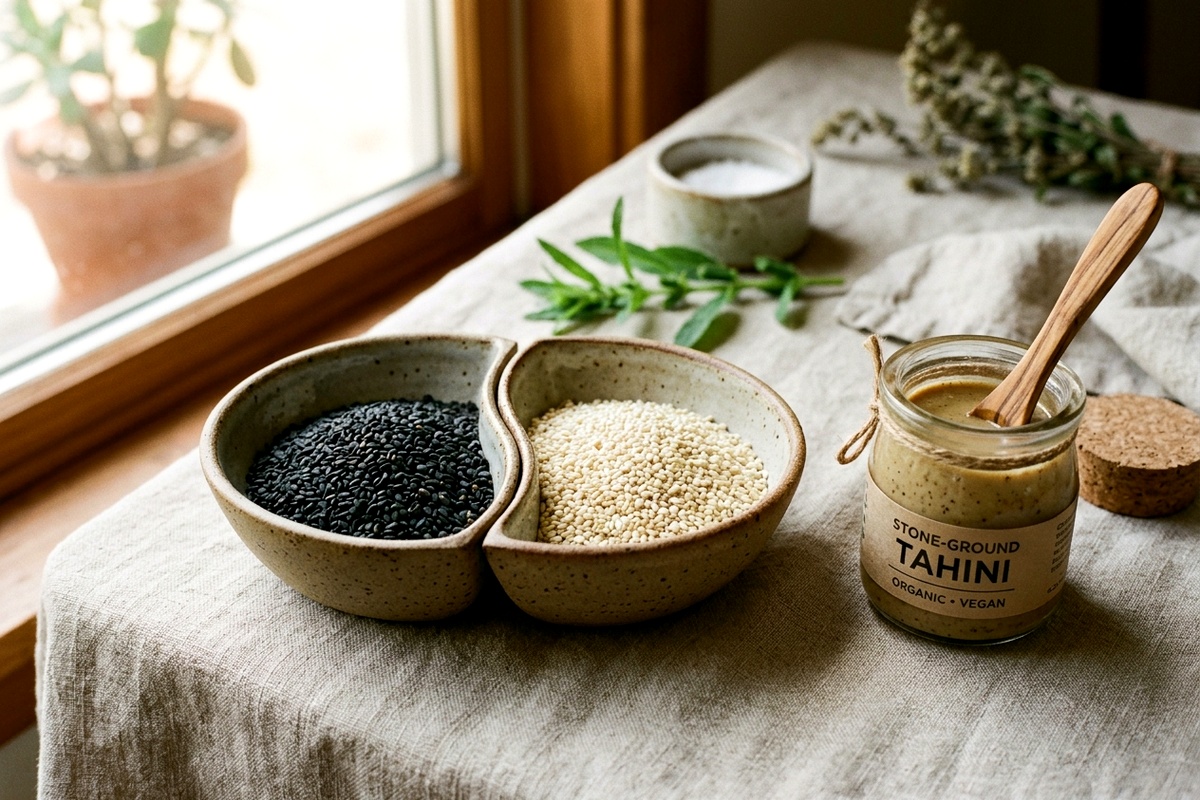
Log mustard seeds in our 30-Plants Microbiome Diversity Tracker, calculate real-time seed nutrient yields with our Daily Seed Nutrition & Protein Stacker, and discover the bioaccessibility secrets of calcium-rich seeds in black vs white sesame seeds and tahini.
Frequently Asked Questions About Mustard Seeds & Myrosinase
Cooking broccoli destroys its heat-sensitive endogenous enzyme (myrosinase), leaving glucoraphanin unable to convert into cancer-fighting sulforaphane. Raw ground mustard seeds contain abundant, highly active myrosinase. Adding just 1/4 teaspoon of raw ground mustard seed to cooked, warm broccoli donates the missing enzyme, multiplying bioavailable sulforaphane absorption by over 400%.
Brown and black mustard seeds (Brassica nigra and Brassica juncea) contain higher myrosinase enzymatic activity and richer concentrations of sinigrin, producing potent allyl isothiocyanate. Yellow mustard seeds (Sinapis alba) are milder and contain sinalbin, but still donate sufficient myrosinase to activate cooked cruciferous vegetables.
No. Commercial bottled condiment mustards are heated and mixed with distilled vinegar, pasteurizing and permanently denaturing the delicate myrosinase enzymes. To activate sulforaphane in cooked vegetables, you must use raw, unheated whole mustard seeds freshly ground at home or raw, unheated organic mustard seed powder.
Myrosinase begins denaturing at temperatures as low as 140°F (60°C) and is completely destroyed within 2 to 3 minutes of boiling or steaming at 212°F (100°C). By contrast, the glucoraphanin precursor is relatively heat-stable, allowing it to survive cooking and await enzyme reactivation by raw mustard seeds.