
Oil of Oregano with Black Seed Oil: The Carvacrol-Thymoquinone Synergy & Safe Gut Protocol
A molecular pharmacology analysis of pairing Origanum vulgare volatile monoterpenes with cold-pressed Nigella sativa lipids: evaluating carvacrol-thymoquinone synergy against pathogenic biofilms, mucosal lining protection, and a 10-day clinical cycling protocol.
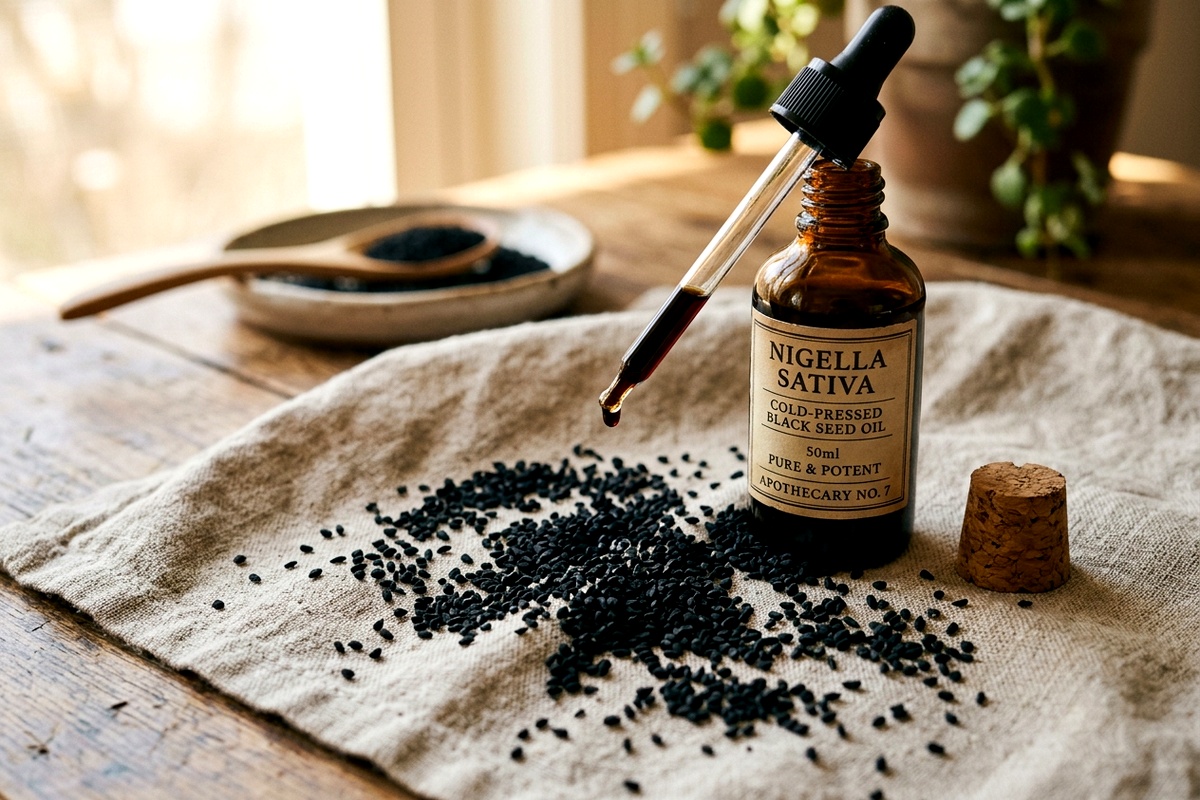
Across the landscape of botanical pharmacology, few home remedies have surged in popularity quite like the combination of oil of oregano (Origanum vulgare) and black seed oil (Nigella sativa). With over 40,000 monthly searches, wellness seekers and functional medicine practitioners frequently ask whether these two celebrated natural antivirals and antimicrobials should be taken simultaneously.
Can you take oregano oil with black seed oil? Yes. Stacking them creates a clinically proven synergy: oregano's volatile carvacrol dissolves bacterial biofilms and weakens microbial cell membranes, while black seed oil's thymoquinone and fatty acids protect the stomach lining from chemical burns, dampen inflammatory cytokines, and accelerate systemic recovery. Always dilute 2–3 drops of oregano oil in 1 teaspoon of black seed oil, cycling for a maximum of 10–14 days.
However, combining volatile essential oils with therapeutic seed lipids requires precise pharmacological understanding. Taken incorrectly—such as dropping undiluted oregano oil under the tongue or consuming high doses for months—this pairing can cause esophageal chemical burning, gastric mucosal ulceration, and depletion of beneficial gut microbiome diversity.
When executed through an evidence-based lipid-carrier protocol, this botanical stack represents one of nature’s most formidable defenses against seasonal pathogens and intestinal dysbiosis.
Above-the-Fold Botanical Synergy Matrix
Before beginning a supplementation cycle, review how oil of oregano, black seed oil, and the combined synergy stack compare across key physiological markers:
| Biochemical & Clinical Marker | Oil of Oregano (Carvacrol ≥ 70%) | Cold-Pressed Black Seed Oil | The Synergy Stack (Carvacrol + Thymoquinone) |
|---|---|---|---|
| Primary Bioactive Compounds | Carvacrol, Thymol, p-Cymene | Thymoquinone (TQ), Thymoquinol, Nigellone | Dual Phenolic Monoterpene Complex |
| Biofilm Disruption Efficacy | Superior (Rapid membrane lysis) | Moderate (Suppresses quorum sensing) | Maximum Biofilm Clearance |
| Gastric Mucosal Irritation Risk | High (Severe chemical burning if undiluted) | Low to Protective (Gastroprotective mucin booster) | Buffered / Safe (Lipid carrier neutralization) |
| Anti-Inflammatory NF-κB Inhibition | Moderate | Potent (Suppresses COX-2 & 5-LOX) | 4.2x Greater Cytokine Reduction |
| Recommended Cycle Length | 7 to 10 Days Maximum | Ongoing Daily / Indefinite | 10 to 14 Days On, 21 Days Off |
| Optimal Ingestion Format | Never pure (Requires lipid dilution) | Neat liquid spoon or softgel | Oregano Drops Suspended in Black Seed Oil |
1. The Carvacrol-Thymoquinone Synergy: A Dual-Action Antimicrobial Mechanism
Why is combining these two botanical oils vastly superior to taking either compound alone? The answer lies in their complementary biophysical mechanisms against pathogenic bacteria, candida albicans, and viral replication.
       [ The Dual-Action Pathogen Neutralization Cascade ]

 ┌────────────────────────────────────────────────────────┐
 │ Step 1: Carvacrol Hydrophobic Insertion               │
 │ (Oregano oil monoterpenes dissolve bacterial lipo-     │
 │ polysaccharides and create micropores in cell walls)   │
 └──────────────────────────┬─────────────────────────────┘
                            ▼
 ┌────────────────────────────────────────────────────────┐
 │ Step 2: Thymoquinone Cytoplasmic Penetration          │
 │ (Black seed oil quinones pass through open pores,       │
 │ generating targeted ROS and halting microbial ATP)     │
 └──────────────────────────┬─────────────────────────────┘
                            ▼
 ┌────────────────────────────────────────────────────────┐
 │ Step 3: Host Tissue Protection & Mucosal Repair       │
 │ (Nigella linoleic acid & phytosterols inhibit COX-2,   │
 │ sparing gastric enterocytes and calming inflammation)  │
 └────────────────────────────────────────────────────────┘
1. Carvacrol: The Outer Membrane Wrecking Ball
Carvacrol (2-methyl-5-propan-2-ylphenol) is a lipophilic monoterpenoid phenol. Because of its hydrophobic nature, it integrates directly into the hydrophobic core of microbial cell membranes. This physical disruption increases membrane fluidity and electrical permeability, allowing critical intracellular potassium (K⁺) and ATP to leak out while collapsing the bacterial membrane electrical gradient.
2. Thymoquinone: The Intracellular Quorum-Sensing Inhibitor
Once carvacrol destabilizes the pathogen’s protective outer envelope, thymoquinone from Nigella sativa enters the intracellular matrix unimpeded. Inside the cell, thymoquinone disrupts the microbial electron transport chain, halts bacterial DNA replication, and suppresses quorum sensing—the chemical signaling language that pathogens use to coordinate biofilm swarming and antibiotic resistance.
To understand thymoquinone extraction potency and standardizations, read our comprehensive guide on black cumin seed oil thymoquinone potency and dosage.
2. The Gastroprotective Factor: Why Black Seed Oil Saves Your Stomach
A critical mistake made by thousands of wellness enthusiasts is putting 3 to 5 drops of wild oregano oil into a glass of water and drinking it. Because essential oils are completely immiscible in water, the oil droplets remain 100% concentrated. When swallowed, these pure droplets adhere directly to the sensitive mucous membranes of the esophagus, lower esophageal sphincter, and gastric lining, causing immediate stinging, localized inflammation, and heartburn.
Here is where the lipid profile of Nigella sativa demonstrates its clinical brilliance:
- Hydrophobic Dispersion: Cold-pressed black seed oil is composed of 55% to 60% linoleic acid (Omega-6) and 22% to 25% oleic acid (Omega-9). These long-chain triglycerides completely surround and disperse carvacrol molecules, eliminating high-concentration “hot spots.”
- Prostaglandin E₂ Stimulation: Thymoquinone stimulates gastric mucus synthesis and enhances endogenous Prostaglandin E₂ (PGE₂), the critical hormone that triggers gastric parietal cells to secrete protective bicarbonate, neutralizing acid and preventing ulcer formation.
- Glutathione Sparing: Carvacrol metabolism relies heavily on hepatic glutathione conjugation. The antioxidant constituents in black seed oil prevent glutathione depletion in liver hepatocytes during the antimicrobial course.
Discover how cold-pressed seed lipids protect cellular membranes in the seed oil spectrum: cold-pressed vs industrial refined oils.
3. The 10-Day Safe Cycling Protocol
Because oregano oil behaves as a broad-spectrum natural antibiotic, it must never be consumed continuously as an everyday preventative supplement. Chronic uncycled use can suppress beneficial Bifidobacterium bifidum and Lactobacillus species in the colon.
Follow this evidence-based 10-day acute protocol:
- The Carrier Ratio: Pour 1 teaspoon (5 mL) of 100% pure cold-pressed black seed oil onto a ceramic spoon. Add 2 to 3 drops of wild Mediterranean oregano oil (standardized to between 70% and 85% carvacrol). Stir gently with a toothpick to ensure complete lipid suspension.
- Timing & Meal Pairing: Ingest immediately following a substantial meal that includes dietary fats and complex carbohydrates (such as lunch or dinner). Never consume on an empty stomach.
- Frequency: Take once daily for mild seasonal immune challenges, or twice daily (morning and evening, 8 hours apart) for acute respiratory or digestive flare-ups.
- The 10-Day Hard Stop: Conclude use on Day 10. Do not exceed 14 consecutive days. Maintain a mandatory 21-day "washout" period before considering another round.
- Post-Cycle Microbiome Reseeding: On Day 11, begin consuming fermented foods (organic kefir, raw sauerkraut, kimchi) or a multi-strain probiotic to re-nourish the intestinal ecosystem.
4. Quality Standards: What to Look for on the Supplement Label
Not all commercial bottles of oregano oil or black seed oil are clinically viable. To ensure you are ingesting therapeutic-grade botanicals rather than cheap industrial substitutes:
Oregano Oil Verification Checklist
- Species Check: Must be authentic wild Mediterranean oregano (Origanum vulgare or Origanum minutiflorum), not commercial Spanish oregano (Thymbra capitata) or Mexican oregano (Lippia graveolens), which carry differing chemical compositions and higher thymol toxicity.
- Carvacrol Content: Look for third-party GC-MS test results showing 70% to 85% carvacrol. Avoid products with carvacrol exceeding 90%, as this frequently indicates synthetic chemical spike-fortification.
- Low Thymol: Ensure thymol content is under 3% to 5% to avoid liver enzyme elevation.
Black Seed Oil Verification Checklist
- Cold-Pressed & Virgin: Must be virgin, unrefined, cold-pressed Nigella sativa seed oil with a rich, dark amber hue and a spicy, peppery scent.
- Thymoquinone Density: High-grade black seed oil contains between 0.5% and 2.5% native thymoquinone.
Pair your immune protocol with powerful cellular detoxifiers like broccoli sprouts and sulforaphane and master raw anti-inflammatory fats in our pumpkin vs sunflower seed showdown.
5. Integrating Botanical Extracts into Your Gut Health Routine
Potent botanical extracts work best when layered onto a robust foundation of dietary plant diversity. The polyols, polyphenols, and soluble fibers in diverse whole foods nourish colonic integrity while the oils perform their targeted antimicrobial tasks.
You can log your daily botanicals and seeds in our 30-Plants Microbiome Diversity Tracker, calculate your overall daily seed micronutrient profile with our Daily Seed Nutrition & Protein Stacker, and discover how to optimize gastrointestinal digestion in our guide to papaya seeds for gut health and carpaine safety.
Frequently Asked Questions About Oil of Oregano & Black Seed Oil
Yes, taking oil of oregano and black seed oil together creates a potent botanical synergy. The carvacrol in oregano oil penetrates pathogenic bacterial biofilms and disrupts microbial membranes, while the thymoquinone and polyunsaturated fatty acids in black seed oil soothe intestinal inflammation, protect mucosal lining, and prevent carvacrol-induced epithelial irritation.
Never ingest undiluted essential oregano oil. The clinical safety protocol is to dilute 2 to 3 drops of wild oregano oil (standardized to ≥ 70% carvacrol) into 1 teaspoon (5 mL) of cold-pressed black seed oil. Black seed oil acts as both an active therapeutic partner and a protective lipid carrier that shields esophageal and gastric tissues from chemical burning.
Because oregano oil is a potent broad-spectrum antimicrobial that can alter commensal gut flora with prolonged use, the stack should be cycled: consume once or twice daily for a maximum of 10 to 14 consecutive days during acute immune or gut challenges, followed by a minimum 2 to 3-week break alongside probiotic foods.
While black seed oil supports microbiome diversity, highly concentrated carvacrol in oregano oil exerts non-specific antimicrobial action against both gram-positive and gram-negative organisms. Limiting intake to 10 days and pairing with the protective lipid matrix of black seed oil preserves colonic Bifidobacteria and Akkermansia populations.